The government has proposed new measures to speed up evictions (despejos) for tenants who fail to pay rent, arguing that increasing owner confidence will help the rental market. Critics of the plan argue it repeats failed approaches from the 2012 “Cristas Law” (Lei Cristas) and fails to protect vulnerable residents. Tenants should note that the proposal was discussed in a recent Council of Ministers (Conselho de Ministros) meeting as part of a broader housing package.
The Casa Para Viver platform, which unites dozens of collectives advocating for housing rights, is organizing a protest in Lisbon this Saturday to oppose recent government measures. Critics argue that policies such as facilitating the sale of undivided inheritances and easing eviction processes for non-payment will exacerbate the housing crisis rather than solve it. Representative Rita Silva warns that these initiatives treat housing as a financial asset, worsening access for those in need and contributing to a rise in homelessness and precarious living conditions. The platform is calling for emergency measures, including a suspension of evictions and the implementation of rent regulations to curb speculative practices.
In 2025, 1,447 eviction orders were issued as part of eviction proceedings, representing a 44% increase compared to 2024, reports Público this Friday, citing data from the Institute for Financial Management and Justice Equipment (IGFEJ). In total, 2,562 cases had been filed at the Tenant and Landlord Desk (BAS).
The Government's new housing measures are being met with criticism by the Lisbon Tenants' Association (AIL), particularly regarding the aspect that aims to accelerate evictions due to non-payment, the vice-president told Lusa. “We are very critical of the measure and never thought it would have this scope,” stated the AIL vice-president, Luís.
The Government's new housing measures are being met with criticism by the Lisbon Tenants' Association (AIL), particularly regarding the aspect that aims to accelerate evictions due to non-payment, the vice-president told Lusa.
The government wants to prevent an heir from blocking the sale of properties and to speed up evictions when tenants do not pay rent. Susana Peralta also answers a question about the measurement of inequalities.
Three legislative amendment bills were approved by the Council of Ministers for the rental sector, aimed at resolving impasses in undivided inheritances. The measures also seek to accelerate housing evictions.
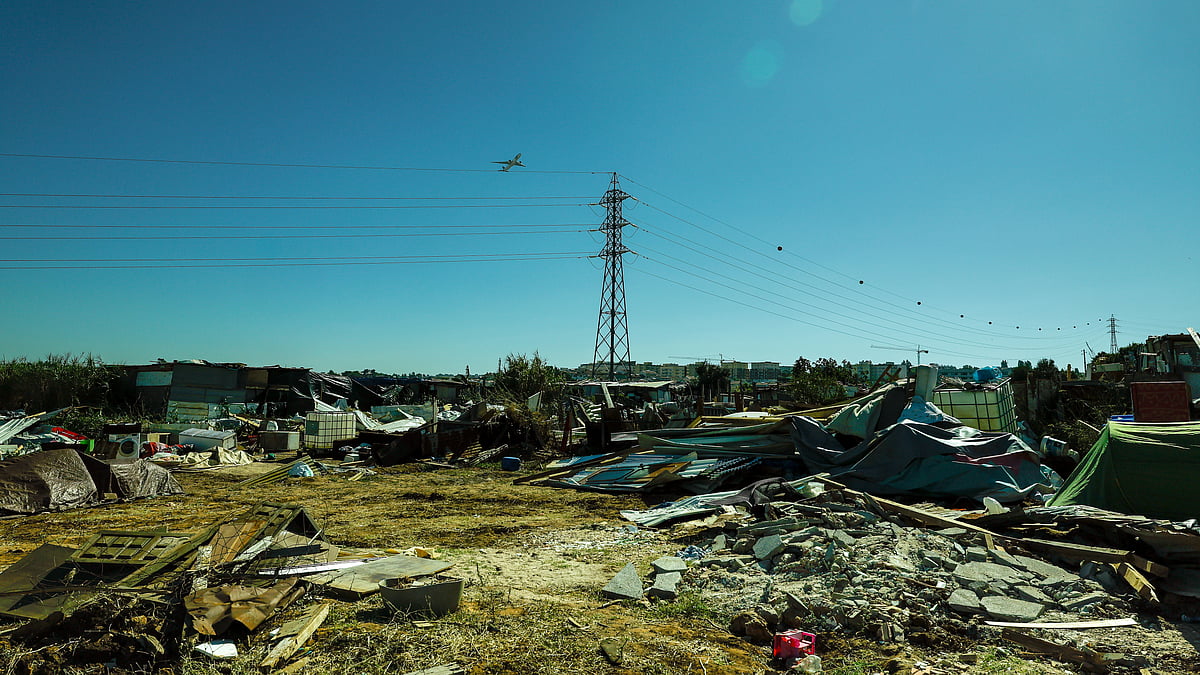
Since July of last year, Loures City Council has demolished 88 homes in the Talude Militar neighbourhood, where 23 other structures are currently protected by an injunction. In response to the Lusa agency, the local authority stated that, as part of inspection actions carried out between 14 July 2025—when it conducted a large-scale intervention in Talude Militar—and last Friday, it demolished what it describes as “88 shanty structures built illegally.” Meanwhile, 23 buildings have been flagged with an injunction, which the council, led by Socialist Ricardo Leão, guarantees it is respecting. However, it notes that it has “observed, in several cases, attempts to expand these constructions” and has taken action against them, albeit “only on elements not protected by the judicial decision.” The demolitions “focused exclusively on extensions or new constructions” made after the notification of the court order, the council asserts. Regarding support for evicted families, only one household currently maintains “regular social monitoring by municipal services,” the council mentions, adding that 24 families have found housing solutions to date, having benefited from financial support for security deposits and first month's rent. “The remaining families occasionally resort to social services when they need specific support, having shown no interest in continuous monitoring, namely in the process of searching for alternative housing or autonomy actions,” it clarifies. Municipal services also provided food vouchers to 14 families. Loures City Council has been regularly demolishing self-built homes in various neighbourhoods across the municipality. To criticism from residents and associations complaining about a lack of housing alternatives, the council has responded that it will not allow the “proliferation of shanties in the municipality,” guaranteeing that “whenever new illegal constructions are identified, the intervention will be immediate and determined.” This “stance of total intransigence regarding illegal land occupation” has been affirmed and reiterated by Ricardo Leão, who was elected for a second term.
The issue concerns the programme in which the Lisbon City Council is a tenant and subsequently sublets the properties through the Affordable Rent Programme.