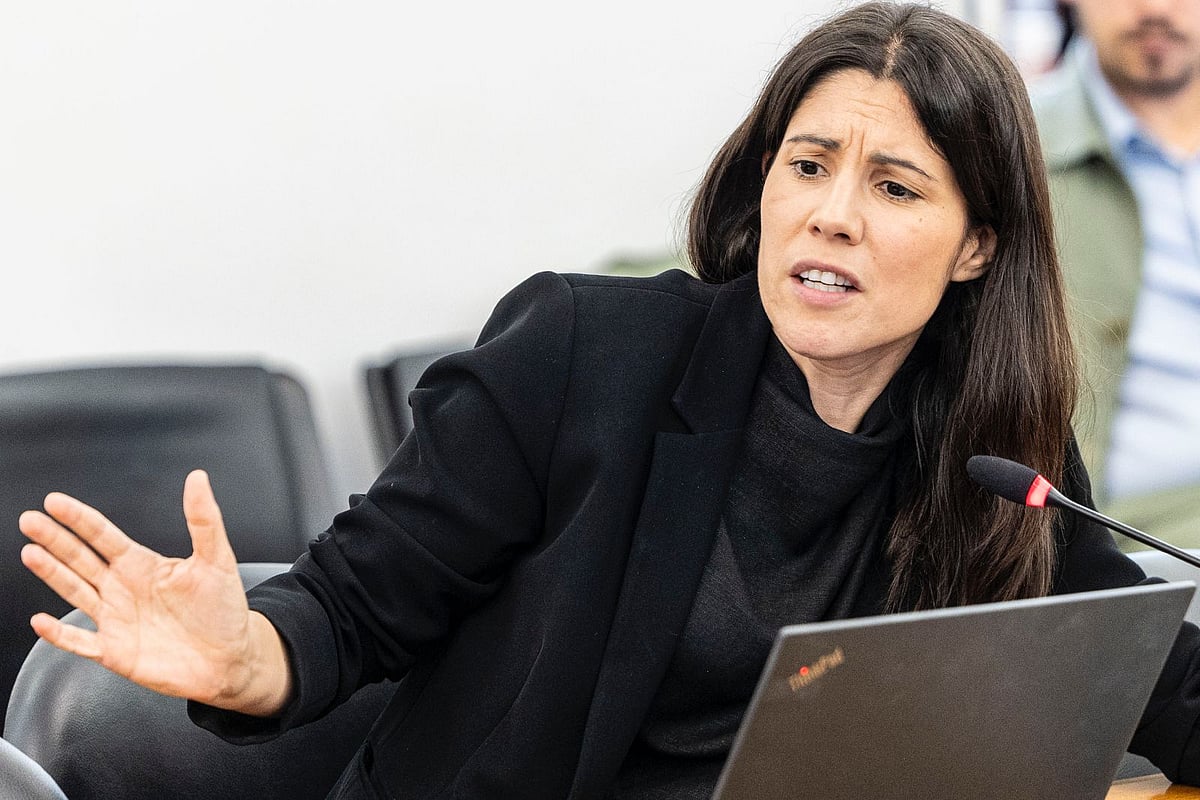
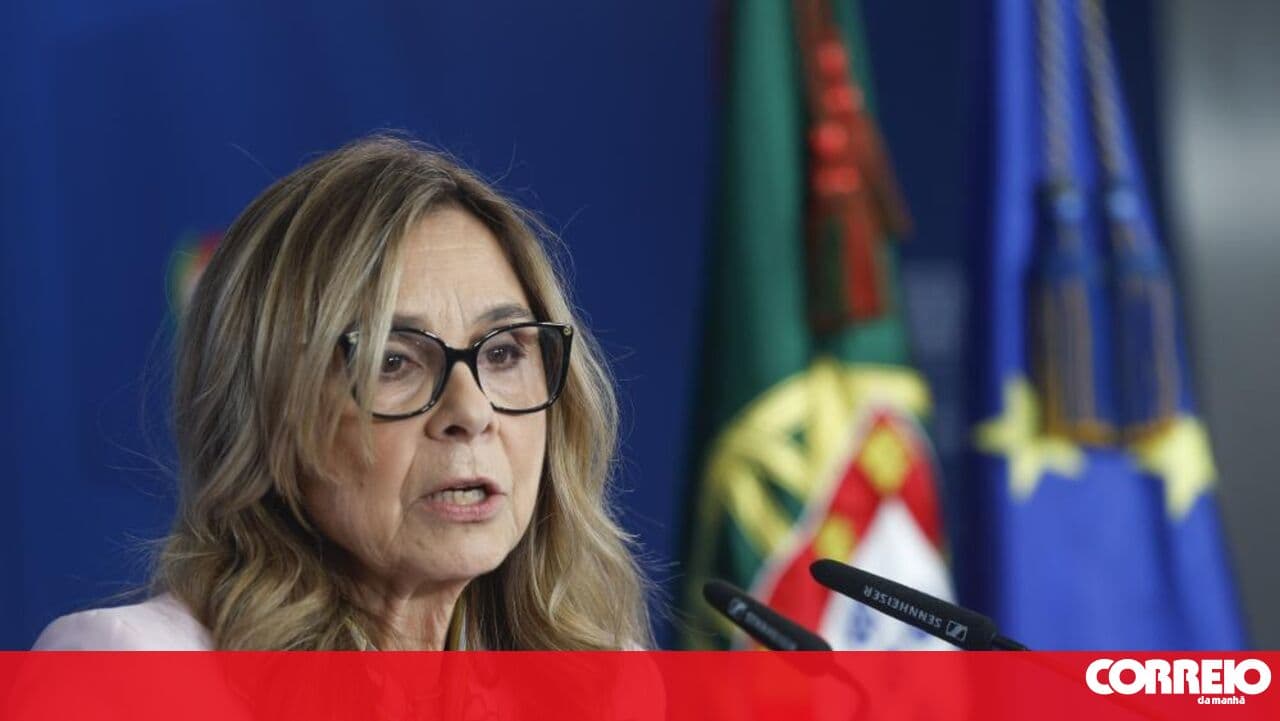
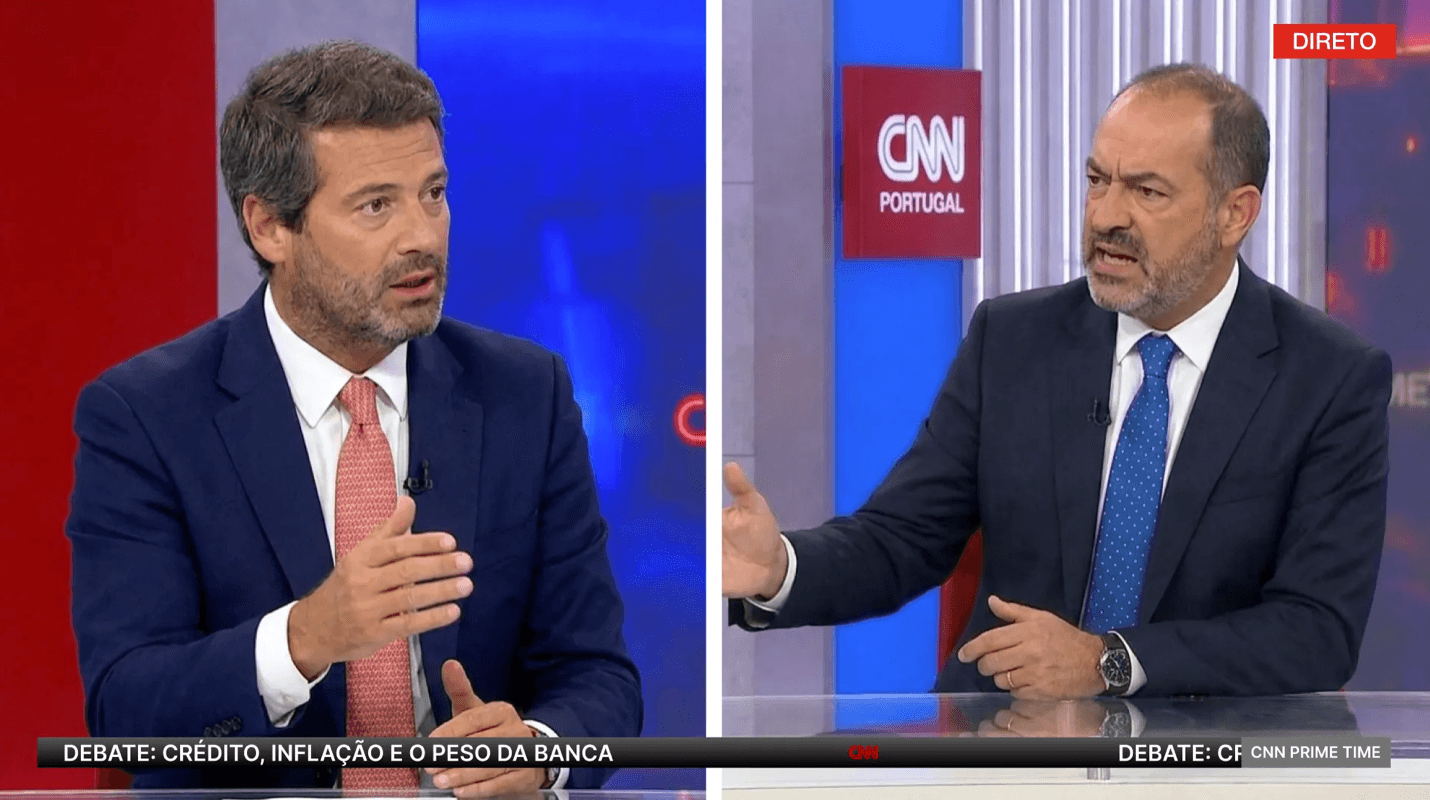
CNN Portugal commentator Helena Matos analyses the effects of potential sanctions applied to Chega following the confrontations with the Vice-President of the Assembly of the Republic, Teresa Morais.
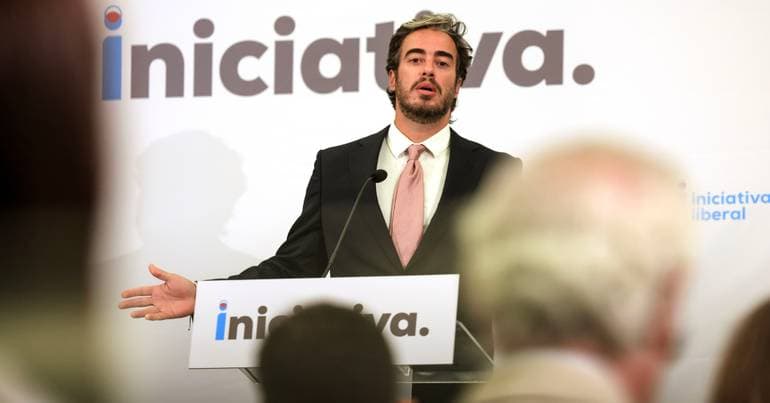
In an interview with SIC, the former president of the Liberal Initiative criticised the Prime Minister and the opposition leader for not knowing the “true meaning” of structural reforms.
The webpage provides a broad overview of current news, including political updates, international conflicts, and sports events. Specifically related to Portugal, it highlights the Portuguese scientist Seguro being honored for his selection to the Nobel Committee, emphasizing national pride in scientific achievements. Additionally, there are political criticisms directed at the government, with claims of incompetence in addressing fundamental issues. The site also covers various sports updates involving Portuguese teams and athletes, such as Ríos scoring his first goal in the Primeira Liga and Portugal's national basketball team losing to Serbia in Eurobasket qualifiers. Overall, the content reflects Portugal's achievements, political debates, and sports activities.
Two bills aimed at banning 'ideological' flags from public buildings were not approved by the Assembly of the Republic during Friday morning's plenary session, following a debate marked by a heated exchange between CDS member João Almeida and Left Bloc member Fabian Figueiredo. The legislative initiatives met different fates: the CDS proposal was sent to committee without a vote, while the Chega proposal was rejected by all parliamentary groups except for CDS. The debate was defined by criticism from left-wing benches, who accused the authors of attempting to ban the LGBT rainbow flag, leading to a personal confrontation after João Almeida responded to Fabian Figueiredo's criticism of the bill by calling him 'ridiculous'.
The article discusses recent proposals by the Portuguese political parties CDS-PP and Chega to restrict the display of certain flags, including those representing ideological causes and other countries, on public buildings. These proposals aim to prevent the use of public institutions as platforms for propaganda or division. However, they have faced strong criticism from left-wing parties and representatives, who accuse the right-wing parties of attempting to suppress symbols of the LGBT community, notably the rainbow flag. Critics argue that the measures threaten to infringe on rights and are part of a broader pattern of persecution against marginalized groups. The debate highlights tensions over cultural and social symbols in Portugal's political landscape.
The article reports that the political parties CDS and Chega in Portugal are proposing to ban “ideological flags” or flags from other countries from being displayed on public buildings. This initiative aims to restrict the display of flags that may carry ideological messages or represent foreign nations in public spaces, reflecting ongoing debates about national identity and public decorum. The proposal has garnered attention within Portuguese political discourse, highlighting tensions around symbolism and patriotism.
Deputy Fabian Figueiredo responded to my opinion piece by attacking the messenger. I used an AI to provide a neutral rebuttal to his arguments. The response addresses the funding of Podemos, noting that despite legal dismissals in Spain, the financial links to Iran's HispanTV remain a documented fact. It criticizes the Bloco for its selective solidarity, arguing that the party focuses on attacking Western democracies while ignoring the role of the Iranian regime in arming terrorist groups. Finally, it challenges the use of international law as a shield for the Iranian regime, asserting that supporting the Iranian people against tyranny is not 'vassalage' but a moral imperative.
The AEFEP Summit, which in recent days transformed the Faculty of Economics of the University of Porto into an important epicentre for national political and economic debate, brought to the fore on its final day one of the most decisive issues for our collective future: the consolidation of a two-speed Europe. The closing session, led by...
Luís Montenegro's challenge regarding the PSD direct elections has reignited internal debates, with former leaders and commentators highlighting the party's weaknesses and the autonomy of Passos's interventions.
The refusal is due to the limit on mandatory scheduling. The President of the Assembly of the Republic says that Chega can renew the request in the next fortnight. Also, Trump promises to continue the war until Iran is defeated.
Pedro Passos Coelho's recent interview with Eco and his explanations over the past week were not just isolated interventions from a former prime minister. They were a political gesture with consequences. At a time when the opposition appears diffuse and hesitant, with both André Ventura and José Luís Carneiro failing to offer anything new, Passos emerges with clarity and assertiveness, paradoxically positioning himself as one of the strongest voices against the direction of his own party's government. By stating that he would announce his candidacy without ambiguity if he ever decided to run, Passos Coelho keeps the door open for a return without making any commitments. More importantly than his personal future is the current political landscape. By arguing that the Executive should have sought a legislative agreement to the right, including Chega and Iniciativa Liberal, he is doing more than providing a strategic analysis: he is exposing what he sees as the insufficiency of the current social-democratic leadership. This is not a frontal attack, but perhaps something more uncomfortable: a structured critique from within. By insisting on the urgency of deep reforms, from Social Security to the economic model, Passos contrasts the government's caution with a reformist vision without concessions. Implicit is the idea that the government is falling short of what is necessary. A sharper critique is hard to find. In this sense, Passos Coelho positions himself as a kind of internal opposition leader: he does not formally contest the leadership of the PSD, but distinguishes himself; he does not present an organic alternative, but suggests one; he does not break away, but increases the tension. In a ruling party, incisive criticism rarely comes from within, hence the surprise. This not only demonstrates the potential weaknesses of the PSD; it primarily highlights the weakness of the political debate opposing the government, which has failed to articulate what Passos Coelho expressed in a single day over the past two years.
On January 18, Isabel Moreira, a member of the Socialist Party, submitted a report to the Constitutional Affairs Committee for the admission of a petition to potentially ban Chega as a racist and fascist party. Moreira argues that Chega does not respect the essential values and principles of the Portuguese Constitution. The petition currently has 12,000 signatures. Moreira's actions are understood as an attempt to combat Chega's ideas and practices, which dangerously approach the violation of fundamental democratic values. However, it is questionable whether this is the most effective way for Moreira to achieve her goals. Chega is currently the second-largest party in parliament, with André Ventura receiving around 1.7 million votes in the presidential elections. This indicates that there are over 1.7 million Portuguese voters for Chega, encompassing a diverse range of opinions. While some may support Salazarism, others reject it, and there are moderates and disillusioned former socialists and communists within Chega's base. Chega's rise is not solely ideological; many voters are disenchanted with the current system that fails to improve their lives. Moreira's petition will soon be discussed in Parliament, bringing Chega back into the political spotlight. If approved, it will be sent to the Constitutional Court, which has never banned a parliamentary party. While Chega has its share of unsavoury characters, it also includes qualified individuals. Moreira knows Chega is a populist party, but its historical connection to Nazism or Italian fascism is tenuous. The most effective way to combat Chega is to modernise Portuguese society and improve living conditions for its citizens. Moreira has a platform to challenge Chega's ideas, and initiating a ban on a party with 1.7 million votes may be counterproductive.
André Ventura returned to politics by attending a session at the Clube dos Pensadores, where Joaquim Jorge admitted that the 'majority' belongs to Chega. However, he had to answer questions about three Salazars and 25 April.
After three days devoted to the storm, André Ventura returned to attack Seguro and admitted he was starting from an unfavourable position, in a debate marked by provocations and barbs.
André Ventura admits his populism. António José Seguro acknowledges that it is only the lowest common denominator, but the socialist slipped up and said his opponent was 'paid to speak'. The leader of Chega, without his camouflage, knows nothing about defence. Six statements from the debate analysed.
Ventura criticised António José Seguro's performance in the debate, saying that Seguro's 'lack of ideas' left him astonished and provoked a 'What the f...' reaction, expressing surprise and disbelief at his contributions.
A report on the admissibility of the petition, authored by Socialist MP Isabel Moreira, saw votes against from Chega, an abstention from CDS and was approved by PSD, PS and Iniciativa Liberal.
Behind the scenes of the debate between António José Seguro and André Ventura for the second round of the presidential election, through the lens of reporters Miguel Domingos and Rui Pereira.
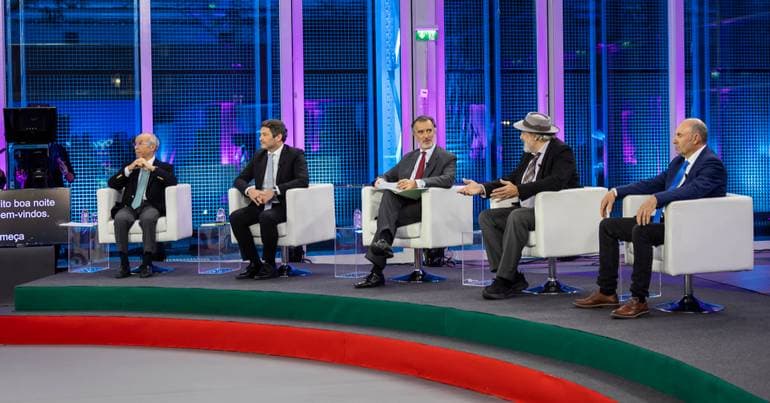
The RTP debate — the only one to include all 11 candidates — centred on personalised attacks and contrasting styles. Ventura and José Seguro were frequent targets while Rui Rio’s former ally Mendes emerged as the most aggressive, clashing chiefly with Admiral Gouveia e Melo; the two men’s exchange became the debate’s defining confrontation. Other notable dynamics included mutual restraint between Almirante and the Chega leader, André Pestana’s bold interventions, Manuel João Vieira’s ironic tone, and even criticism directed at Marcelo, suggesting a campaign increasingly shaped by personality and tactical barbs rather than detailed policy battles.
The 11-candidate presidential debate, held in two instalments across three topics, was overshadowed by a sustained personal clash between PSD’s Marques Mendes and independent candidate Henrique Gouveia e Melo. Mendes publicly rejected allegations of impropriety — insisting “I am not a facilitator of business deals” — and branded parts of the admiral’s conduct as “vulgarity,” a dispute that punctuated exchanges throughout the evening. Amid this confrontation, Jorge Pinto’s near withdrawal and his declaration that he would not stand in the way of a potential Seguro victory illustrated how interpersonal attacks and tactical moves risked eclipsing substantive policy debate.