

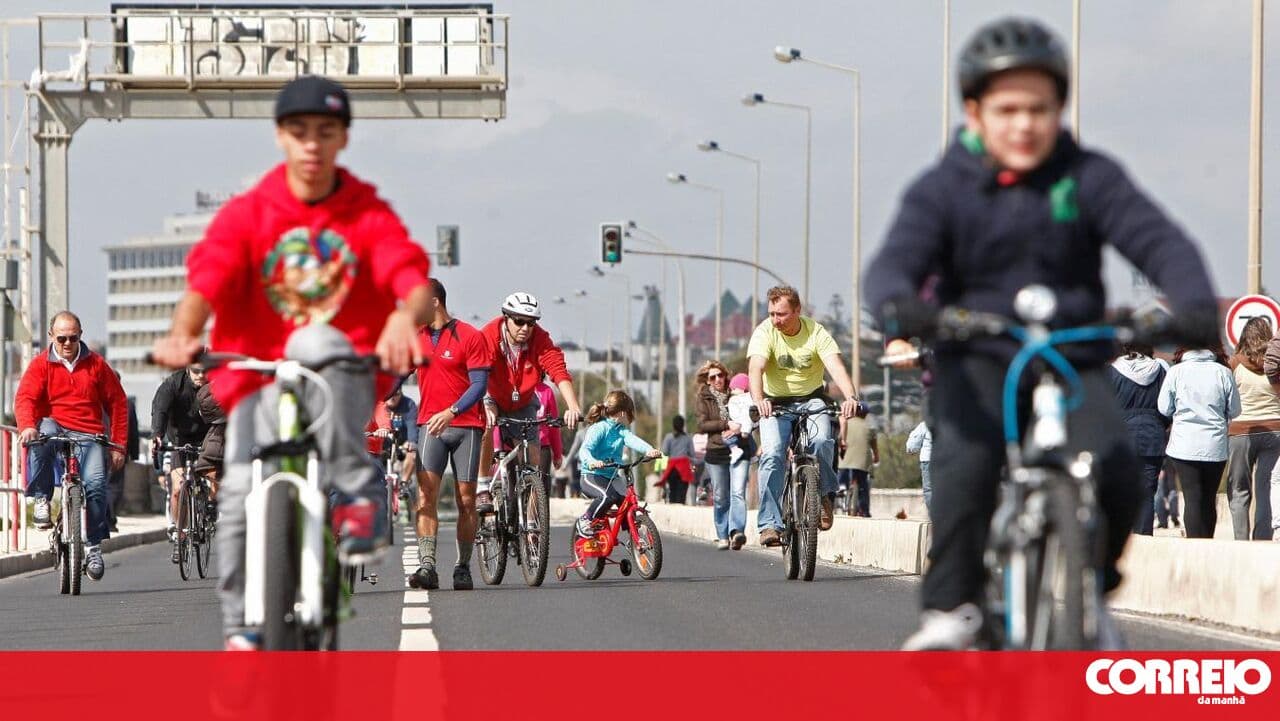
Lisbon to Cascais coastal road closed to traffic on 12 April for World Physical Activity Day
The initiative, organised by the Lisbon, Oeiras, and Cascais municipal councils, is in its third edition and is free to participate in.
Correio da Manhã
Latest news and stories about physical activity in Portugal for expats and residents.
The initiative, organised by the Lisbon, Oeiras, and Cascais municipal councils, is in its third edition and is free to participate in.
Portugal celebrates an achievement that many envy: in 2024, the average life expectancy was 82.7 years, higher than the EU average. However, before we pop the champagne and toast to an aging society, we must consider an important detail: how many of those years are actually lived in health and autonomy? On average, Portuguese people have about 8.4 'healthy' years after 65, slightly below the European average of around 9.4 years. This means that much of the time gained through medical advancements may be spent with physical limitations or dependence rather than independence and quality of life. The distinction between living longer and living well is one of the greatest challenges for modern societies, and Portugal is at the forefront. Unlike the Nordics, who often train joyfully at 70 and 80, it is more common in Portugal for people of these ages to be in care homes. This is the true paradox of Portuguese longevity: a country capable of ensuring long life but still lacking in consistently adopting lifestyles that preserve health into old age. Sedentary behaviour remains significant, physical activity levels are below desirable, and although dietary patterns are rooted in a Mediterranean tradition known to be the healthiest, they have increasingly been replaced by processed and caloric options. Prevention is often subordinated to treatment logic. Despite having climatic, geographical, and cultural conditions that could favour a Nordic-like model, Portugal is still far from having a society that integrates movement, contact with nature, and regular exercise. Active aging should not just be a concept in strategic documents but a socially valued practice. Therefore, the challenge for Portuguese society is clear: it is not enough to celebrate increased life expectancy; it is imperative to aspire for more years lived with autonomy, clarity, and participation. It must be understood that living more years with quality is largely an accumulative construction. Each year of inactivity or excess has its consequences, while each healthy choice acts as a silent investment in the future. It is not about pursuing eternal youth but preserving autonomy, clarity, and the ability to participate. Portugal has already shown it can add years to life. Now, each Portuguese person faces a simple yet demanding decision: to transform those years into a time of vitality or resign to live them with limitations. Do you really not have 30 minutes, three times a week, to walk, swim, or cycle? Can you not make some dietary changes to reduce the chances of cardiovascular and metabolic diseases? And what do you do to sleep better and manage stress? I leave you with these questions, reminding you that aging with autonomy is built, especially in your 30s, 40s, and 50s. Because while longevity is a victory, healthy longevity is the goal. Note: Whenever I have the privilege of writing in this space, I will bring news about new modalities or healthy habits. This time, the highlight is on the current trend: HYROX. It is a mix of cardiovascular endurance and functional strength, two fundamental capabilities for long-term health. Unlike very technical competitions, it is relatively simple to train and progress. You can watch the first competition in Portugal from May 1 to 3, 2026, at the International Fair of Lisbon, in Parque das Nações, Lisbon.

'Motor illiteracy' is worsening in Portuguese society, says physiotherapist Beatriz Queiroz. It is the result of years of early sedentary behaviour, excessive protection and a lack of basic physical experiences that used to occur naturally in childhood.

Diversifying exercise may extend life more than simply increasing the hours spent exercising, a study that analysed more than 110,000 people reveals.

Moderate‑intensity physical activity was associated with a 10% reduction in all‑cause mortality for most adults.
