Latest news and stories about medical research in Portugal for expats and residents.
This page has only 1 story and is not indexed by search engines.
Early symptoms can go unnoticed by people who have difficulty with colour vision. People with bladder cancer who are colour-blind had a 52% higher risk of dying after diagnosis, a study says.

People with bladder cancer who are colour-blind were 52% more likely to die within 20 years of diagnosis.

Two Cape Verdean researchers aim to strengthen the diagnosis of blood cancer and the “rational use” of antibiotics in Cape Verde through projects funded by the Calouste Gulbenkian Foundation, with the goal of improving healthcare in the country.

It is known that everyone who develops multiple sclerosis has previously had infectious mononucleosis, or the “kissing disease”.

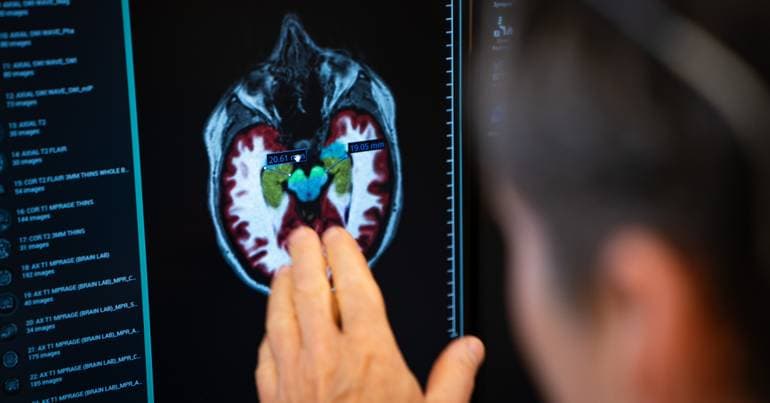
A new study from the Karolinska Institute strengthens evidence that Epstein–Barr virus (EBV), the common cause of glandular fever, can trigger an immune response that damages the brain and may contribute to the development of multiple sclerosis (MS). The research supports the hypothesis that EBV infection is a key environmental driver of MS, a chronic inflammatory neurological disease affecting nearly three million people worldwide, in which the immune system attacks the central nervous system.
A discovery by a Canadian institute enables early diagnosis through blood tests that measure antibody immune responses. The study aims to develop a preventive vaccine.

A scientific discovery in in vitro fertilisation and assisted reproduction could change the paradigm of infertility. The development was announced today by a group of British researchers who say they are working on a protein that prevents the chromosomes in women's eggs from separating during the early stages of pregnancy.
The discovery of the molecule LUZ51 is a promising step for photodynamic therapy as a potential solution to fight cancer. Observador spoke to researcher Luís Arnaut.

A group of scientists in Coimbra has developed a new molecule for treating cancer. The clinical treatment involves photodynamic molecules that will act inside cancer cells.
At the Champalimaud Foundation in Lisbon, scientist Ana Luísa Correia is researching an innovative way to prevent the formation of breast cancer metastases.

Luís Arnaut, a professor at FCTUC (Faculty of Science and Technology, University of Coimbra), explains more about a molecule developed by a group of researchers at the University of Coimbra that makes the process of combating cancer cells more effective.

Home News Portugal scientists develop innovative molecule for cancer treatment Portugal scientists develop innovative molecule for cancer treatment A group of researchers from the University of Coimbra has developed an innovative molecule that could represent a significant advance in the treatmen

If all goes well, in ten years' time we will have better stroke diagnoses. Victoria Leiro's work will enable faster interventions, fewer long-term disabilities and more lives saved.

At the Laboratory of Instrumentation and Experimental Particle Physics in Lisbon, Pedro Assis’s team is developing a system capable of delivering radiotherapy more effectively.

With 95 percent of drugs failing clinical trials, it’s clear that a new approach is needed. Let’s not miss this chance to invest in a new kind of science.

A European consortium aims to transform a bacterium associated with acne into a diagnostic and treatment vehicle for atopic dermatitis. A team from the Faculty of Sciences of Lisbon is part of the research.

Recovery demonstrated by several patients opens the possibility for the treatment to be applied on a large scale, once clinical trials with a larger number of people are completed.