Police officer suffers broken nose after being rammed by suspects fleeing on the 25 de Abril Bridge
The officer was transported to the São Francisco Xavier Hospital in Lisbon.

Latest news and stories about public safety in infrastructure in Lisbon, Lisboa, Portugal for expats and residents.
The officer was transported to the São Francisco Xavier Hospital in Lisbon.

Driver without a licence and with a history of fleeing was intercepted after weaving at high speed on the bridge. A 28-year-old PSP officer was hospitalised.

A PSP officer was injured after being struck by a vehicle carrying two men, aged 26 and 46, who were fleeing on the 25 de Abril Bridge. The incident occurred on Friday morning, March 13, around 7:52 am, according to Correio da Manhã, citing a PSP source. It began during a routine police stop at the toll plaza when the men in the vehicle refused to stop and immediately fled. A pursuit ensued, and on the bridge deck, the suspects' vehicle hit another car and the officer's motorcycle. The officer was transported to São Francisco Xavier Hospital in Lisbon due to injuries from the fall. The vehicle was intercepted further ahead, and the two suspects were arrested, with the event captured on video by witnesses. It is currently known that the driver did not have a driving licence. The incident caused traffic to be suspended on the bridge until around 9:00 am in the Almada-Lisbon direction.

A police pursuit of a car that failed to obey a stop order ended in a collision between a car and a motorcycle, resulting in one injury on the 25 de Abril Bridge.

An accident on the 25 de Abril Bridge resulted in one minor injury and forced the closure of the left and central lanes in the South-North direction this Friday morning. Traffic was back to normal before 9 am.

The Almada Fire Department was mobilised to the scene.

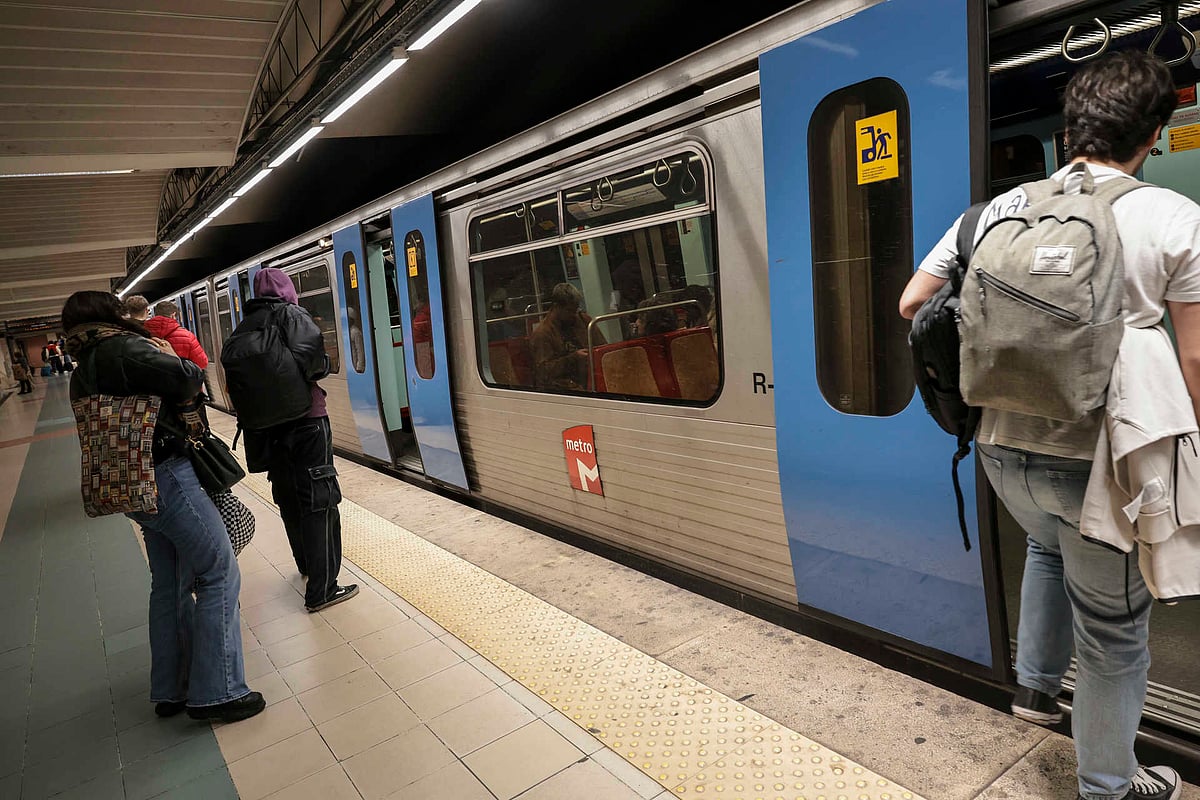
The Lisbon Metro informed the PSP on March 6th that “the conditions for reopening have been met.” Activities have been redirected to the Rato station for 73 days.

A 31-year-old man had to be restrained and handcuffed at the Cais do Sodré railway station.

Traffic in the South-North direction was restricted to the central lane following a collision between two cars, which resulted in one minor injury and four people treated at the scene. The road reopened at 10:00.

One person suffered minor injuries.

The Municipal Assembly approved a recommendation from Chega, with support from the PSD, CDS-PP, and IL. The PS and the left-wing parties voted against it, warning of accident risks.

Service on the Red Line of the Lisbon Metro was restored around 16:45 on Friday, March 6, after a fire caused a disruption for about two hours. The fire was detected between Oriente and Moscavide near a ventilation shaft, with firefighters confirming that only smoke was present and no flames were involved. The incident began at 14:59 due to a pile of rubbish burning near the ventilation entrance, prompting the deployment of sixteen firefighters for ventilation efforts. The Metro had warned that the interruption could be prolonged due to unforeseen circumstances.
Storm Regina is being felt in some regions of mainland Portugal.

Carlos Moedas stated that “more than 50%” of the provisional damages recorded are related to infrastructure, with also losses in school equipment.

Landslide due to bad weather continues to necessitate the relocation of residents.

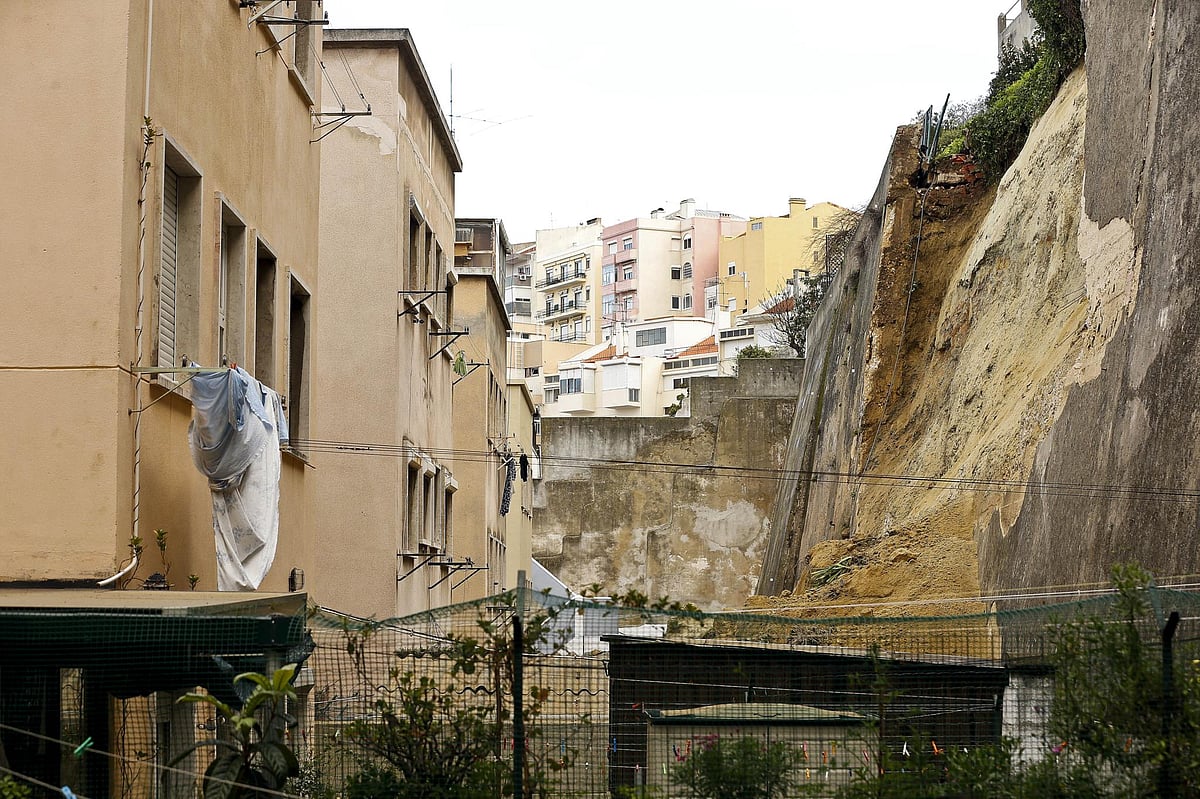
The Lisbon City Council is currently undertaking work to stabilize the slope in the Graça area after a landslide caused by bad weather, which continues to necessitate the relocation of residents, revealed the councillor for Works. Joana Baptista stated that they are already on site conducting topographic surveys and geological tests, and moving forward with a design/construction procedure for slope stabilization and water drainage. The councillor spoke during a meeting of the Lisbon Municipal Assembly, addressing questions from PEV and BE deputies regarding the landslide and the preventive evacuation of buildings. On February 10, a landslide was recorded in the Graça parish, leading to the evacuation of seven people from three buildings on Rua Damasceno Monteiro as a precautionary measure. According to Joana Baptista, the slope in question is between Rua Damasceno Monteiro and Travessa Terras do Monte, which has a significant area and has previously been addressed by the Lisbon City Council in 2010 and 2017 for consolidation and stabilization. Due to recent adverse weather conditions, another landslide occurred in an area that had not yet been intervened. All residents have been duly informed, and those who were relocated will have to remain so, as the houses still do not meet safety conditions. The outdoor areas of Rua Damasceno Monteiro will also remain closed for now. A major project is underway for the coming months. In this context, BE presented a recommendation for the council to take immediate measures for slope stabilization and containment, which was approved with votes against from IL and CDS-PP. Regarding the impacts of bad weather in the city, Lisbon Mayor Carlos Moedas stated that damage assessments are still being conducted but expects to present this information on Thursday, estimating damages in the millions of euros and emphasizing that the central government must respond. Moedas noted that recent storms caused over 2,000 incidents in the city, highlighting the need to intervene in over 200 streets to fill potholes and emphasizing the General Plan of Lisbon to minimize flood risks. The PS inquired about urban hygiene reforms, as the council plans to extend inter-administrative contracts until December 31, 2026, despite Moedas' management considering the delegation of powers to parish councils as the source of problems. The PSD mayor responded that a transition period is necessary, stating that from 2025, waste collection around eco-islands will be ensured by the City Council. The municipal group of IL questioned the Lisbon Without Wires programme, aimed at removing dead cables from facades and poles, with Urbanism councillor Vasco Moreira Rato revealing that 330 buildings have been intervened and about 37 kilometres of cables removed, with work continuing in the Baixa area and other neighbourhoods throughout the year.

The article discusses ongoing construction work by the Câmara de Lisboa following a landslide in the Graça neighborhood. It highlights the city's response to the incident and the measures being taken to address the situation. The article is part of a broader news context, including various updates on social issues and political developments in Portugal.
The planned Luís de Camões airport is situated on flood-prone land along the Tagus River, raising concerns about its viability and safety. The site is the most expensive option, potentially costing the state between 25 billion and 35 billion euros. Recent storms have highlighted the risks associated with this location, prompting experts like Paulino Pereira to suggest relocating the airport to safer areas such as Rio Frio, Montijo, or Alcochete. Engineering solutions to mitigate flooding risks would require significant earth movement, making the project even more costly and complicating access routes, which are also vulnerable to flooding.

The storms that hit the country are yet another example of extreme climate phenomena that will become part of the new normal. We will increasingly have to deal with these realities, preparing better, reacting effectively, and adopting almost permanent reconstruction habits. This requires national management complemented by local authorities, public institution leadership with civil society involvement, emergency actions combined with medium-term interventions. In Lisbon, we first offered solidarity to severely affected regions, then alerted the population, limited risks, and protected critical areas. Immediate restoration interventions were launched, and we will recalibrate multi-year investments to adjust plans to new realities. The ongoing structural investments, such as the General Drainage Plan, have already shown containment effects during this crisis. However, this context should prompt the Portuguese to reflect on fundamental issues, including the effectiveness of our economic model and the quality of our institutions. We need robust infrastructures, installed capacities, and efficient response mechanisms, as well as ambitious, sustainable, and financeable investment plans. We must integrate the best contributions from academia, the private sector, and civil society to effectively address the structural challenges posed by new realities, ensuring that strategic planning is not merely an accessory but a necessity for good governance.

The arrival of Depression Marta is expected to bring heavy rain to Lisbon and Setúbal, with the most concerning period being between morning and early afternoon. Areas already facing complications may experience the worst impacts as this is the third depression to hit the region in a short span of time.

The municipality led by Carlos Moedas highlighted that in light of the forecast for bad weather in the coming days, there remains “the risk of flooding and falling trees.”

The man fled to the south of the country after committing the crime. He was arrested by the PJ (Judicial Police).

The man fled to the south of the country after committing the crime. He was arrested by the Judicial Police (PJ).

Lisbon Metro has opened three central stations overnight to provide emergency shelter for people experiencing homelessness amid cold weather. Oriente (Red Line), Rossio (Green Line) and Santa Apolónia (Blue Line) will be accessible from Friday through the early hours of Tuesday at least, a period that the city warns may be extended or shortened depending on ongoing weather assessments. The move — driven by concern from Lisbon City Council — uses transport infrastructure as temporary refuge and highlights the need for coordinated short-term protection and wider services for people sleeping rough during extreme conditions.