Labour package. CIP: "We hope to conclude this process today"
The Portuguese government, UGT, and four business confederations are meeting to negotiate a decisive agreement on new labour law reforms.
Observador

Latest news and stories about labour law in education in Lisbon, Lisboa, Portugal for expats and residents.
The Portuguese government, UGT, and four business confederations are meeting to negotiate a decisive agreement on new labour law reforms.
The Supreme Administrative Court (STA) ruled in favour of two scientists in appeals against the University of Lisbon, ordering the university to open public competitions for career entry once the maximum term of their fixed‑term contracts expired. Two separate rulings — including one dated 8 January concerning the Instituto Superior de Agronomia (ISA) — require competitions to be launched within 30 days at ISA and at the Faculty of Letters, overturning earlier judgments. The decisions set a legal precedent on academic precarity and fixed‑term employment, with potential implications for higher education labour practices and reform of recruitment procedures in Portuguese universities.

On World Teachers' Day, hundreds marched in Lisbon and warned that only by valuing the profession can the problem of teacher shortages be solved.

A symbolic protest marked World Teachers' Day. Teachers marched from Príncipe Real to Largo Camões in Lisbon, highlighting the main challenges facing the profession.
The stoppage takes place one week before the Government submits its proposal for the 2027 State Budget.

A meeting triggers a complaint from the professor who is the subject of a moral harassment investigation.

The president of the Instituto Superior Técnico (IST) at the University of Lisbon, Rogério Colaço, has decided to archive a disciplinary case against a full professor following allegations of moral workplace harassment filed 18 months ago by eight faculty members. This decision contradicts the recommendation of the Inspectorate-General of Education and Science (IGEC), which had proposed a written reprimand. The allegations involved the restriction of access to research resources and interference with academic projects. Colaço limited the scope of the investigation to the last 12 months, citing the statute of limitations for older complaints, and has instructed the complainants to refrain from public comment on the matter.

The union denounces funding frozen since 2015, illegal working hours, and job insecurity across the 140 private schools that provide the majority of this educational offering.
Sebastião Bugalho announced this decision, which was made by the Minister of Education, and whose payment format is currently being defined and will be announced by Fernando Alexandre.

A group of teachers from the António Arroio Artistic School in Lisbon and the Soares dos Reis Artistic School in Porto “continue to receive no answers.”

The situation of these teachers was denounced by the Greater Lisbon Teachers' Union, which warned in a statement that, “whether due to the distance between the two schools or the workload, it becomes practically impossible to reconcile the two schedules.”

The demonstration and strike were called by the National Federation of Teachers (Fenprof), the largest teachers' union organisation in Portugal.

A FESINAP official criticised what they described as the Ministry of Education's “intransigence” regarding the demands of non-teaching staff.

Operational assistants and technicians are on strike this Friday, a stoppage that may affect the operation of schools.
There are few phenomena as revealing of the contradictions in public debate in Portugal as the attitude of a significant portion of public school teachers. The recent demonstration promoted by Fenprof in Lisbon — accompanied by new strikes and work stoppages — once again exposed this paradox in an almost caricatured way. It is a sector that lives...

Fenprof accuses the ministry of devaluing the profession in the revision of the Teaching Career Statute. A teachers' demonstration is scheduled for Saturday.

More than 80% negatively evaluate the stance of the Ministry of Education, Science and Innovation throughout the process and state that the ministry has not shown “a true openness to negotiate”.

Teachers' unions are discussing the new model for recruitment, placement, and admission of teaching staff proposed by the minister.

Research grant holders are gathering this Thursday outside the Ministry of Science. They are calling for the end of grants and their replacement with employment contracts, as is the case in other sectors.

For two weeks, Fenprof visited schools across the country to discuss issues affecting the profession. The Minister says his focus is not on responding to a trade union front.

Teachers delivered thousands of postcards to the Prime Minister's official residence containing protests collected from schools across the country. An action by FENPROF calling for the appreciation of the teaching career and investment in public education.
The judicial mandate to open recruitment processes for scientists is causing concern among universities. There have already been nine court rulings against the University of Lisbon. The Government does not foresee any increase in funding.

The FENPROF initiative begins at Jardim da Estrela with a human chain leading to the Prime Minister's residence. The federation's Secretary-General, José Costa, warns that the teacher shortage is spreading across the entire country.

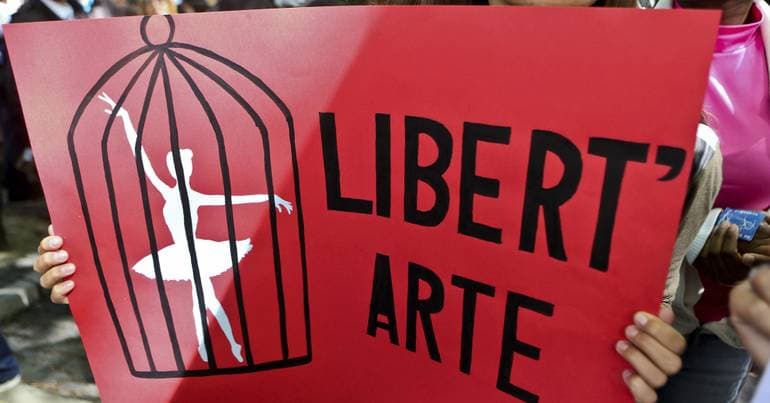
Around fifty teachers from the António Arroio Artistic School in Lisbon are protesting this Tuesday, March 17, against precarious employment contracts, with a similar demonstration taking place in Porto. “António Arroio and Soares dos Reis in the same fight” is one of the signs visible today in front of the artistic school in Lisbon, where teachers of specialized visual and audiovisual arts are gathered. At issue is the precarious professional situation of about 200 teachers from the country's two artistic schools who have been teaching subjects like cinema or performing arts for years but remain without a recruitment group that would allow them to obtain permanent tenure, Fenprof secretary-general José Feliciano Costa told Lusa.

Operational assistants at EB 2,3 de Telheiras are protesting this Thursday. The team has reduced from 20 to 10 workers since 1999. Parents report “brawls”, assaults, and areas without supervision.

The Secretary of State for Education stated that the union, which held a protest during today's meetings, did not demonstrate good faith and reiterated that negotiations will not occur under pressure. Alexandre Homem Cristo explained that the government's position is to avoid negotiations when there is pressure, which they felt was present during the protest. The Sindicato de Todos os Profissionais da Educação (Stop) did not attend the negotiation meeting after the government warned it would not accept the union's presence while the protest was ongoing. The Stop decided to maintain the protest instead of participating in the meeting. The government emphasized that any disruption affecting the negotiation conditions would prevent meetings from taking place. Following this incident, the Federação Nacional dos Professores (Fenprof) refused to meet with the government regarding the teaching career statute, deeming the government's decision “absolutely unacceptable.” The government aims to introduce changes to a mechanism allowing teachers without professional qualifications to conditionally join the Ministry of Education's staff, but unions are concerned about the lack of available places in professional training courses.

One of the STA's rulings is dated 8 January and concerns the Instituto Superior de Agronomia (ISA) of the University of Lisbon.

Two rulings order the opening of competitions within 30 days at ISA and at the Faculty of Letters. The decisions overturn previous judgments and set a legal precedent on academic precarity.

The general secretary of Fenprof, José Feliciano Costa, said that first-cycle (primary) teachers and pre-school educators need parity with other teaching staff.

Participants held placards demanding 'equality in the school calendar, teachers' timetables and reductions based on seniority' in front of the Ministry of Education.