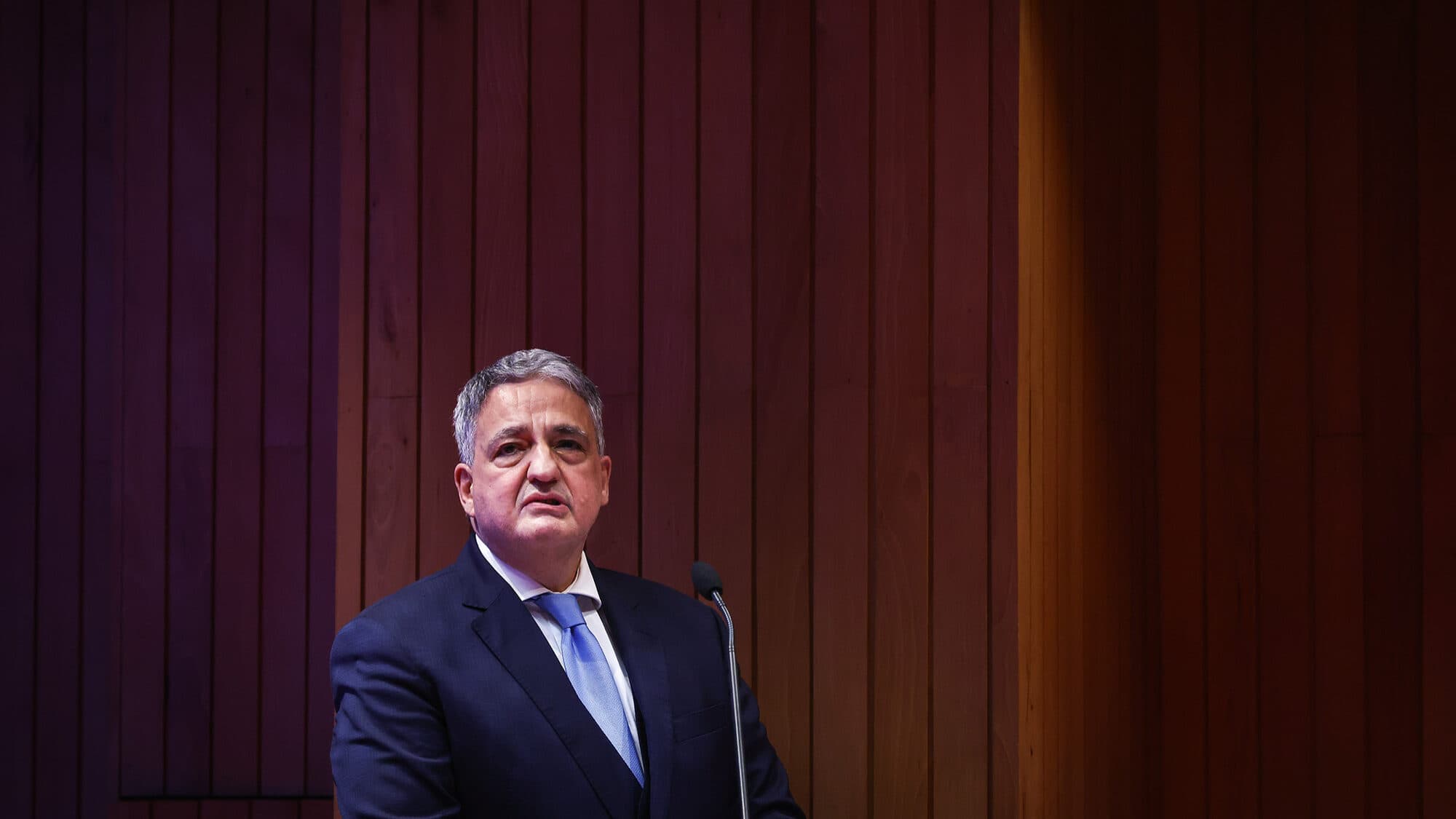
Joom CEO Ilya Shirokov warns that proposed changes to Portugal's nationality law create market uncertainty and hinder the recruitment of international talent, noting that the company has already lost potential candidates to Germany.
Portugal is seeking to enhance its appeal to Middle Eastern investors, particularly from Qatar, by shifting its marketing strategy beyond just its favorable climate. In Doha, representatives from Startup Portugal are engaging with local entrepreneurs to promote investment opportunities in the country.
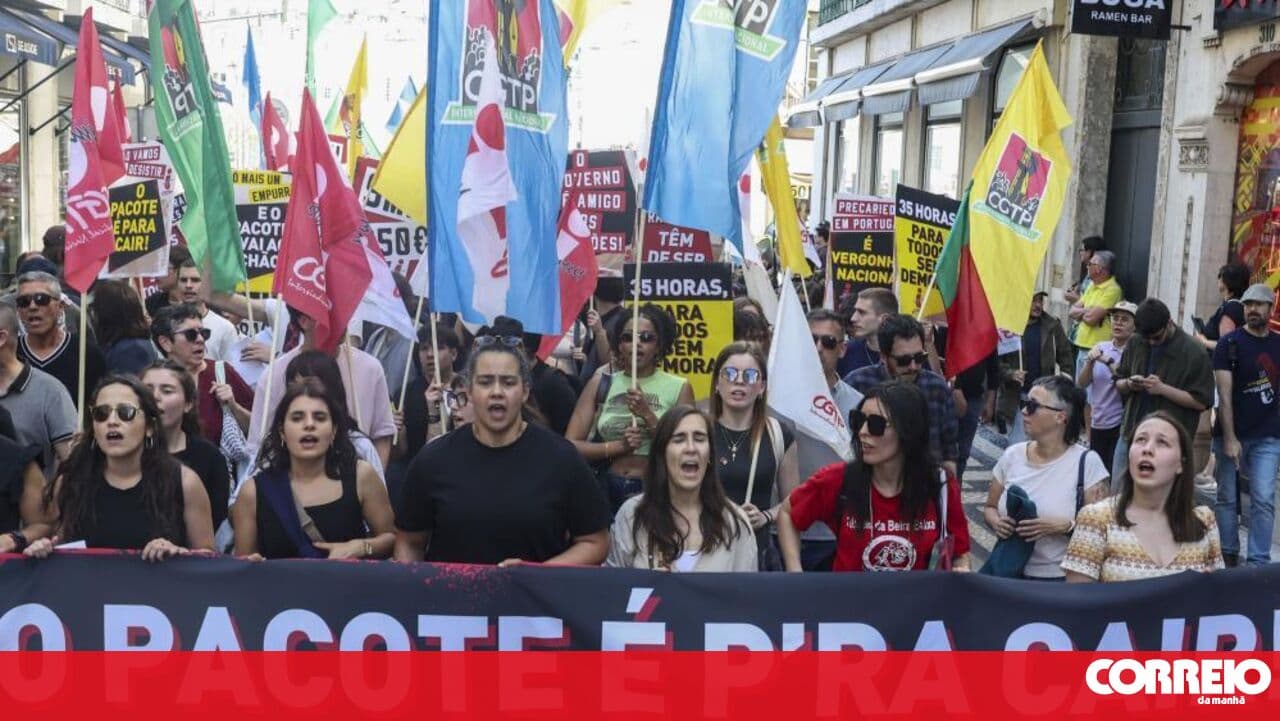
Outside Parliament, a demonstration demanded the fall of the labour reform. Hundreds of people called by the CGTP spoke of a “declaration of war on workers”.
The chief executive of Caixa Geral de Depósitos (CGD) said this Thursday in Lisbon that it is necessary to increase the salaries of public administration officials and that these should no longer be benchmarked against politicians' salaries. “When we speak ill of the Public Administration, we must know if we are willing to pay more to its leaders,” ...
The proposal to create a competition for the hiring of 163 technicians and managers for the Lisbon City Council was approved at this Wednesday's meeting. The launch of procedures for the first dozens of positions under this new regime will begin to be implemented this year, the deputy mayor, Gonçalo, told ECO/Local Online.
Several protests are scheduled from the north to the south of the country, promoted by the UGT and CGTP. A Pordata report reveals that Portugal is the fifth country in the EU with the highest weekly working hours.
The Secretary of State for Portuguese Communities attributed the need for immigrants this Thursday to Portugal's “success”, as they perform jobs that nationals “do not want or cannot do”. Emídio Sousa was speaking during the Portugal Global Nation Forum, a strategic platform connecting Portugal, its diaspora, and international markets.
The UGT trade union federation will reiterate its existing proposals in labour reform negotiations and has not ruled out joining a potential general strike, according to its secretary-general, Mário Mourão. Speaking on the sidelines of a conference in Lisbon, Mourão expressed discomfort with the government's negotiation model and stated that while the union is open to dialogue, it will wait until the next social consultation meeting on May 7th before deciding on further industrial action. Mourão also commented on the Minister of Labour, Maria do Rosário Palma Ramalho, suggesting that her lack of practical experience with how companies operate has hindered the negotiation process.
Portugal's business landscape is dominated by small and medium-sized enterprises (SMEs), which officials argue hinders productivity and global competitiveness. To address this 'SME trap,' the Banco Português de Fomento (BPF) plans to inject €30 billion into the economy through 2028, using public guarantees, European funds, and a new sovereign-style investment fund to help companies scale up and compete internationally.
The consolidation of the Portuguese business landscape will be the subject of the 'M&A - Consolidating to Grow' conference, hosted by Diário de Notícias and PwC on 22 April. The event, held at the Palácio Sotto Mayor in Lisbon, will explore the relationship between company size, competitiveness, and salary policies, while also examining the current state of Portuguese businesses and available financing mechanisms for consolidation. The conference will feature industry leaders, including representatives from the Banco Português de Fomento, Fortitude Capital, and the José de Mello Group, concluding with an address by the Secretary of State for the Budget, José Maria Brandão de Brito.
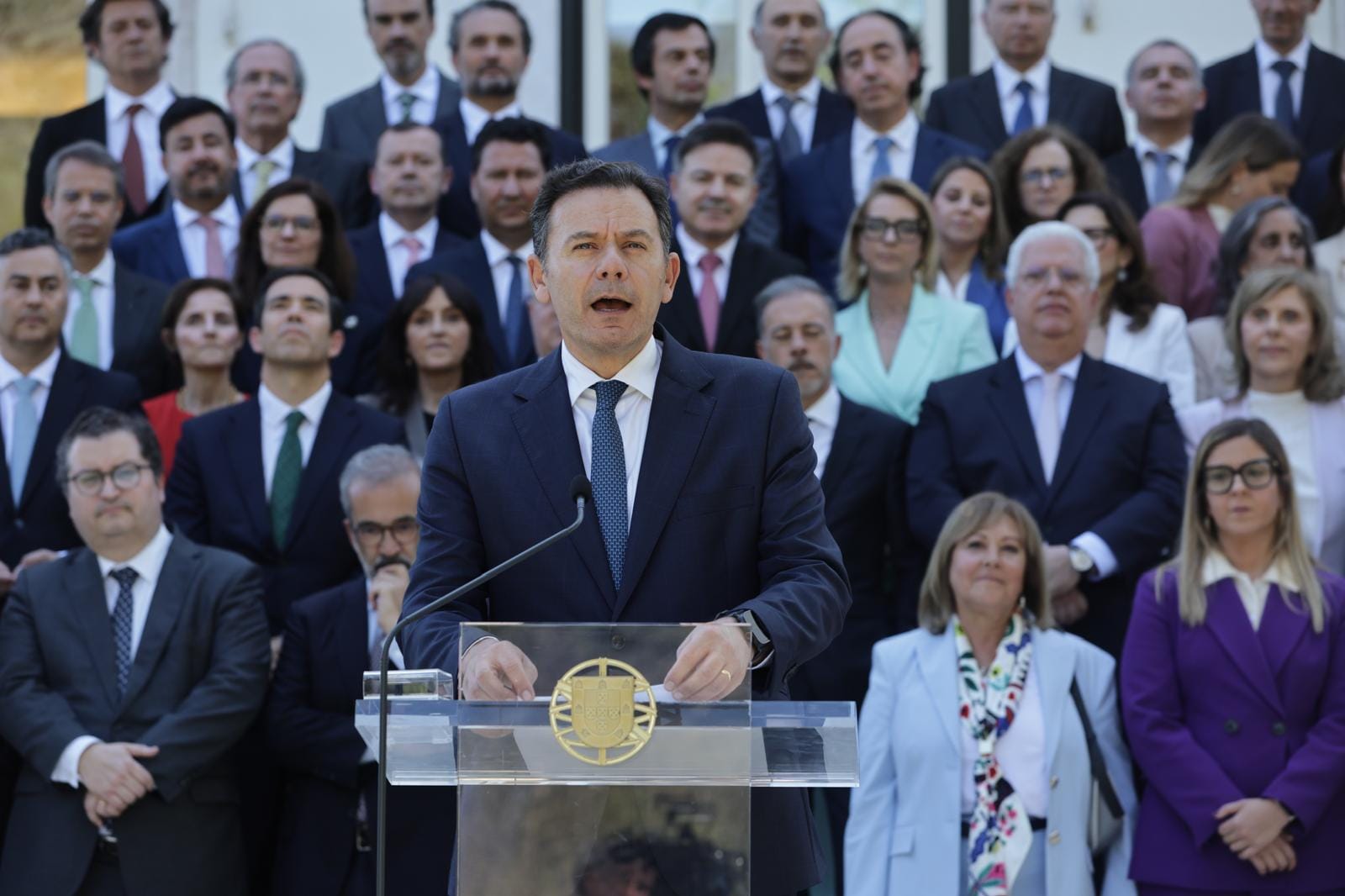
Prime Minister Luís Montenegro announced a 600 million euro support line, 'Portugal Energy Resilience', to assist companies where energy costs exceed 20% of production expenses. Funded by the Banco Português de Fomento, the initiative provides state guarantees of 70% for large companies and 80% for SMEs to help manage cash flow and operational needs. During the announcement, marking his two-year anniversary in office, Montenegro stated that the country and its citizens are in a better position than they were two years ago.
Armindo Monteiro says that 'as soon as this negotiation process ends', the CIP will propose 'a plan' for income, with the aim of increasing wages and growing the economy.
The president of the CIP - Confederation of Portuguese Business said today that he hopes to 'conclude quickly' the negotiation process regarding changes to labour law and considered that the country is 'a little bit tired of this negotiation'.
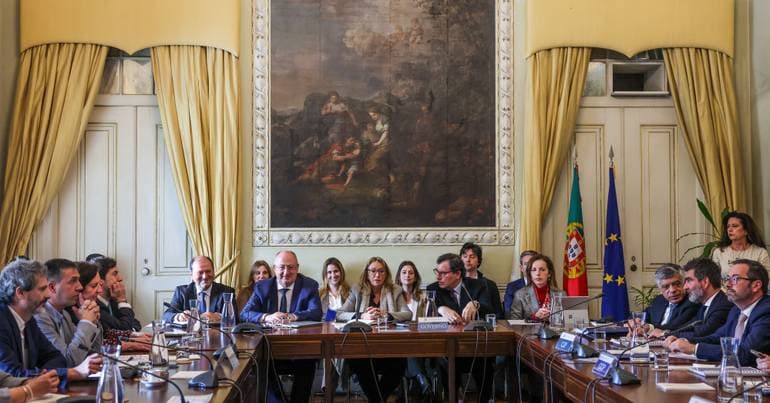
The Minister of Labour will meet on Monday, 23rd, with UGT and four employer confederations to discuss changes to the labour law, in a meeting without the participation of CGTP. The meeting is scheduled for 9:30 AM at the Ministry of Labour, Solidarity and Social Security (MTSSS) in Lisbon. This gathering aims to assess the technical meetings that have taken place between the government, employer confederations, and UGT regarding the labour law changes being discussed in the Social Concertation framework, where CGTP is also represented. Last week, the Minister had called UGT and employer confederations for a meeting, but it was held without union representatives as CGTP was not invited and UGT announced it would not participate, deeming the meeting 'untimely'. An official source from the ministry indicated that 'UGT was invited and did not show availability at any time this week', but the government remains open to discussions with the union. In UGT's absence, employer confederations expressed their 'interest' in reaching an agreement on the labour law, stating that without the union's presence, 'in practice, there was no meeting' and they are willing to negotiate with the union starting this week. This was noted by Francisco Calheiros, president of the Tourism Confederation of Portugal (CTP), who spoke on behalf of the other three employer confederations. When asked about CGTP's absence, Calheiros declined to comment. The Secretary-General of CGTP accused the government of trying to exclude the inter-union from discussions on labour law changes and using methods of discussion 'completely outside' the usual negotiation processes. The draft reform, called 'Trabalho XXI', was presented by the government of Luís Montenegro (PSD and CDS-PP) on July 24, 2025, and the Minister has indicated the intention to submit the bill to parliament, although no date has been committed to. The changes proposed by the government in July were rejected by the unions, who view the changes as an attack on workers' rights. The opposition led CGTP and UGT to jointly call for a general strike on December 11, 2025. Employer confederations welcomed the reform but stated there is room for improvement. In response to criticisms from CGTP and UGT, the government presented a new proposal to UGT with some concessions but reiterated that it is not willing to withdraw the entire initiative or abandon the core elements of the announced changes. UGT submitted a counterproposal to the government on February 4 and indicated it has red lines on issues such as fixed-term contracts and outsourcing, which it considers 'unacceptable'.
The new central area will create 14,000 jobs solely in offices. Fidelidade states that it is still working with the Lisbon City Council on a solution for the trees threatened with removal on Avenida 5 de Outubro.
Vacancies for the 1st cycle, where there is a significant shortage of teachers, were fully filled, as were posts in the Mathematics and Geography groups. The majority of teachers secured positions in Greater Lisbon.
The Socialists are calling for 'social support measures, professional retraining and the creation of conditions for a swift reintegration into the labour market', following Sicasal's insolvency.
Rejecting any possibility of negotiation regarding the current labour proposal, Paulo Raimundo highlighted the precariousness of researchers and scholarship holders during a visit to the Instituto Superior Técnico.
“For every day that passes without specialists knowing which positions are open and where they can go, it's another day given to the private sector,” laments Jorge Roque da Cunha.
A day after the general strike against the revision of the labour law, the Ministry of Labour called UGT for a new meeting, with the trade union led by Mário Mourão stating that they are open to this, but it is necessary to remove the key obstacles that the Government has...
This week we welcomed presidential candidate Catarina Martins, and the discussion covered NATO, nationality law, the labour package, Chega, and economic issues.
Concerned about job security amid uncertainty over the winner of the logistics licenses for Portuguese airports, SITAVA and STHAA are moving forward with a strike notice.
Marques Mendes calls on the government to promote dialogue with employers and unions. António José Seguro states that if he were president, he would ask the Prime Minister to withdraw the proposal to amend labour laws.