The Tenants' Association has condemned the Institute for Housing and Urban Rehabilitation for a complete lack of oversight regarding the Rental Support Programme, labeling the situation a significant governance failure.
The Portuguese government is set to approve tenancy law reforms this Thursday to accelerate eviction processes for non-payment, aiming to restore landlord confidence and increase the supply of habitable rental properties in major metropolitan areas.
Home News Portuguese municipality intensifies the fight against irregular occupations in social housing in Entroncamento Portuguese municipality intensifies the fight against irregular occupations in social housing in Entroncamento The Entroncamento City Council cut illegal water and electricity
The operation took place in the Frederico Ulrich neighbourhood, involving the PSP and E-Redes, and covered both contract tenants and about half a dozen illegal occupants. It is the second such operation in less than three months.
The PSD has proposed that the sale of the family home, without the consent of the surviving spouse, be expressly excluded from the Government's initiative to unlock the sale of properties in undivided inheritances at the request of a single heir. At the suggestion of the PSD, a clause is added to the Executive's proposal determining that the...
The Mayor of Porto wants more inspection powers for the local authority and more active police involvement in the fight against immigration networks and drug trafficking.
The increase applies until the end of September next year. Furthermore, the Minister of Infrastructure asks that his successor does not reverse current housing measures due to ideological prejudice.
The Government's new housing measures are being met with criticism by the Lisbon Tenants' Association (AIL), particularly regarding the aspect that aims to accelerate evictions due to non-payment, the vice-president told Lusa. “We are very critical of the measure and never thought it would have this scope,” stated the AIL vice-president, Luís.
The Government's new housing measures are being met with criticism by the Lisbon Tenants' Association (AIL), particularly regarding the aspect that aims to accelerate evictions due to non-payment, the vice-president told Lusa.
The headlines from Portugal on March 13, 2026, highlight significant national and international issues. The Middle East conflict dominates the news, impacting fuel and food prices, with concerns over war-related food shortages and geopolitical tensions. Domestically, the government adopts a tougher stance, distancing itself from labor unions like UGT, amid political shifts reflected in voting intentions favoring the PS and Chega over PSD. Key events include the death of journalist Mário Zambujal, ongoing investigations into scams and trafficking, and developments in housing policies, education, and healthcare. Sports results feature victories for FC Porto and Braga, while other stories cover infrastructure projects, energy market disruptions due to Iran's war, and social issues such as mobile phone use in schools and hospital procedures. Overall, the coverage underscores Portugal's political, social, and economic challenges amid global conflicts.
The government is preparing changes to housing policy to accelerate evictions in cases of non-compliance and unlock the sale of inherited properties, aiming to increase rental supply. Minister Leitão Amaro's measures seek to balance incentives for landlords with the protection of vulnerable tenants. The article argues that public policy must provide legal and fiscal security for owners while ensuring the state, rather than private individuals, bears the burden of social support. It also highlights the need for robust public investment in housing, improved public transport to support mobility, and a long-term, coherent strategy that transcends political cycles.
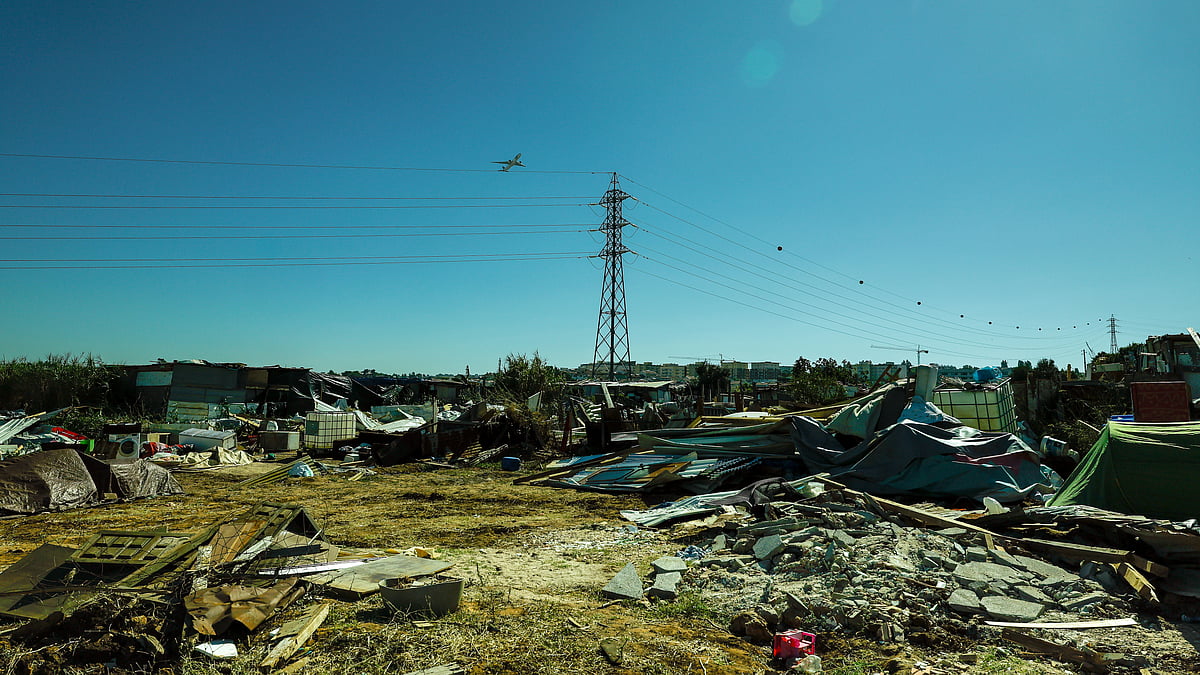
Since July of last year, Loures City Council has demolished 88 homes in the Talude Militar neighbourhood, where 23 other structures are currently protected by an injunction. In response to the Lusa agency, the local authority stated that, as part of inspection actions carried out between 14 July 2025—when it conducted a large-scale intervention in Talude Militar—and last Friday, it demolished what it describes as “88 shanty structures built illegally.” Meanwhile, 23 buildings have been flagged with an injunction, which the council, led by Socialist Ricardo Leão, guarantees it is respecting. However, it notes that it has “observed, in several cases, attempts to expand these constructions” and has taken action against them, albeit “only on elements not protected by the judicial decision.” The demolitions “focused exclusively on extensions or new constructions” made after the notification of the court order, the council asserts. Regarding support for evicted families, only one household currently maintains “regular social monitoring by municipal services,” the council mentions, adding that 24 families have found housing solutions to date, having benefited from financial support for security deposits and first month's rent. “The remaining families occasionally resort to social services when they need specific support, having shown no interest in continuous monitoring, namely in the process of searching for alternative housing or autonomy actions,” it clarifies. Municipal services also provided food vouchers to 14 families. Loures City Council has been regularly demolishing self-built homes in various neighbourhoods across the municipality. To criticism from residents and associations complaining about a lack of housing alternatives, the council has responded that it will not allow the “proliferation of shanties in the municipality,” guaranteeing that “whenever new illegal constructions are identified, the intervention will be immediate and determined.” This “stance of total intransigence regarding illegal land occupation” has been affirmed and reiterated by Ricardo Leão, who was elected for a second term.
A morning roundup noting that nearly 3,300 people have legally changed their gender and name since 2018. Separately, architects are raising questions about the '1.º Direito' initiative.
The government relied on Chega for the fiscal package and on the PS (and Chega) for changes to licensing rules. The housing package was approved and the PS wants to negotiate it at committee stage despite criticising the minister's attitude.
In its proposed law, the Government aims to reduce deadlines and streamline urban licensing procedures, while reinforcing the oversight role of local authorities.