Two “urgent” texts from May 1974
A short story about the enthusiasms of May 1974: more painless births, more births in maternity wards, more doctors, more psychiatrists. Opinion by Bárbara Reis

Latest news and stories about historical events in Portugal for expats and residents.
A short story about the enthusiasms of May 1974: more painless births, more births in maternity wards, more doctors, more psychiatrists. Opinion by Bárbara Reis

As we mark eighty years since the crushing of the Warsaw Ghetto Uprising, that stubborn whisper remains – “Read, read” – not as naivety, but as a gesture of lucidity.

Rui Ramos discusses the nature of current historical debates and addresses what he considers to be a manufactured controversy.

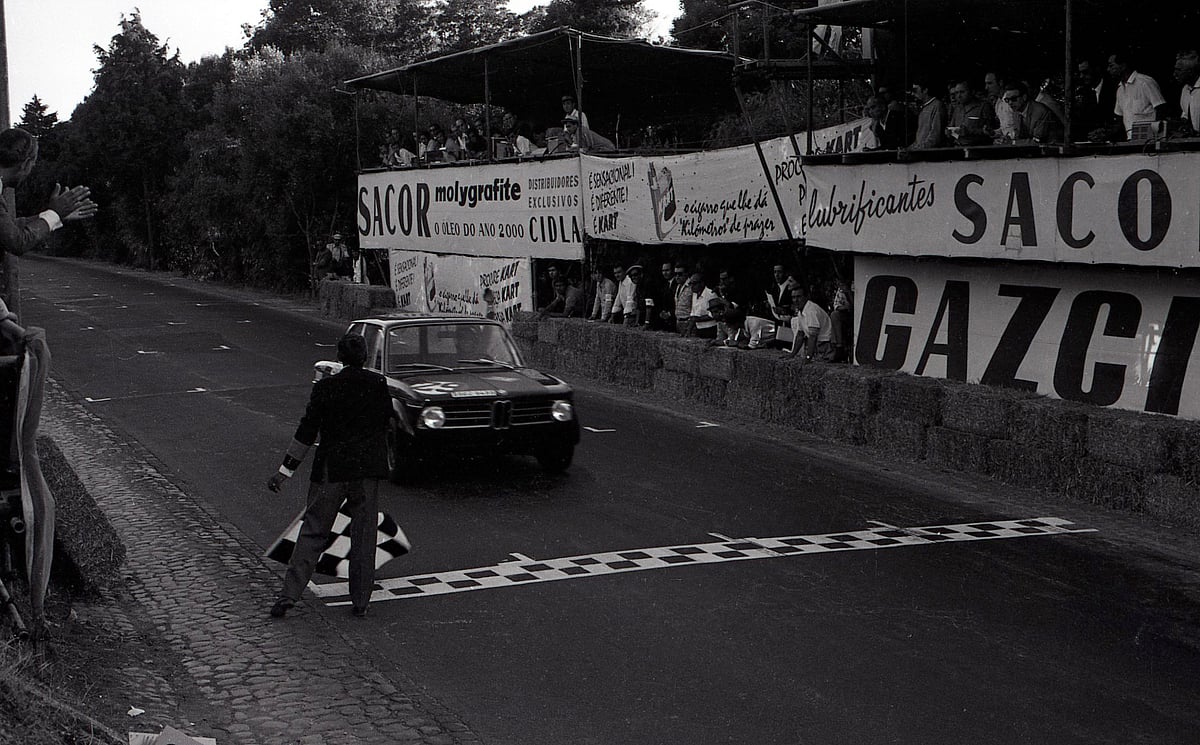
A look back at the historic and unexpected win by the Citroën DS in the Portuguese rally.

In recent weeks, there has been a debate over whether it is legitimate to compare the number of political prisoners from the Estado Novo regime with those held between September 28 and November 25, 1975. This is our response.

In the ship wrecked in 1587 during Drake's attack on Cadiz, ceramic containers with olives in brine, animal remains, ginger boxes, and a woman's skull were found.

It was 11:33 AM in mainland Portugal when the Iberian power grid suffered a total collapse, losing synchronisation with the European network. The country was suddenly plunged into darkness in the middle of the day.
The vessel, built in the Mediterranean, belonged to Pietro Paolo Vassallo and was commanded by Clemente Vassallo

It is one thing to consider that the current regime regulating transparency should be revisited. It is another not to understand that a regime of this nature is necessary.

43 athletes from four teams competed in the race, which started at Campo das Salésias and finished at Campo Grande: Newspaper Sellers (14), Belenenses (12), Benfica (10), and Sporting (7). The route passed through Junqueira, Santo Amaro, Alcântara, Campolide, Sete Rios, Luz, Lumiar, and Alameda das Linhas de Torres before heading to the finish line, which the winner reached in 51 minutes and 35 seconds. The DN newspaper congratulated 'Os Sports' for the organisation, stating the 'Little Marathon' could not have been more successful. The winner, Jaime Mendes, outperformed his teammates and all competition from the capital's three biggest clubs. The event was described as a popular and sporting success, with everything being brilliant from start to finish.

In the early hours of April 26, 1986, reactor 4 of the power plant exploded, causing the greatest disaster in the history of a nuclear power plant.
This marks 40 years since the explosion of Chernobyl's reactor 4, the most serious nuclear accident in history. In the documentary 'Chernobyl: Minute by Minute', we revisit April 26, 1986, the fire in the reactor, and the radioactive cloud that spread across Europe.

What you are beginning to read is a kind of diary of a man, a soldier, who was one of the first to arrive at Chernobyl after the nuclear disaster. His name is Andrii Kulish, he is 67 years old, and all the photographs you will see in this piece are his, as are the words and the stories. This is his testimony, shared with Expresso, 40 years after he was called to lead the 7th company in the cleanup of the city: “We expected to be able to master the power of the atom with simple laundry detergent.”

On the bicentenary of its founding grant, the worst thing one can do is judge the Constitutional Charter of D. Pedro with the political eyes that followed in the 20th century in Portugal.

A look at the historical impact of the events of April 25th in Portugal.

The town of Monforte hosted a historical reenactment or event related to Isabel of Portugal.

This is the story of the young men who went to war and returned without eyes, hands, or legs, or with faces disfigured and painted blue. It is also the story of a young woman who fell in love with a paraplegic she met in the hospital. And it is the story of a brilliant basketball player who became a different man after a booby-trapped grenade turned him into a leader who fought for the 16,000 Portuguese disabled veterans of the Colonial War. Note: this multimedia report, originally published in April 2024, contains images that may be disturbing.

An overview of the censorship and restrictions imposed during the Portuguese dictatorship prior to the Carnation Revolution.

The Social Democratic Party (PSD) highlights the significant impact of the 1974 Carnation Revolution on the Madeira archipelago.

“A Fuga” (The Escape) features courage, betrayal, emotion, an armoured car, and a man who makes the impossible possible. Paulo Caetano and Jorge Mateus have turned the 1961 escape of eight prisoners from Caxias prison into a graphic novel.

Inside a Chaimite armoured vehicle locked with iron bars, surrounded by a furious crowd, Portuguese history was made in “absolute silence”. On one side, the man who had governed a country under a dictatorship; on the other, a 23-year-old sergeant, anonymous until then, with a clear order to ensure that no one would take justice into their own hands. Amidst shouts of “death” and fists pounding on the metal, the fate of a regime was decided and the path to freedom was opened. This is the living memory of someone who was at the centre of the 25th of April - where fear and courage walked side by side to change Portugal forever.

I may seem pessimistic, but the truth is that I do not believe we are evolving in the direction of community, fraternity, equality, and social justice. Opinion by São José Almeida

April fulfilled its initial promise. It democratised, decolonised, and developed.

At dawn, the passwords were heard on the radio, giving the order for the military to move out. From all over the country, thousands of soldiers joined the Armed Forces movement to overthrow the regime. By morning, it was official: the Revolution had begun. In the afternoon, the surrender was negotiated and the celebrations started. By nightfall, Democracy was born in Portugal. This is a map that tells the story step-by-step and minute-by-minute of an unrepeatable day. This visual narrative was originally published in April 2024.

Seguro suggests that the overthrow of the dictatorship would have been the preferred path during the social concertation negotiations.

From 1980 to 1987, the FP-25 terrorised the country with hundreds of shootings and bombings. Twenty people died. As had already happened with the far-right, the case was resolved with pardons and amnesties.

Did Portugal win by turning the page on terrorism or should it have applied the law to the limit? By Ricardo Costa

(Post-)revolutionary hopes filmed as pure spectres, with no place in the country. The best film by Ivo M. Ferreira.

Renato Seabra killed Carlos Castro 15 years ago in a New York hotel room. He was sentenced to life imprisonment and has already served 15 years of his sentence.

The colonel denounced the blockade on granting space for an Interpretive Centre. Helena Roseta warned of risks in the constitutional review.