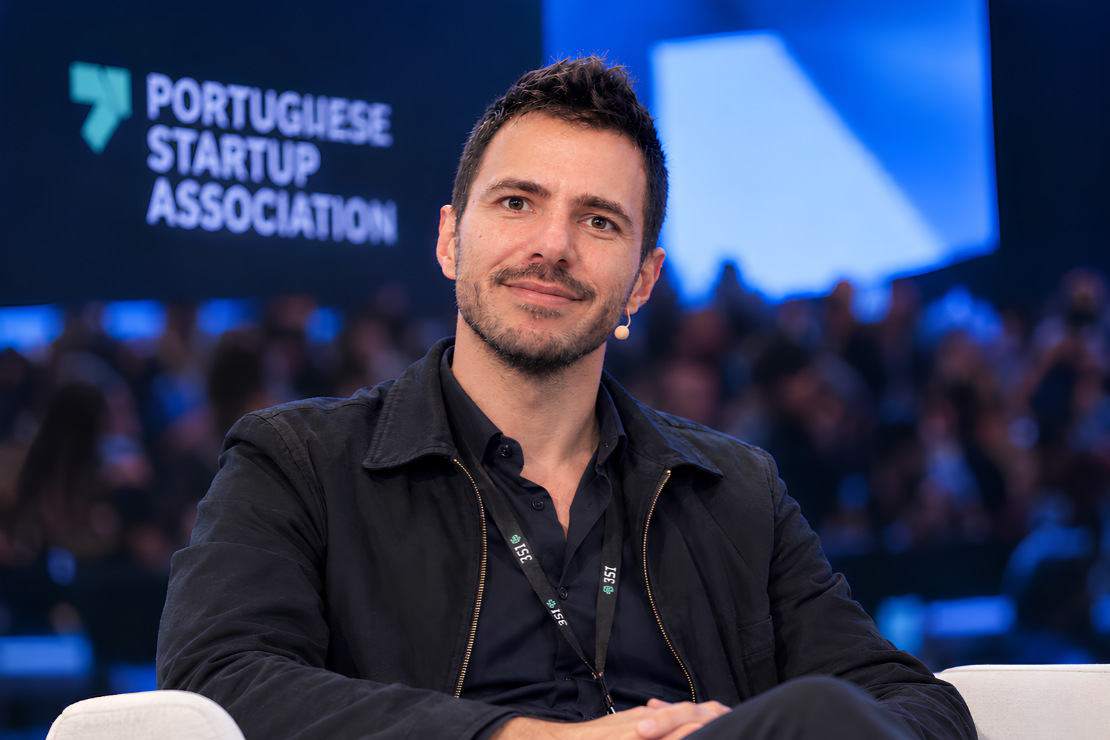
The Cuatrecasas Acelera programme celebrated its 10th edition with a Demo Day in Barcelona, where seven startups, including the winner Usawa Care, showcased their projects to a panel of experts. This event marked the conclusion of the programme, highlighting innovation and entrepreneurship in the startup ecosystem.
Named the Unicorn Factory Lisbon Metropolitan Area Network, it will be officially presented on November 2nd at the Beato Innovation District to establish the region as a territory for innovation, entrepreneurship, and international competitiveness. This strategic partnership aims to boost the metropolitan business, scientific, and technological ecosystem across the territory's 18 municipalities. In a joint initiative by...
Founded in the heart of Lisbon during the pandemic, the restaurant Salta, led by entrepreneur Tomaz Salema Reis, is now expanding its unique fusion menu to Brazil. After overcoming initial financial struggles and years without a salary for its founder, the business has gained recognition in the Michelin Guide and is currently scouting locations in São Paulo to bring its signature culinary style to the Brazilian market.
More than 120 scientists, including three Portuguese researchers, are calling for more European funding for early-stage innovation. They advocate for simplified application processes and greater support for entrepreneurship.
According to Google, these solutions aim to “save these entrepreneurs precious time, allowing them to focus on what is essential,” assisting businesses in areas such as graphic design and accounting.
Gemini, Google's artificial intelligence (AI), has launched a worldwide hub—including in Portugal—featuring new tools aimed at micro-enterprises and small entrepreneurs, according to information released by the Mountain View tech company. Google states that these solutions aim to “save precious time for these entrepreneurs, allowing them to focus on what is essential.”
From Turkish lahmacun to Angolan magoga, We Cheffes brings together delicacies and cooks from different corners of the world, who from Lisbon share global cuisine at the table.
Fábio Toshio left his job at the city hall in Brazil, spent time in Guinea-Bissau and, along with Portuguese native Silvana Ramalhosa, created a sushi bar in Porto where 'omakase' (trust the chef) is the house concept.
As the school year begins, thousands of teachers unknowingly take on the role of entrepreneurs, innovating in the classroom and adapting to challenges. Entrepreneurship, defined by the EU as a transversal life skill, is the ability to identify opportunities and act on ideas despite uncertainty. This skill is vital from the classroom to startups and SMEs, requiring constant learning, testing, and resilience. Supporting this mindset across all levels of education and business—as seen in initiatives like Santander X—is essential for progress, reinforcing Nelson Mandela's belief that education is the most powerful tool to change the world.
In a podcast launched this Tuesday (20/10), PÚBLICO Brasil provides a space to share the stories of Brazilian entrepreneurs in Portugal. The premiere features Carlos Fertonani, CEO and co-founder of The Coffee.
With a growing number of Brazilians starting businesses in Portugal, working from home has become a popular alternative due to high commercial rents in cities like Lisbon and Porto. This guide explains the necessary steps, such as registering with the tax authorities (Finanças), verifying residency permit requirements, and determining if specific commercial licences are needed based on the nature of the business—especially for food production or activities involving foot traffic. Entrepreneurs are advised to consult the gov.pt portal or local municipal councils to ensure compliance before investing.
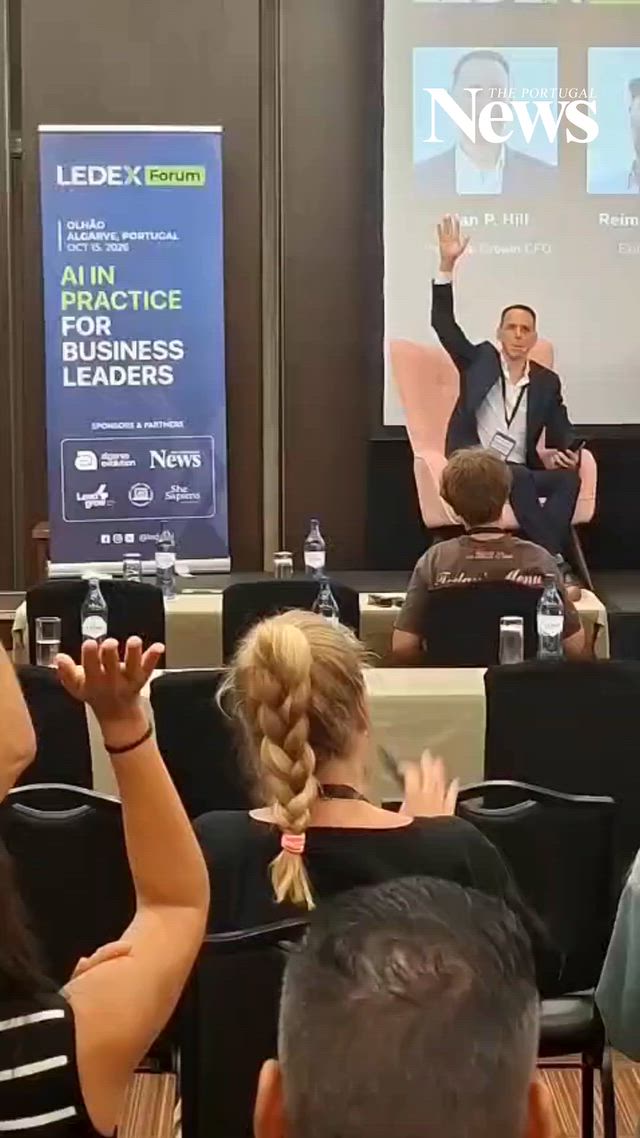
Home Business LEDEX Forum 2026 Brings Innovation and Business Leaders Together in the Algarve LEDEX Forum 2026 Brings Innovation and Business Leaders Together in the Algarve The LEDEX Forum is taking place today, 15 October, bringing together entrepreneurs, business leaders, innovators and indust
Armindo Monteiro identified entrepreneurs and managers as a “silent majority,” challenging them to “break this silence” and lead what he called an “uprising of an entrepreneurial nation that believes in having more prosperity than it currently does.” “It is a terrible verdict to know that we are growing below our potential,” he added. “We should not...
We run the risk of forgetting a simple idea: an association is not just a structure that represents interests. It is, above all, a community of people and companies that have decided not to face shared challenges alone. Associativism is born from this awareness. There are problems that an isolated company can hardly solve, causes it can hardly make heard, and knowledge it cannot always access. When many voices join around the same concerns and ambitions, they cease to be individual cases and gain scale, consistency, and the capacity for intervention. However, belonging is not enough. Associativism needs activism – not in the sense of permanent confrontation, but in the most essential meaning of the word: being present, participating, questioning, proposing, sharing experience, and building collective positions. An association where no one participates is just an acronym; where everyone participates, it is a force. This culture is decisive in a business fabric made up mainly of micro and small companies. Those who manage a small business are divided between purchasing, suppliers, clients, teams, treasury, and bureaucracy. Keeping up with legislative changes, deciphering new requirements, and anticipating economic and technological trends is, in daily life, simply impossible. There is no time to interpret the changing world around them. That is where associativism adds value. It gathers scattered knowledge, transforms individual problems into collective diagnoses, translates complexity, and brings to decision-makers what would otherwise be shattered by thousands of companies. But it only works if the road goes both ways: associations must listen to companies, and companies must participate in associations. That is why major association meetings matter. They allow for an earlier understanding of what is changing, identifying risks, learning about new tools, and confronting different perspectives on the same problem. When everything is changing at an unprecedented speed – technology, consumers, professions, business models – no one anticipates what is coming alone. There is also a less visible but equally decisive dimension: these meetings strengthen trust. A business network is built on relationships. A conversation can lead to a partnership; a shared experience can avoid a mistake; a contact can open a market; an idea heard on stage can become a solution in a company. This trust capital has economic value. What difficulties do we face? What changes are approaching? What tools do we need to master? What public policies need correcting? What skills will we have to develop? What kind of companies do we want to be five or ten years from now? Responding together is very different from responding alone. A general meeting is not just an institutional moment. It is a space for collective intelligence: a photograph of the present is taken, and, above all, the future begins to be drawn. It is there that thousands of small voices stop speaking alone and become a common voice, capable of being heard. Keeping associativism alive is, therefore, keeping participation alive. Because we all need each other.
An article exploring the challenges faced by immigrant entrepreneurs who often operate on autopilot, sacrificing personal well-being and awareness to manage the complexities of starting a business in a new country. The text encourages readers to incorporate moments of conscious presence and reflection into their demanding routines to maintain clarity, avoid burnout, and appreciate the journey of entrepreneurship, rather than solely focusing on the outcome.
The former US president Barack Obama is the keynote speaker today at the sixth edition of the Game Changers Forum in Lisbon, less than a month before the United States midterm elections.
During the meeting, over 30 national and international figures are participating in debates about the worlds of politics, economy, technology, entrepreneurship, and innovation, concluding with a dialogue with the former Democratic president.
Portugal recorded the creation of 40,266 new companies from the start of the year through September, representing a 3.2% decrease compared to the same period in 2025. According to an Informa D&B study, most sectors saw a decline, suggesting a possible retreat from the 2025 historic record. However, Construction and Information and Communication Technologies (ICT) bucked the trend, showing growth. The Construction sector, with 6,065 new companies (+13%), continues to thrive, driven by intense real estate demand in major urban centers like Lisbon and Porto. ICT also saw growth, with 3,010 new companies (+5.6%), led by IT consulting and programming, which have grown 18% annually since 2020. Conversely, sectors such as Agriculture and Livestock (-29%), Accommodation and Catering (-11%), Retail (-11%), and Transport (-11%) face significant declines. Geographically, only the West and Tagus Valley showed a slight increase (+1.7%) in business start-ups, with Santarém leading this trend. Meanwhile, more than 9,000 companies ceased operations through September, mainly in Business Services, Retail, and Accommodation and Catering, concentrated in the Lisbon and Porto districts. From September 2025 to date, there has been a 7.9% reduction in closures, totaling 14,519 closed companies. However, some sectors, such as Footwear Manufacturing (+39%) and Specialized Construction Activities (+5.4%), recorded increases in closures.