Latest news and stories about election results in Portugal for expats and residents.
This page has only 1 story and is not indexed by search engines.
The candidate backed by the PSD and CDS finished 5th or 6th in 131 municipalities. Seguro captured 160 municipalities that had been held by the AD, Ventura took 52. In Madeira, where the coalition had swept everything, Marques Mendes did not win in any.

Comparing Ventura’s solo votes in the presidential election with his party’s votes in the legislative election, he is worth a little less than Chega but much more than he was in the 2021 presidential race — he increased his vote count in every electoral constituency in the country, particularly in Porto and Lisbon. An analysis based on CNN Portugal’s Comparómetro.

The Socialist candidate for Belém performed better than Pedro Nuno Santos in the last legislative elections.

The leader of Chega received 28.69% of the vote in Murça, a municipality traditionally held by the PSD. Marques Mendes managed only 19.57%. Why? “Down there they have everything; here we have nothing.”

A comparison with the legislative results shows where the candidates who surprised on Sunday drew their votes from. Seguro coloured the map pink and goes into the second round with an advantage in the polls. Presidential elections are not legislative and candidates do not formally represent parties, but most are backed by them.

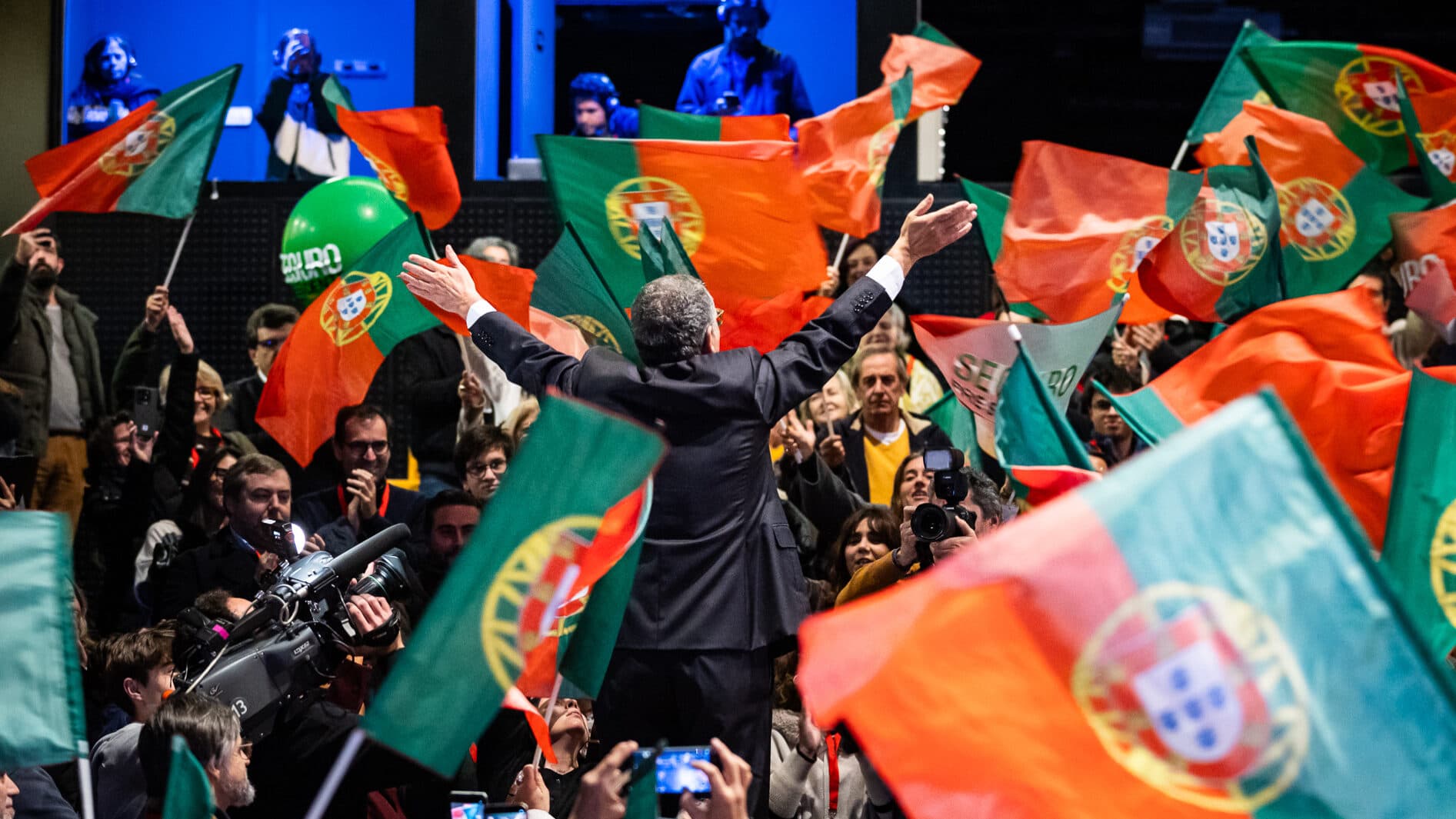
The Socialist victory restores the PS after the trauma of 2025, colouring the country pink. But it was not achieved through large gains. The best news for the Socialists is the reconquest of the biggest urban centres.
João Cotrim Figueiredo won in Spain; Seguro in Germany and the United Kingdom. Gouveia e Melo prevailed in the Russian Federation and Marques Mendes in China.

André Ventura, of Chega, received 48.81% of the votes from Brazilians and Portuguese who went to the polls at the ten polling stations in Brazil for the presidential election. António José Seguro received 21.90%.

One day after receiving more than 60,000 votes and finishing eighth in the Presidential election, musician Manuel João Vieira reacted to the results with his usual humour.

António José Seguro and André Ventura, who will contest the second round of the presidential election, were separated by just one vote in Figueira de Castelo Rodrigo (Guarda), according to provisional results from Sunday’s election.

In Golegã (Santarém), the difference between the two candidates who will go to the presidential run-off was six votes, and in Porto Moniz (Madeira) it was eight votes.

Catarina Martins, António Filipe, Jorge Pinto, Manuel João Vieira, André Pestana and Humberto Correia do not qualify for state subsidies after Sunday’s first round of voting, all having won less than 5% of the vote.
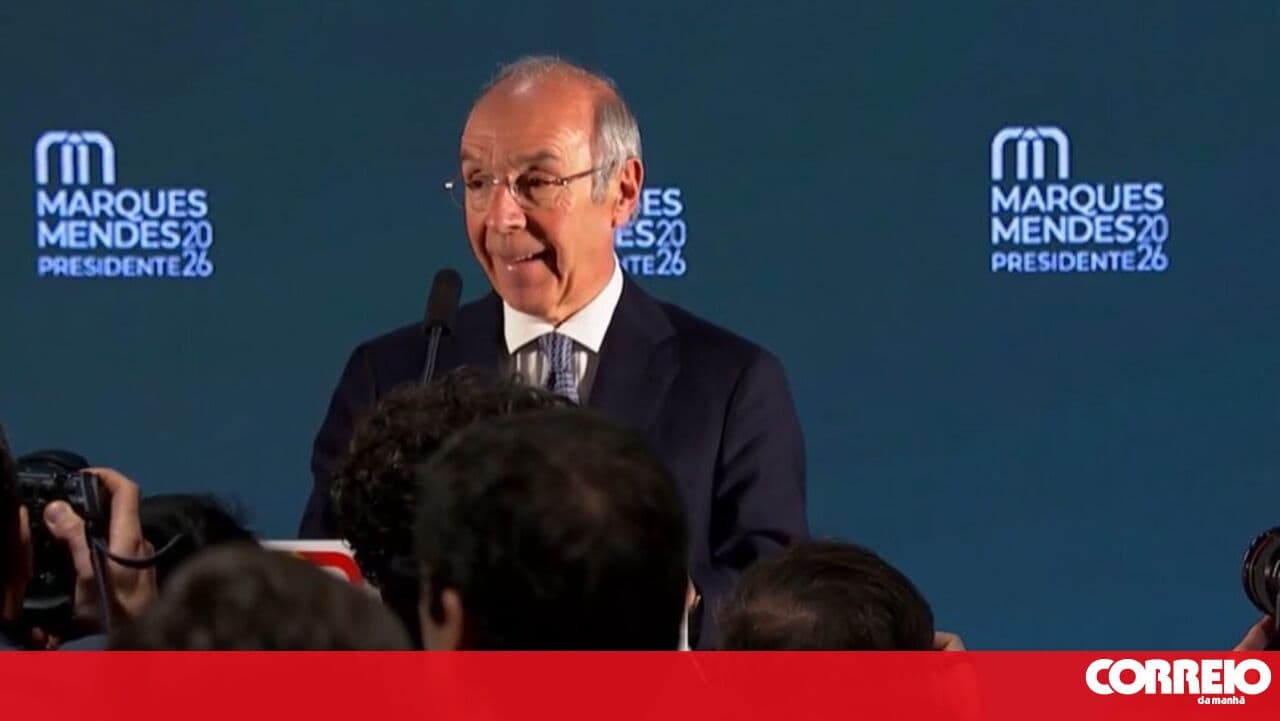
The candidate backed by the PSD finished fifth with 11.3% of the vote and did not confirm support for any candidate in the second round.

Polls were unanimous in predicting António José Seguro's victory.

In the aftermath of the presidential first round, several defeated candidates have signalled how the contest will shape up. Catarina Martins, António Filipe and Jorge Pinto have declared support for António José Seguro in the second round, consolidating a bloc of endorsements. Marques Mendes, who finished fifth, said he bears no grudges, while Gouveia e Melo vowed to keep serving the country, positioning himself as a continuity-minded figure. Cotrim de Figueiredo responded with pointed criticism of Montenegro, underlining a personalised element to the post‑election rhetoric and potential tensions within the opposition landscape.

You have to go back to Jorge Sampaio's re-election to find a higher share of the vote.

The parties that founded Portuguese democracy fell below 50% of the vote for the first time. The PSD recorded a share of the vote three times lower than its worst previous result. But the PS held steady and even increased. And on the right there are two new records. The story of the first round in charts and numbers.

The Socialist candidate achieved the PS's best result since Jorge Sampaio's re-election in 2001, surpassing Mário Soares's 25.43% in the first round of 1986. Ventura won only in Faro and Madeira.

António José Seguro won in 225 of the country’s 308 municipalities, seizing territory that had belonged to the AD and Chega in the legislative elections. Even so, André Ventura was the winner in 80 municipalities, including the whole of Madeira. Marques Mendes, meanwhile, only managed to receive the most votes in three municipalities.

Seguro dominates in Penamacor (where he was born), Ventura wins in Madeira, Cotrim and Gouveia e Melo win some parishes, and Marques Mendes wins in Fafe. See the geographical curiosities of the presidential election.

The abstention rate in this Sunday’s presidential election was 47.65%, compared with an abstention rate of 60.76% in the 2021 election. It is the lowest rate since the 2006 election, when it stood at 38.5%, but still above the exit poll projections. The poll by ...

Catarina Martins did not even reach the minimum threshold for public funding. She says she will continue working to elect a woman to the presidency at Belém Palace.

The lowest result came in the district of Bragança, where the candidate backed by the Bloc received just 1.09%

Both null votes and blank votes increased compared with 2021
Independent candidate Jorge Pinto fell short of 1% of the vote, even as the left-wing party Livre posted its best-ever result in the legislative elections. The presidential race advanced to a run-off between António José Seguro — who cast himself as a unifying 'president for all' — and André Ventura, who framed his campaign against the socialist space, underscoring sharp political divisions heading into the second round.