ECB signs agreements to explore three solutions for the implementation of the digital euro
Covered by these agreements are the standards of the European Card Payment Cooperation (ECPC), which includes SIBS MB, Nexo Standards, and the Berlin Group.

Latest news and stories about digital euro in Portugal for expats and residents.
Covered by these agreements are the standards of the European Card Payment Cooperation (ECPC), which includes SIBS MB, Nexo Standards, and the Berlin Group.

Economist Ricardo Reis believes that the digital euro will not be that relevant to the functioning of banks, but it will be very important for Europe to maintain its financial and monetary sovereignty, which is 'threatened' by private dollar-based stablecoins. 'Regarding the digital euro, it is important, but it is...'

The European Central Bank (ECB) argues that Europe must reduce its reliance on non-European payment providers amidst rising e-commerce and geopolitical tensions. ECB executive board member Piero Cipollone stated that a digital euro would provide a sovereign payment infrastructure, allowing citizens to pay digitally with central bank-issued money as they do with physical cash. Currently, two-thirds of card transactions in the eurozone are governed by non-European companies, and the ECB aims to strengthen European autonomy by offering a pan-European digital payment solution that is resilient, cost-effective, and independent of foreign infrastructure.

The European Central Bank (ECB) intends to improve payment infrastructures in the eurozone due to rapid technological changes, the entity announced this Tuesday, the 31st. In releasing its new payment strategy, the ECB explained that it complements the strategy regarding cash and expands the retail payments strategy to also cover wholesale, business-to-business, and cross-border payments. This new payment method from the ECB and national central banks in the eurozone takes into account “the gradual adoption of new technologies, such as tokenisation and distributed ledger technology,” the entity stated. Tokenisation converts rights to a physical or financial asset, such as real estate, artwork, or shares, into a digital token on blockchains, allowing for fractionalisation and sale. This technology breaks down traditional assets, facilitating liquidity and allowing small investors to access previously inaccessible markets. Distributed ledger technology unifies financial records through a single shared ledger, significantly reducing clearing and settlement costs. “Payments are fundamental to society and are changing rapidly,” said Piero Cipollone, the ECB executive board member responsible for payments and the digital euro. The ECB is working to ensure that payments are reliable, fast, competitive, and open to innovation, whether they are retail, wholesale, business-to-business, or cross-border, the official added. Lagarde promises that the digital euro will lower fees for small businesses.

The digital euro will increase competition, but the North American giant wants to be involved.

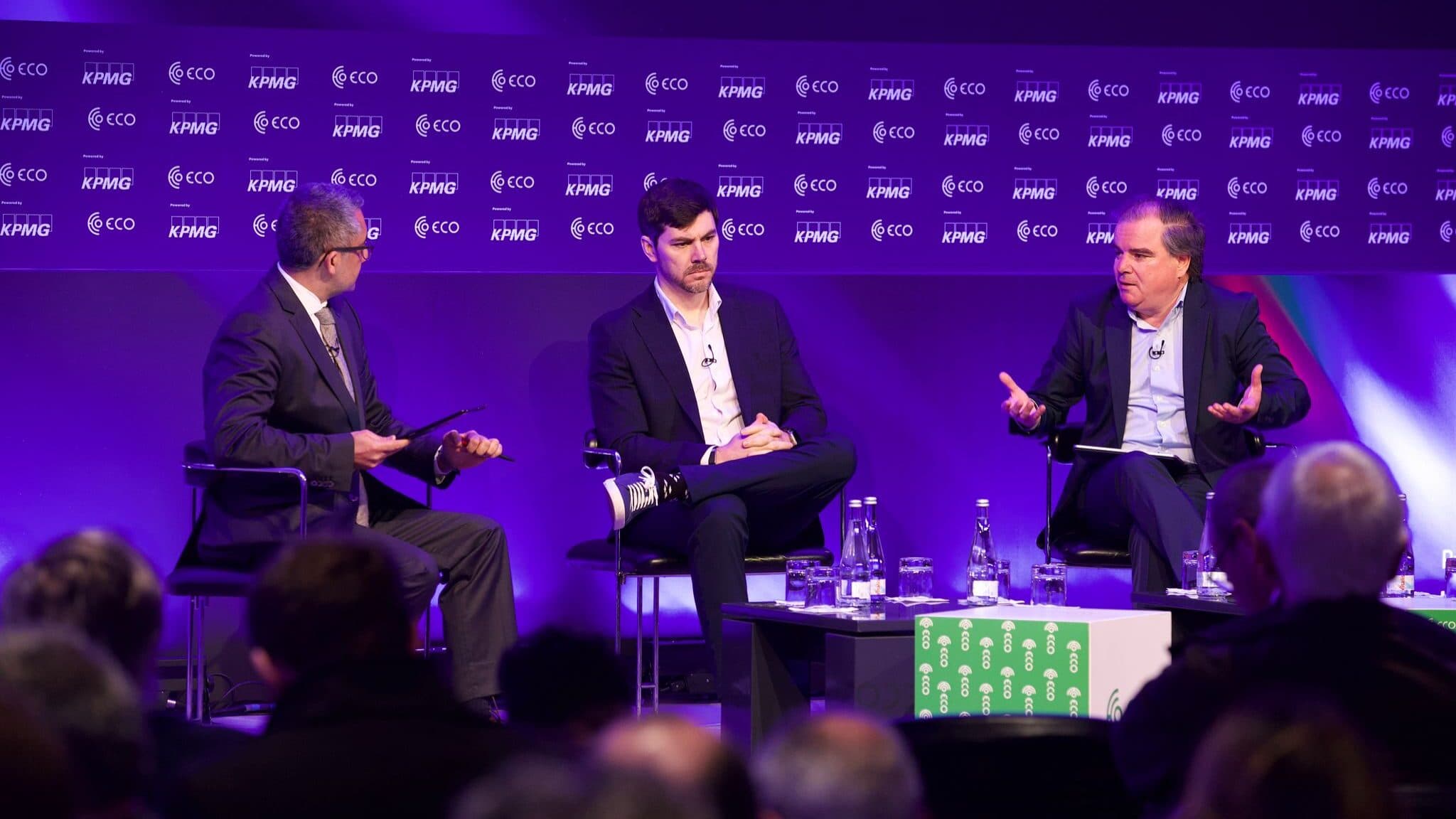
Diogo Mónica: I do not know of any government-mandated product that has been successful. (...) I do not know of a solution. Hélder Rosalino: Swift was created and sponsored by governments and it works well. Diogo Mónica: It is not something a consumer uses. With the digital euro, we are talking about something...

He noted that, among its advantages, it would be a means of payment and would not bear interest.

The Governor of the Bank of France said a digital euro is needed to counter risks and protect the euro as the EU's single currency.