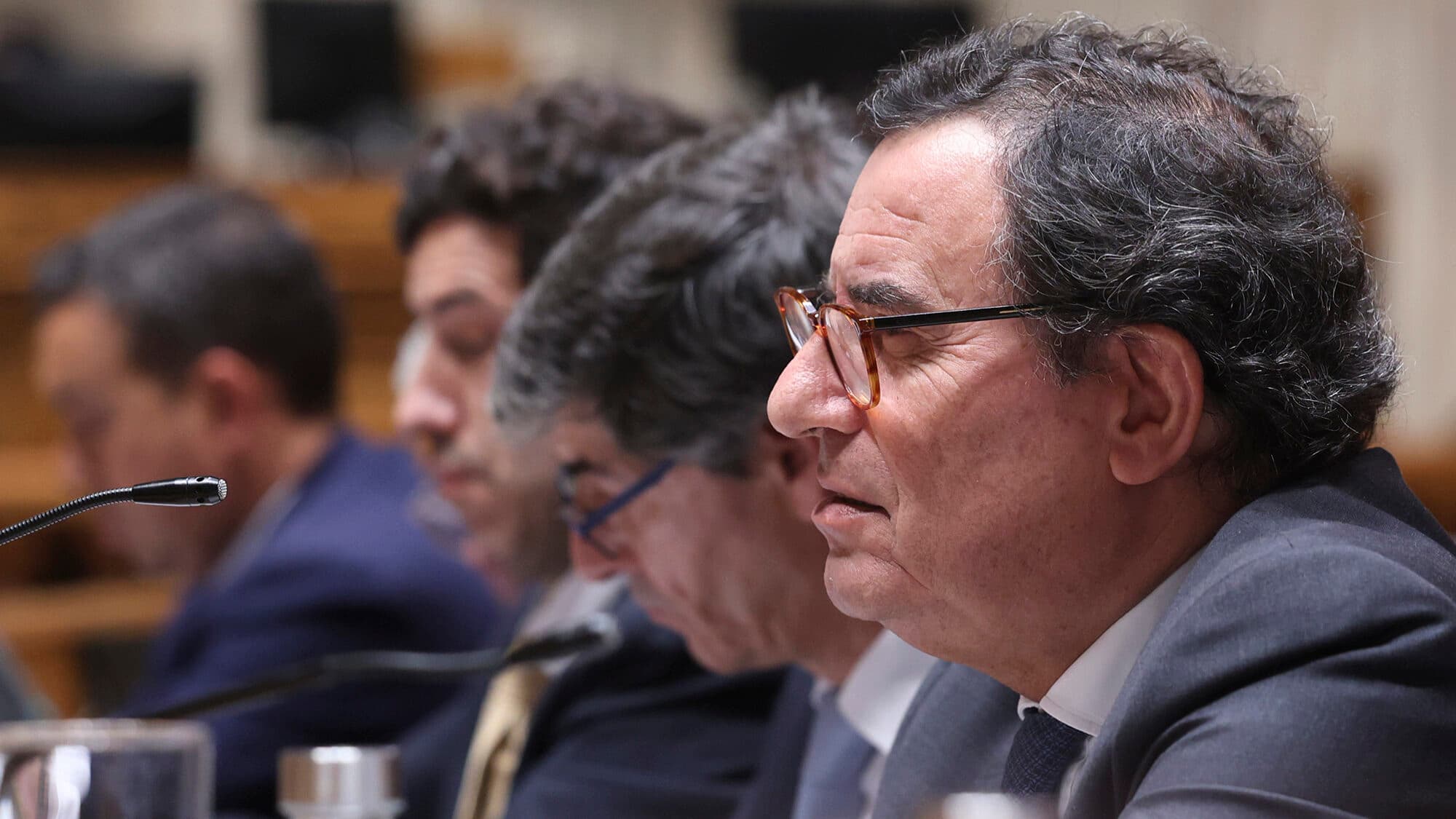
The newly elected leadership of the National Association of Portuguese Municipalities (ANMP) has formally presented its congress resolutions to the Government, raising detailed concerns about the draft law on local finances and the wider decentralisation process. The ANMP is seeking clarifications and safeguards to protect municipal budgets and competences, clearer arrangements for funding decentralisation, and secure access for municipalities to European funds under the next EU programming framework.
The debate must be conducted with seriousness and strategic vision. It is important to clarify whether there is a genuine willingness to increase the overall amount allocated to municipalities, whether there will be openness to assigning new revenues to local authorities, and whether the financing of decentralisation will finally be subject to a rigorous assessment - The opinion of the ANMP
This is an opportunity for 'true decentralisation', stated the Mayor. The proposal comes after the Government declared that the previous location at Terreiro do Paço was unfeasible.
The revision of the Local Finance Law, long requested by mayors, is another priority defined in the sectoral motion that the Mayor of Matosinhos is taking to the PS Congress.
The Minister of Economy and Territorial Cohesion, who oversees local authorities, lamented this Wednesday that there is no “great appetite” on the part of municipalities for the transfer of public buildings from the central administration to local councils, as part of the decentralisation process. During a hearing at the Parliamentary Committee on State Reform and Local Government...
Centralism in Portugal is also measured by the weight of the vote: a voter in Lisbon or Porto has more political influence in the election for the Assembly of the Republic than one in the interior regions.
If civil parishes ensure the overwhelming majority of local administrative interactions, the financial architecture should reflect this structural function.
More important than creating a new intermediate level of power, Portugal needs something simpler and more effective: true decentralisation of powers to the municipalities. Opinion by Manuel Cordeiro
An association led by Elisa Ferreira, Miguel Cadilhe, Carlos Tavares, and Fontaínhas Fernandes denounces the “concentration” of investment in Lisbon, which contradicts the principles of cohesion and decentralisation.
Decentralisation operates on two main levels: economic and political. The article discusses the adequacy of the current administrative territorial division in mainland Portugal, arguing that there are too many parish councils, which lack the necessary scale to perform significant functions. Despite previous reforms aimed at reducing the number of parishes, many have been reinstated due to local political pressures. The author suggests that the elimination of parishes should coincide with the creation of municipalities for populous areas. Additionally, the article highlights the absence of regional governance structures, which could enhance public investment and governance. A recent law aimed at transferring competencies to local authorities is also discussed, although the transferred powers are deemed to be of limited significance. The author concludes that establishing regional authorities would require both economic rationality and democratic representation.
Home News AIMA decentralisation rejected in Parliament AIMA decentralisation rejected in Parliament The Assembly of the Republic rejected a bill from the Iniciativa Liberal (IL) to remove the concentration of AIMA cases in the Lisbon Administrative Court ( TACL), due to the high number of pending
The terrible circumstances faced by the country in recent weeks have sparked a debate about decentralisation and regionalisation. This always happens when dealing with disasters that affect populations, such as the fires of 2017. Regardless of the area particularly affected by natural disasters, the same complaints abound: the populations were forgotten, firefighters took too long to arrive, Civil Protection ignored them, the coordination of rescue efforts was a fiasco, the military went elsewhere, and if it had been in Lisbon, everything would have been resolved! These outbursts, usually in front of television cameras, almost always elicit the same reactions: 'poor things' - the victims; 'rascals' - the politicians; let's send trucks with essential goods - the well-meaning supporters; we throw a budget with many zeros at them (always less than necessary) - the government. The few serious attempts to discuss the root of the problems fade into oblivion, and months later, everything is practically the same. Until the next tragedy. I have long believed that the difficulty of Public Administration in facing natural disasters results - besides the severity of the disasters, of course - from our inability to rationally think about territorial administrative organisation. First of all, it is important to clarify that the problem of decentralisation is not a legal issue. To solve it, economists, geographers, and historians are needed more than lawyers. There is an intimate relationship between the distribution of public functions and tasks and the territorial and human dimension. Among the more than 3000 parishes, there is one with fewer than a hundred inhabitants and several with more than sixty thousand. Of the 308 municipalities, one has more than half a million inhabitants, while others have fewer than two thousand. More than 250 municipalities have fewer inhabitants than the most populous parish (2021 Census data). It should be noted that all of mainland Portugal is divided into municipalities and parishes, constituting two overlapping networks. To my knowledge, this duplication does not exist in any other European country. The number of territorial public entities has a consequence: while Lisbon and Porto have the human dimension and financial resources to support a university, if they wish, most other municipalities would hardly have secondary schools without state support. Naturally, the ultimate reason for this difference lies in the increasingly unequal distribution of the population across the mainland territory, an aspect that cannot be ignored when implementing a truly decentralising policy. Highways with 'ghost' sections and the unfortunate and abandoned stadiums in the Algarve, Leiria, and Aveiro are there to certify the death of a pseudo-decentralising strategy. I will continue next week to discuss decentralisation further.
A commentary questioning opponents of regionalisation and those who resist devolving power, asking who fears empowering citizens with greater regional representation.