Latest news and stories about medical services in daily life in Portugal for expats and residents.
Man creates an atmosphere of terror in the emergency department, insulting and threatening doctors and other healthcare staff.

Eighteen emergency responders were at the scene, supported by seven vehicles.

From where she is, Candy knows she will only leave to go to heaven. But when the music comes into her room — in Joana and Rute's voices and instruments — a new joy makes her forget where she is and why.

The victim suffered, among other injuries, punctures to the heart and lungs. The suspect is in pre-trial detention.

National surveillance shows fewer influenza cases and a drop in intensive‑care admissions, according to the public health institute Dr Ricardo Jorge (Instituto Nacional de Saúde Doutor Ricardo Jorge). However, authorities warn that overall 'excess mortality' remains above typical seasonal levels, indicating the picture is improving but still worrying in aggregate. Those relying on public healthcare should remain vigilant for local updates and follow NHS guidance if they become ill.
The National Institute of Health Ricardo Jorge (Instituto Nacional de Saúde Ricardo Jorge or INSA) is Portugal's public health institute responsible for epidemiological surveillance, reference laboratories, research and technical guidance for the health system. INSA plays a central role in testing, tracking infectious diseases and issuing scientific advice used by the government and the Serviço Nacional de Saúde, so its findings often shape public-health measures and travel or testing guidance.
Excess mortality is the number of deaths above what would be expected based on historical averages (commonly a multi‑year baseline), and it captures deaths directly and indirectly caused by events like epidemics, heatwaves or healthcare disruptions. Portugal’s public health institute INSA (Instituto Nacional de Saúde Doutor Ricardo Jorge) monitors excess mortality to see the broader impact of seasonal illnesses and other stresses on the health system, so a drop in flu cases does not automatically mean overall mortality has returned to normal. Those following public‑health trends should note excess‑mortality figures because they show the pandemic and other factors’ continuing effect on population health.

Portuguese reporting indicates a sharp rise in monthly fees at some care homes — increases of roughly €500 — driven largely by a persistent labour shortage and higher operating costs. The hikes are prompting families to withdraw elderly relatives, intensifying pressure on informal care networks and raising equity and access concerns for vulnerable patients. Economically, the trend highlights how rising labour costs and constrained staffing can be passed directly to users in minimally regulated markets, with implications for social policy, funding models and workforce recruitment/retention. Separately, French coverage notes a demobilisation of farmers’ protests in Paris, underscoring a wider context of labour and sectoral tensions across services and primary production.

Reporting examines cases where the National Institute for Medical Emergency (Instituto Nacional de Emergência Médica) — INEM — failed to arrive in time, adding to concerns about pre-hospital response amid broader pressure on emergency services. The piece links ambulance and response delays to current strains across the system rather than isolated incidents. Those relying on urgent medical care should note potential delays and ensure they understand local emergency procedures and alternative routes to care.

The National Institute of Medical Emergency (Instituto Nacional de Emergência Médica), known as INEM, coordinates Portugal’s pre-hospital emergency care, ambulance dispatch and medical response to 112 calls. It matters to expats because INEM is responsible for ambulance response times and on-scene care — incidents like the reported three-hour wait in Seixal can trigger investigations, affect public confidence and influence how quickly you can expect help in an emergency.

Rising costs of medicines are a primary barrier to healthcare for the most disadvantaged, forcing some patients to cancel appointments and tests for lack of funds. This creates widening inequalities in health outcomes and places additional strain on services; addressing the problem requires policy responses such as targeted subsidies, improved coverage, price regulation and better access to affordable medicines.

In 2025, 14.26% of people reported not seeking healthcare when needed, reflecting significant access barriers in Portugal. More than half of the poorest households cannot afford all prescribed medication, while over 50% of initial consultations in the National Health Service (SNS) occur outside the appropriate timeframe. These findings point to intersecting problems of affordability and timeliness that disproportionately affect low-income groups and signal the need for targeted policy responses to improve medication coverage, reduce waiting times and strengthen primary-care access.

A Nova SBE survey shows the share of people using a private GP climbed from 11.8% in 2023 to 15.5% in 2025, while the share saying they rely exclusively on the National Health Service (Serviço Nacional de Saúde or SNS) fell from 90% to 82% over three years. Observers say rising private demand reflects pressure on public services and waiting times, and could mean more residents choose private clinics for continuity of care. Patients considering private options should compare costs, contracts and whether their insurance covers consultations.

A study from Nova SBE finds 51.85% of respondents said they had self-medicated at some point, with higher rates among young people, those with more education and people without a family doctor (médico de família). Researchers warn self-medication is commonly used for mental-health issues and can be risky for people with chronic conditions if not discussed with a clinician. Those relying on regular prescriptions should ensure continuity with a registered family doctor and bring medication lists to appointments.

A new report finds episodes of illness rising particularly among younger people in Portugal, contributing to an overall increase in the number of people falling ill while persistent barriers to accessing the SNS (Serviço Nacional de Saúde) remain high. The data suggest growing pressure on primary and urgent care, uneven access driven by geographic, capacity and administrative constraints, and possible underlying drivers such as changing infection patterns, mental‑health needs and disruptions to routine care. The report calls for targeted policy responses to expand capacity, improve outreach to younger cohorts and reduce practical barriers to care, and for more granular analysis to identify regional and demographic causes.

Emergency departments and hospitals are experiencing significant difficulty admitting patients presenting with respiratory problems, creating bottlenecks in patient flow and raising concerns about care delays and safety. The situation appears driven by high demand for acute respiratory care combined with constrained inpatient capacity, staffing pressures and infection-control requirements that limit bed availability. This strain on emergency and hospital services risks longer waits, compromised care coordination and wider impacts on public health and system resilience unless capacity or operational responses are implemented.

Rising influenza activity is increasing admissions to intensive care and placing growing pressure on emergency departments. Health authorities warn the epidemic has not yet peaked, and the country is experiencing higher-than-expected mortality for the season, raising concerns about healthcare capacity and the potential need for surge planning and resource prioritisation.

The Portuguese Firefighters' League (LBP) has established a weekend task force of four additional ambulances to bolster pre-hospital emergency response and ease pressure on hospitals. The emergency vehicles — drawn from the Ajuda, Cabo Ruivo, Camarate and Cascais brigades — will be based at the LBP headquarters, while a commander will be on permanent duty at CAASO (Centre for Operational Monitoring and Support) to coordinate operations. The deployment is a targeted, short-term capacity boost intended to improve response times during busy periods and provide centralised operational oversight.

Beja Hospital’s obstetrics and gynaecology emergency service will be closed overnight due to a shortage of doctors, operating from 20:00 on Saturday until 08:00 on Sunday and again from 20:00 on Sunday until 08:00 on Monday. The closures are attributed to an inability to complete the rota, raising concerns about patient access to urgent maternity and gynaecological care and potential pressure on neighbouring services. An accompanying opinion notes systemic failings in emergency logistics — exemplified by ambulances held up by missing stretchers — as symptomatic of wider incompetence in healthcare operations.
PSD MP Miguel Guimarães welcomed the announcement to purchase 245 ambulances, saying it will allow INEM to increase its response capacity across multiple locations, notably Greater Lisbon and Setúbal. Analytically, the investment should improve coverage and potentially reduce response times in high-demand areas, but its effectiveness will depend on deployment strategy, crew availability and integration with existing emergency services. Close monitoring of allocation and operational metrics will be required to ensure the intended gains in emergency healthcare delivery are realised.

The prime minister announced what was described as “the largest investment in ambulances in over a decade” — 275 new vehicles — less than 36 hours after three citizens were reported to have died while waiting for care. Critics have called the timing “strange” and labelled the move demagoguery, arguing it risks masking systemic negligence in emergency services rather than addressing deeper policy and resourcing failures in healthcare and public safety. The episode has intensified calls for transparent planning, independent oversight and comprehensive reforms to emergency medical services rather than one-off equipment purchases.

Carlos Enes of CNN Portugal examines recurring, serious failings in Portugal’s emergency response system, arguing that political and union attacks on INEM distract from patient safety. He urges giving INEM operational authority, requiring ULS hospitals to free trolleys and beds, and restoring clinical judgement as the primary guide for urgent care, while calling for systemic changes to protect public health.

Almost a year after the minister warned of unacceptable A&E waiting times, there has been no meaningful improvement. Persistent delays point to systemic strain on emergency services, heighten risks to patient safety and wellbeing, and indicate a need for urgent policy and resource interventions rather than repeated warnings.

Marques Mendes urged the President and the Government not to stall a bill establishing regional obstetric emergency departments, saying he hopes they decide before he assumes the Presidency on 9 March to avoid it becoming one of his first decisions in office.

Ten years ago, Garcia de Orta Hospital in Almada opened the first hospital-at-home unit. Today there are already 50 Local Health Units offering this service — a way of delivering healthcare to 400 patients receiving inpatient care outside the hospital.

On Saturday the obstetrics and gynaecology emergency departments at the hospitals in Abrantes, Setúbal and Portimão, and the obstetrics emergency department in Vila Franca de Xira, will be closed. The Setúbal emergency department reopens on Sunday.

Today the terms of ten boards of directors of Local Health Units (ULS) across Portugal come to an end, including the board at Hospital de São José. Rosa Valente Matos, who has led São José for six years, said she was not given any justification for the decision not to renew her mandate. The SNS administration confirmed several appointments will not be renewed and noted that the São José post was awarded to a PSD-affiliated figure; its 18:00 bulletin also included an analysis of possible developments in conflicts in Eastern Europe and the Middle East, framing the personnel changes within wider political and policy considerations.

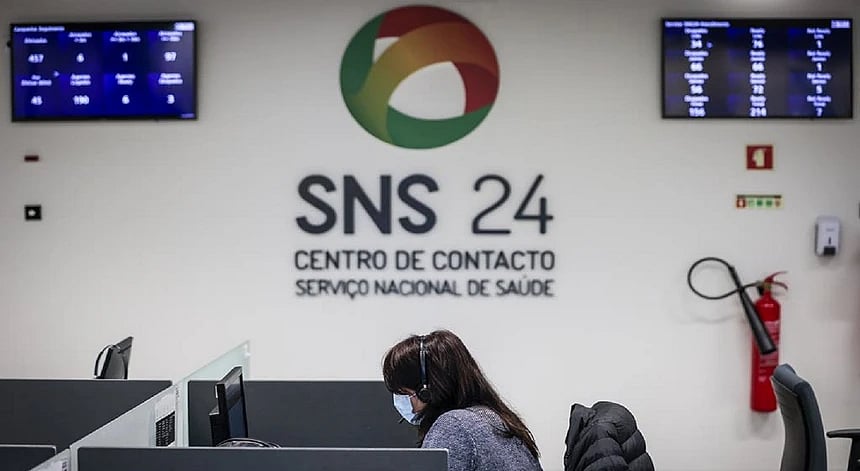
In 2025 SNS24 handled over 5.7 million calls and scheduled more than one million primary healthcare appointments — about 2,800 per day — frequently referring patients to same‑day or next‑day in‑person primary care. The data highlights SNS24’s expanding role in triage and in facilitating timely access to primary care through a telehealth appointment‑scheduling function.
Four gynaecology and obstetrics emergency departments have been closed. In Amadora‑Sintra only the gynaecology emergency department is shut; meanwhile the general emergency at Hospital Fernando Fonseca (Amadora‑Sintra) reported a three‑hour wait for patients classed as very urgent as of 20:00, according to the SNS Portal. Santa Maria recorded a two‑and‑a‑half‑hour wait for very urgent cases, and Hospital de Loures topped the waiting‑time list with around three‑hour waits for urgent patients.