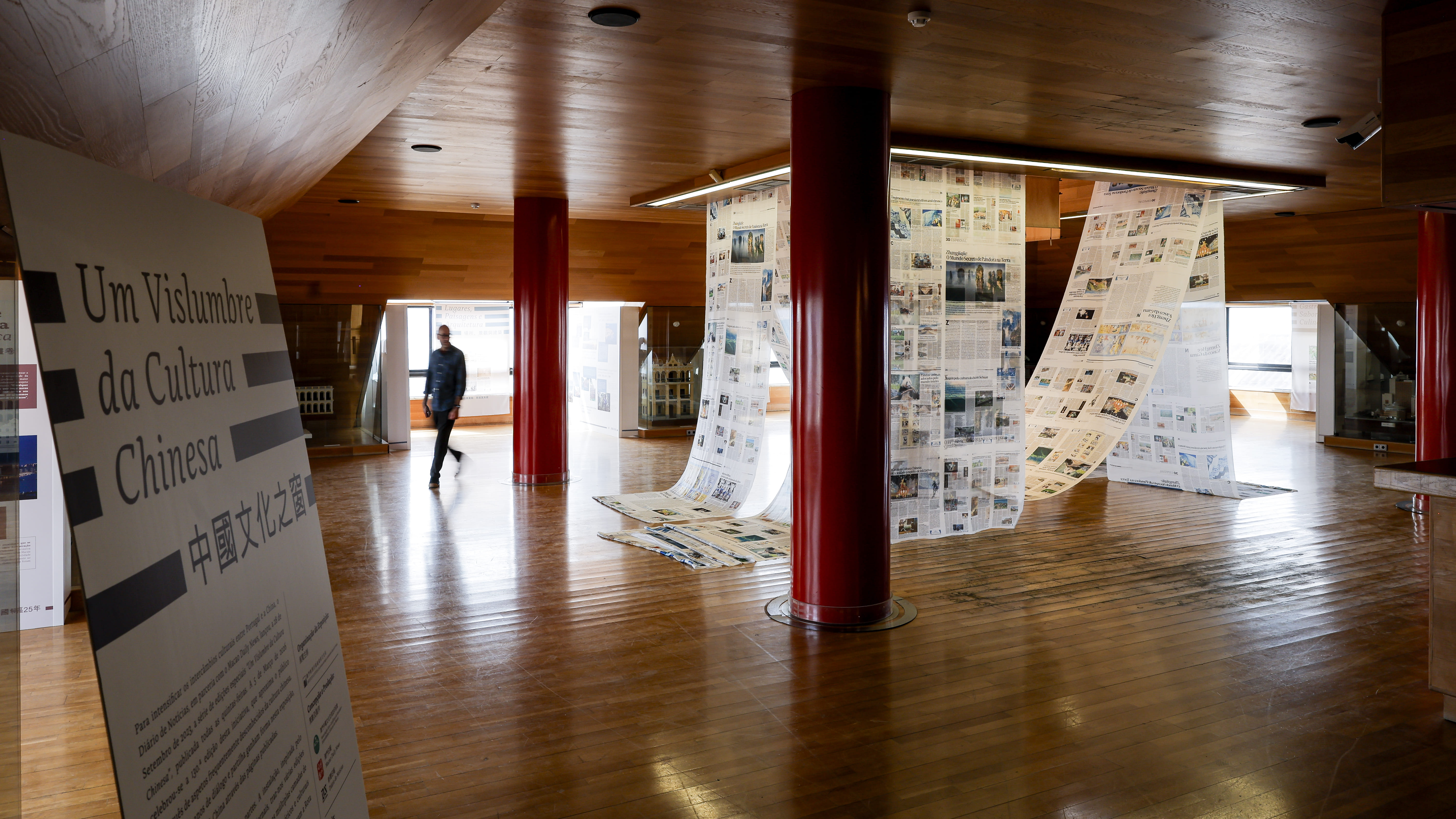
An exhibition titled 'A Glimpse of Chinese Culture' is on display at the Scientific and Cultural Centre of Macau (CCCM) in Lisbon from 19 April to 1 May. It showcases journalistic texts published over the last two years as part of a joint initiative between the Portuguese newspaper Diário de Notícias (DN) and the Macao Daily News. CCCM president Carmen Amado Mendes describes the exhibition as the materialisation of ongoing editorial and cultural exchange, highlighting Macau's role as a platform for mediation between China and Portugal. The exhibition explores themes of cultural continuity, the legacy of Portuguese influence in Macau, and the enduring 500-year relationship between the two regions, which DN director Filipe Alves describes as a bridge for the future.
The University of Coimbra and Renmin University of China launch a project to support the development of cultural exchanges between the European and Asian countries.
The idea comes from the Tunisian ambassador to Portugal, Naoufel Hdia. Musicians from both sides are already rehearsing to perform a show in Lisbon and another in Tunisia at the end of spring.
Brazil has taken another step in its efforts to combat discrimination and xenophobia against Brazilian students in Portuguese schools. The Consulate-General in Lisbon has launched a competition to reward work that promotes positive relations between the two countries. Prizes for students and teachers range from 80 to 500 euros and include trips to Brazil. The launch was attended by the ambassador and the consul in Lisbon.
The event, which is part of the closing cycle of the PROCULTURA project, runs until this Saturday, March 28. The EU has allocated 19 million euros to strengthen the cultural sector.
In the third edition of the initiative, feature films and short films will receive joint funding from Brazil, Portugal, and Angola and will be broadcast on public television stations in CPLP countries.
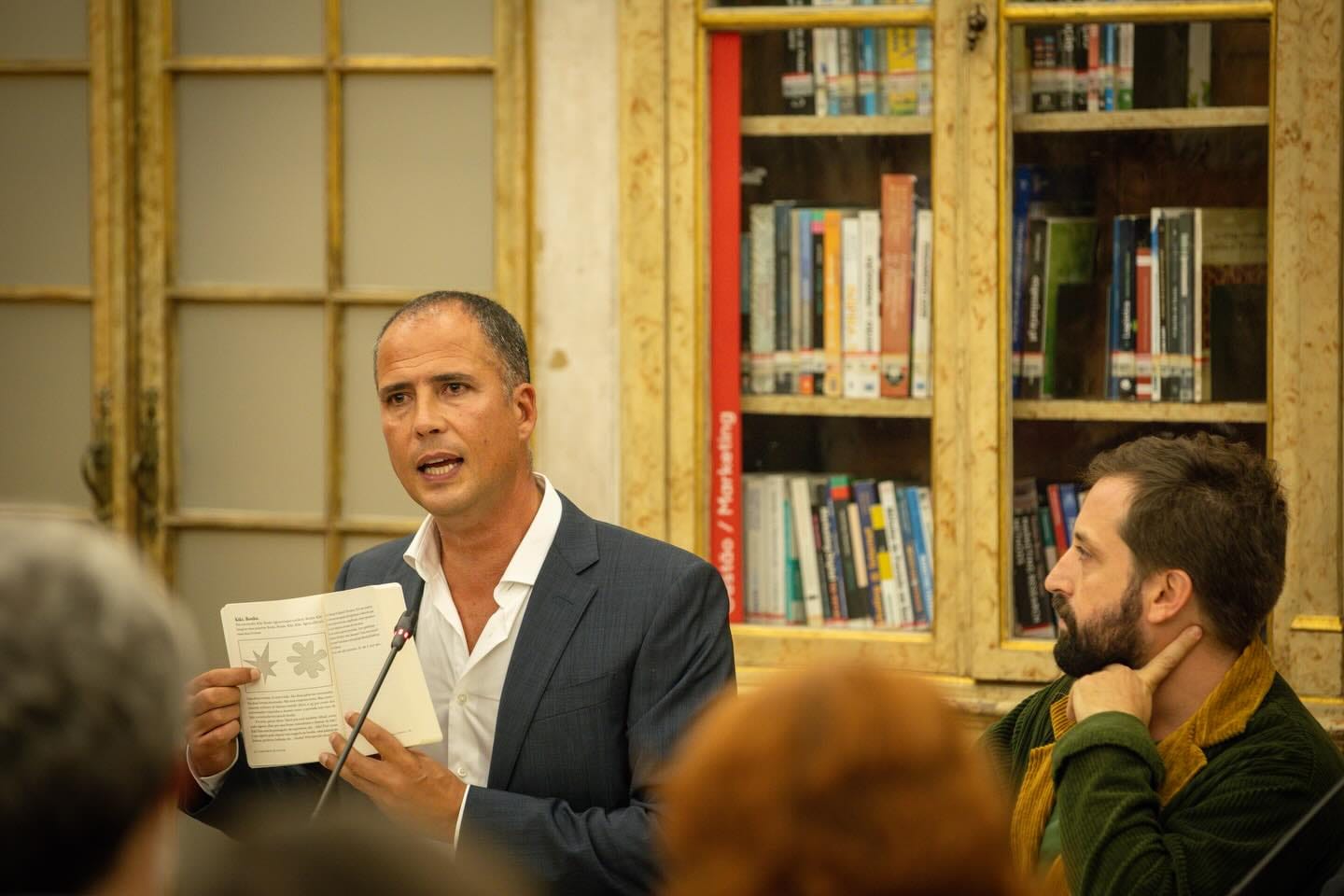
After participating in the launch of Brazilian actor and writer Gregório Duvivier's latest book in Lisbon, Ricardo Araújo Pereira highlighted the importance of cultural exchange between Brazil and Portugal and criticised the rise of xenophobic rhetoric in the country. The Portuguese comedian argued that Portugal's history and social formation make such behaviour particularly contradictory, given that the movement of people and cultures has always been central to the nation's identity. During the event at the Palácio Galveias Library, he noted that racism is stupid everywhere, but especially so in Portugal due to its history of miscegenation. He also emphasised the role of humour and culture in reducing prejudice, noting that much rejection stems from ignorance. The event also featured discussions on linguistic differences between the two countries, with Pereira highlighting how humour helps bridge the gap between Brazilian and Portuguese cultures.
Lara Aleixo, a Portuguese singer from Turquel, has become a cultural bridge between Portugal and Kazakhstan. Her passion for the country, its language, and its music superstar, Dimash Qudaibergen, has earned her significant popularity in the Central Asian nation. Aleixo has performed the Kazakh national anthem, released an original song in Kazakh, and recorded a viral duet with local pop star Kazybek Kuraiysh. The Portuguese Embassy in Astana actively promotes her work, and the city even features traditional Portuguese pastéis de nata, highlighting the growing, albeit distant, connection between the two countries.
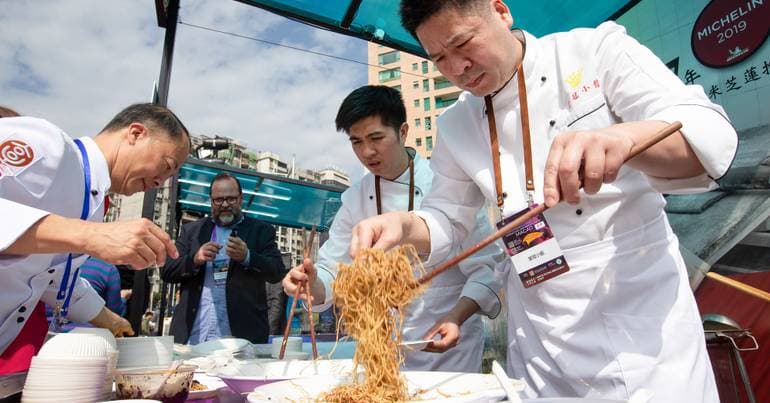
Santa Maria da Feira is bringing chefs Elisabete Miranda and Clara Santos to Macau. Matosinhos will be making its debut in this edition. Culinary demonstrations and academic debates will be among the activities.
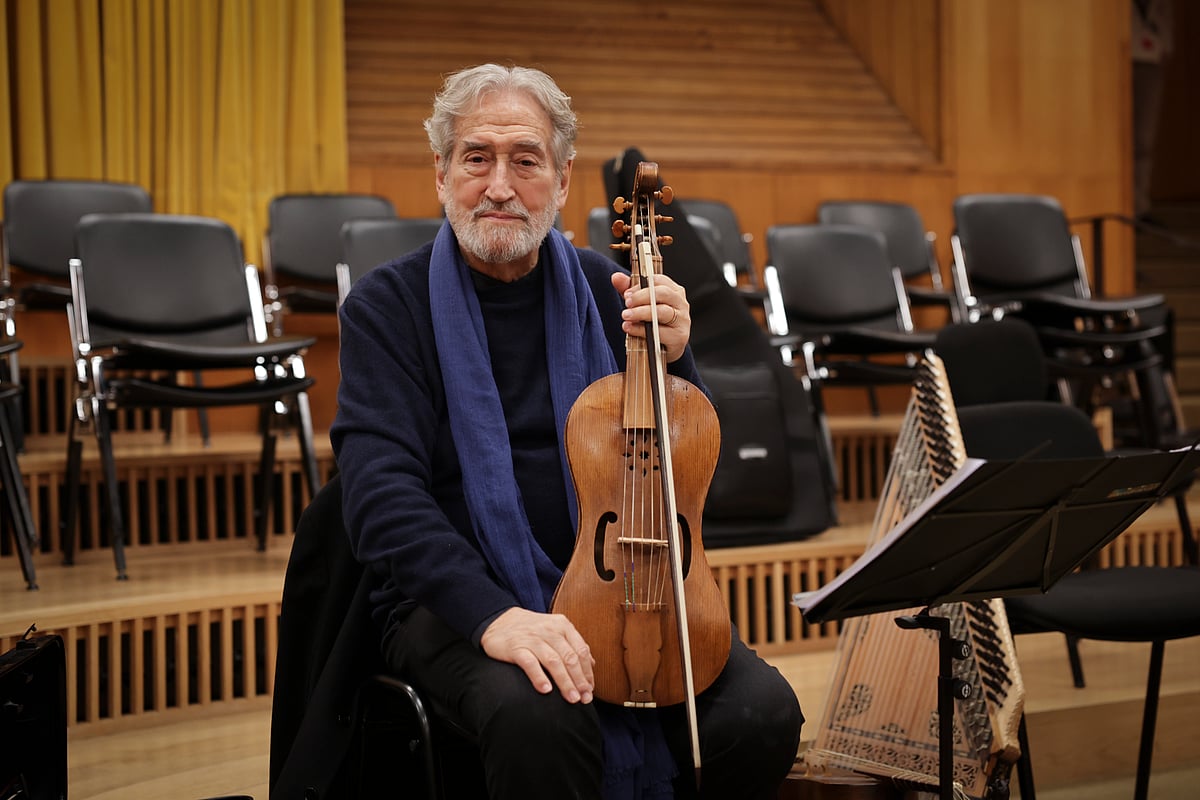
This concert - East-West - like Les Routes de l’Esclavage, seems to respond to a very clear ethical and political concern. Savall believes that ancient music can be a tool for peace and not just a symbolic gesture. The concert features representatives from very different cultures, including musicians like David Mayoral, who comes from historical music. Savall highlights the natural dialogue between medieval music and Eastern music due to their shared modal and monodic systems. He reflects on his project initiated in 2017 to help musicians from migrant backgrounds, emphasizing the importance of dialogue, peace, and respect for other cultures through music. He also discusses the historical context of European music and the need to remember the past, particularly regarding the legacy of slavery. Savall expresses that music serves as a powerful means to connect with history and emotions, advocating for a broader understanding of cultural exchanges in music.
It's surprising how much we learn when we decide to listen and take an interest in what others have to share. I continue to meet women and their life stories during rides in app-based cars. Each trip is an opportunity to view the world from a different perspective, understanding the journey of someone who has also worked hard to be there, heading in that direction. In the last month, I met several Brazilian drivers. We laughed, shared memories, and future aspirations. Different accents carry memories, landscapes, and feelings; they awaken the imagination and curiosity. 'Are you well?' greeted the driver from Minas Gerais as she placed my suitcase in the back of the vehicle. I immediately recognized that warm way of speaking that seems to invite one for coffee with warm pão de queijo. The kind reception already indicated a lively conversation along the way. Whenever I hear that cadence, I remember the year I lived in Contagem (MG) for my postgraduate studies. It was a time of effort, adaptation, and good friendships. Living in Portugal for fifteen years, the driver that afternoon was a woman who forged her own path. She emigrated alone, worked as an elderly caregiver for ten years, and has been driving passengers to their destinations for four years. Despite her ever-present smile, she revealed that she has lost enthusiasm due to the lack of respect and disregard experienced in the Lusitanian lands. 'There’s always someone looking at you sideways. Hatred is more explicit. The media has favoured the exposure of feelings - for better or worse,' she reflected. Another day, I was pressed for time to reach a training session when I was welcomed by a driver from Rio de Janeiro who was born in Aveiro. At 65, she is retired from a long career in law but remains active. She is a professor of Constitutional and Administrative Law, also graduated in Anthropology, and has begun studying immigration. We exchanged views on the well-known attendant law, discussed politics, and how religious factors can mobilise emotions. With her anthropological knowledge, she warned: 'In Sociology, we study the SELF in relation to the OTHER, and when we put a face to that OTHER, it becomes easy to manipulate.' In a way, the carioca from Aveiro conducts a social experiment while interacting with clients, discovering each passenger's ideologies and behaviours in the world. On a trip to a meeting, I met a woman from Pernambuco who has lived in Lisbon for nine years. In Brazil, she worked in sales, and in Portugal, she drives for an app after resuming her career post-maternity. She commented on the differences in commissions offered in both markets - 'Insurance doesn’t pay here.' - and her plans to return to the real estate sector. She navigates life with daily experiences in finding better routes. 'A gentleman prayed over me, and God told me I would change countries,' shared another driver, originally from Goiânia, known as the land of pequi. A story that could be from magical realism but materialised twenty-six years ago, the time she has lived in Lisbon. She has tried to bring her daughter and mother to live together, but neither adapted to the cold climate. 'I don’t see myself there (in Brazil), I love it here,' she explained, recounting the critical situation of her three siblings living in Leiria after the Kristen depression: 'A chaos. You know when there’s a war and it ends? Everything is destroyed.' This Saturday, I met another Brazilian from Paraná, who has lived in Loures for twenty-four years. She emigrated to stay for just two years, tried to return after ten, but couldn’t. 'I found it strange, how can we not adapt to our own country?' she recalled when she briefly returned to Brazil. Now permanently living in Portugal, last year, she took her twelve-year-old son to connect a bit with his roots. 'He is proud to be Brazilian.' We said our goodbyes, and I pondered how it would be to return to Brazil for good. But for now, the only change planned is to a new home. Starting next week, I will begin a period of adaptation within the same land. DN Brasil is a section of Diário de Notícias dedicated to the Brazilian community living or intending to live in Portugal. The texts are written in Brazilian Portuguese.
Curated by Sergipe-born Willame Lima, the exhibition 'A Nordeste do Nordeste – Deslocamentos' (The Northeast of the Northeast – Displacements), featuring around 50 works, strengthens cultural dialogues between Brazil and Portugal.
Portuguese artist Rita GT is the creator of “The Circle of Gold Filigree Beads: Historical Connections between Bahia and Viana do Castelo”, which will be presented this Sunday (18 Feb) in Salvador.
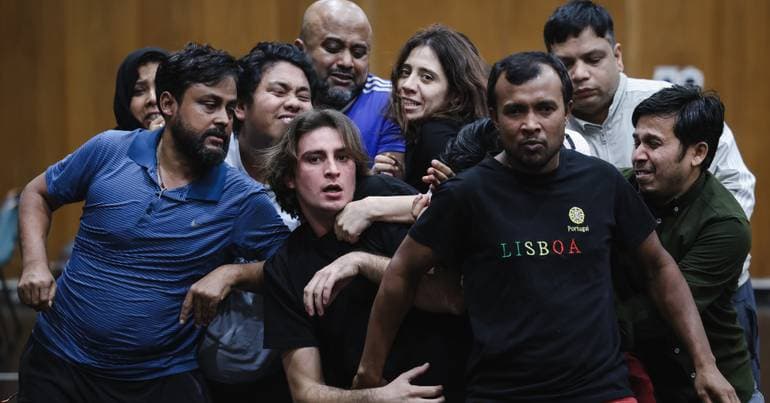
From the photograph that outraged the country, a show has emerged where immigrants from Bangladesh and Nepal share their stories for the first time. “An Enemy of the People” premieres this Saturday in Braga.