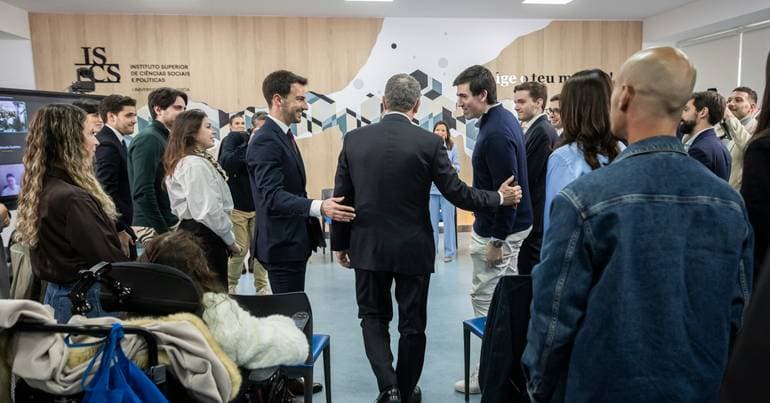
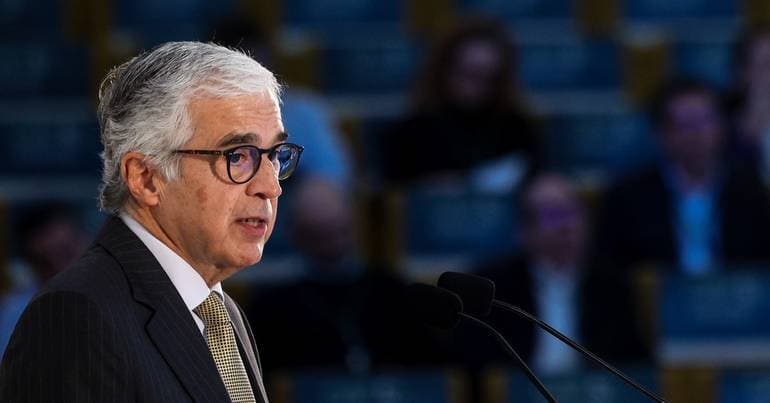
António José Seguro issued an appeal to young people to defend freedom, reminding them that “April does not need solemn guardians. It needs attentive, free citizens with critical capacity.”
The majority of Portuguese people did not participate in the activities of associations or organisations over the last year, revealing still low levels of civic engagement. According to this poll, among those who do participate, cultural associations and political parties stand out.
It is a journey through the history of this civic association founded in 1936, highlighting its contribution to building public awareness through debate, research, and intervention during key moments in the city's urban history.
An analysis of the challenges facing the political system and the role of the association SEDES and civic engagement in strengthening Portuguese democracy.
From cheap criticism to apathy, democracy demands more than clicks and soundbites. Silence is a political choice and omission hands the future over to interests that are not our own. A column by Ricardo Laja.
A few days before the elections in Hungary, tens of thousands of people gathered in Budapest for a seven-hour concert to mobilise the vote and call for change after 16 years of Viktor Orbán's power. More than 50 artists participated in the event organised by the Civic Resistance Movement, which also included Hungarians living abroad, including in Portugal. An initiative that seeks above all to involve younger people, at a time when polls point to an opposition advantage among voters under 30.
This is a call for civic participation: to think about the country, discuss solutions and contribute, in an informed and responsible way, to its collective future.
Luís Garcia believes that “it is not enough to talk about citizenship, one must live it,” and that it is not limited to holding political office or working within institutions. He states that “participation begins with simple things.”
There are rich and poor. White and black. Christians and Muslims. Jews and Gentiles. An endless array of differences and divisions. But there is one division that overrides them all: between democrats and non-democrats. Opinion by António Barreto
Conexão Lusófona states that a letter addressed to António José Seguro requests that youth be recognised as an effective partner in defining the country's national and international priorities.
In an increasingly abstract and heterogeneous world, security stands out as one of the main pillars of human freedom. The growing number of people occupying the same territory, combined with a dominant feeling of detachment from the Central State, generates a sense of alienation and insecurity among citizens that has been widely discussed in public opinion. Locally, the weakening of community spirit is the most natural consequence of this phenomenon. Despite the active efforts of national security forces - police authorities, Civil Protection, and the Army - to ensure safety, local municipalities are essential to achieving this goal without undermining each citizen's sense of belonging to their community. Although they have various tools at their disposal to promote the safety of their residents, such as facilitating cooperation among existing authorities and investing in the refurbishment of police facilities, municipalities can only pursue this goal if they have more resources to protect themselves. Investing in the security institutions closest to residents is, therefore, the most appropriate solution to this problem. This is exemplified by Municipal Police, for which some responsibilities of national security forces should be decentralised. Although still in its infancy, this measure offers numerous advantages. With more responsibilities, police officers would be less tied to administrative tasks, allowing them to be a more regular presence on the streets of each municipality. In turn, security technology would gain a firmer purpose, enabling immediate police action in response to incidents rather than merely signalling them for national authorities' action. The feeling of security is neither a myth nor superficial; it is a demand of an increasingly abstract political world, where local municipalities have a fundamental role to play. For instance, Cascais has been fulfilling this goal by training 115 officers, opening a competition for 100 new positions in the Municipal Police, acquiring 50 new vehicles, and installing 168 surveillance cameras, with plans to increase this number to 440 in the coming years. However, to truly ensure citizens' safety, a coherent legal framework is essential to grant more powers to Municipal Police. In a safer municipality, family comfort increases, community spirit thrives; national and international businesses are attracted, generating more jobs for residents, while tourism flourishes; and, finally, doors open to the construction of active cultural communities, where citizens act in solidarity with one another. Where there is security, there is freedom; and it is up to municipalities to be its guarantors.
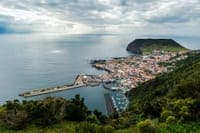
The region, or electoral constituency, is the Azores: six of the ten municipalities with the highest abstention rates are Azorean and there are 19 with abstention above 50%. According to sociologist Fernando Diogo, of the University of the Azores and a researcher at CICS.Nova, the solution may take decades but lies in schools: “It is not necessary to create new subjects, it is necessary to create a tradition of debates within schools; there is a lack of public engagement in the 'res publica'.”
In one of the three polling stations run by the Union of Parishes of Oliveira, children vote on the transport they use to get to school, on school meals and on sport — or even on superheroes.
Geração V hosts a debate with five representatives of the candidates: Eva Brás Pinho (Mendes), Jorge Teixeira (Cotrim), Frederico Tropa (Ventura), Júlia Araújo (Gouveia e Melo) and Renato Daniel (Seguro).
The President of the Assembly of the Republic says the solution to threats to democracies 'cannot rely solely on security and defence', but must also involve 'greater participation, stronger civic engagement and better information'.
With the 2026 presidential election approaching, debate is growing about democratic representation in Portugal. The question arises: do young people feel that any candidate addresses their concerns? Opinion column by Joana Vieira Barroso.