Portugal is far from circular economy targets
Portugal is currently failing to meet its established goals regarding the circular economy.

Latest news and stories about circular economy in Portugal for expats and residents.
Portugal is currently failing to meet its established goals regarding the circular economy.

An analysis of the millions of unused mobile devices in Portugal and the growing importance of the refurbishment market.

The Portuguese Pact for Plastics 2030 platform states that the goals reinforce “the commitment to the transition to a circular economy for plastics in Portugal”.

Portugal is committing to a circular economy strategy through 2030, though the country continues to encounter significant structural obstacles.

Smart Waste Portugal is organising a conference focused on a competitive circular economy, scheduled for April 22nd, as reported by Ambiente Magazine.

In 2020, an unprecedented event occurred: the weight of everything humanity has produced surpassed the total weight of all life on Earth. This data comes from a study published in the journal Nature, which highlights the urgent need to transition from waste management to resource management. The geopolitical potential of waste lies in two main pillars: replacing imported natural gas with biomethane derived from organic waste, and recovering strategic minerals through recycling. These pillars are essential for reducing Europe's dependence on third-party countries for energy and critical raw materials, thereby strengthening the continent's strategic autonomy.
Portugal is facing a demanding moment in waste policy. The European context will not allow for prolonged deviations between assumed targets and achieved results.

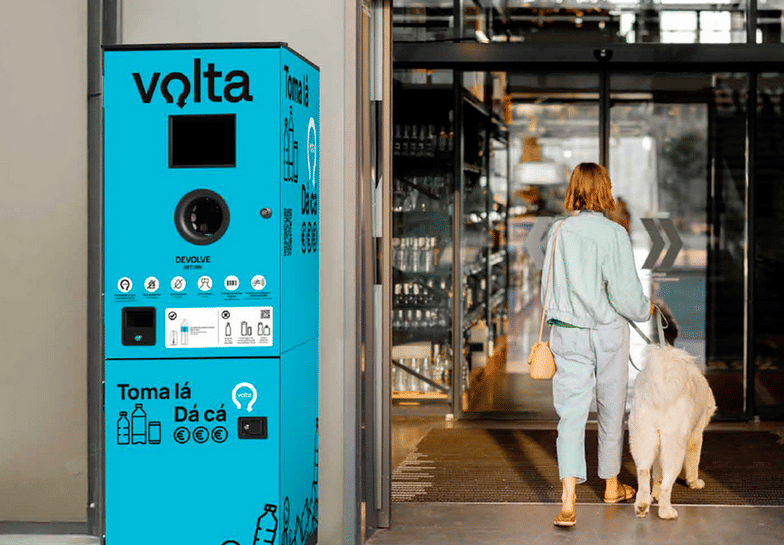
Portugal is the nineteenth country to join this system. The goal is to allow materials to be transformed into new packaging and to strengthen the circular economy.

Starting Friday, beverage containers will be worth 10 cents when returned empty to automated machines, a system the government considers one of Portugal's largest environmental projects. Known as 'Volta', the Deposit and Refund System (DRS) aims to boost recycling rates for single-use plastic and metal bottles by providing a financial incentive. While the system is launching with 2,500 machines and thousands of collection points, consumers are advised that only containers marked with the 'Volta' symbol will be accepted during the initial transition phase.

Waste is ceasing to be a cost and becoming a business opportunity. From construction to textiles, including footwear and natural stone, more and more Portuguese companies are transforming waste into raw materials. Discover the examples. A pair of architects from Minho 'cover' their business with construction rubble after six years of...

Architects Luís Lima and Patrícia Gomes have launched the Matterpieces project, which transforms construction waste into sustainable materials for flooring, wall coverings, and design objects. By repurposing materials like glass, tiles, and bricks that would otherwise end up in landfills, the duo has already diverted 90 tonnes of waste and generated 100,000 euros in revenue last year. They are now looking to expand into international markets, targeting the mid-to-high-end segment where sustainability is highly valued.

PAEC 2030 aims to extend product lifespans, reduce landfill use, and align Portugal with European regulations, but doubts persist regarding funding and implementation in a country that wastes a great deal.

Before metal packaging or sustainability became central topics, there were already sectors operating according to principles that we now associate with the circular economy.

The Portuguese Business Association (AEP) has launched the first 'Practical Guide to Circular Economy and Waste Management' to support micro, small, and medium-sized enterprises (MSMEs) in adopting efficient resource use and waste management practices. It cites the model developed by Lipor as a success story, considered a 'benchmark'.

As the EU advances its circular economy agenda, textile services’ circular models are already delivering sustainability, resilience and strategic autonomy — and should be recognized as key partners in upcoming legislation.

Waste less. Reuse more. The circular economy is redefining what we produce and how we make it. Find out why it is an opportunity, not just a responsibility.

A University of Aveiro investigation revealed that fishing waste from Cape hake contains bioactive lipids with high potential for the food and pharmaceutical industries, the institution announced on Monday. The study analysed trimmings and offcuts from the cutting and filleting process of that fish, which are normally discarded by companies in the sector...

“The next year will be decisive for the advancement of the circular economy, both in Portugal and in the European Union. We are entering a phase of regulatory consolidation and practical implementation,” says Ana Costa, Director of Sustainability and Blue Economy at Beta-i. The European landscape is marked by the Circular Economy Act (CEA), which has just concluded ...

Even before mid-year — as early as 5 May — Portugal crossed a red line: at a national scale it had already consumed all the resources that the planet could naturally regenerate this year. In Portugal, only 2.8% of the materials used come from secondary sources, so almost the entirety of resources are ...

The Government approved last Friday the 2030 Circular Economy Action Plan (PAEC) at a Council of Ministers meeting. Among the measures foreseen in this plan, consulted by ECO/Capital Verde, are various financial incentives for companies, ranging from vouchers to dedicated funding lines. Find out about them. With regard to financing, the plan aims to “define and ...”

The regulatory context is rapidly evolving, with new rules on eco-design, critical raw materials, and producer responsibility.

The proposal is part of the European Commission's efforts to accelerate the transition to a biological and circular economy in the EU, which aims for widespread use of these biological materials by 2040.