

Camões presents himself as a 'hero' in 'Os Lusíadas'
A Professor Emerita at the University of Lisbon uses John Keats's concept to explore how the Portuguese poet shapes his epic work amid uncertainties, contradictions and immortality.
Observador

Latest news and stories about camões in Portugal for expats and residents.
A Professor Emerita at the University of Lisbon uses John Keats's concept to explore how the Portuguese poet shapes his epic work amid uncertainties, contradictions and immortality.
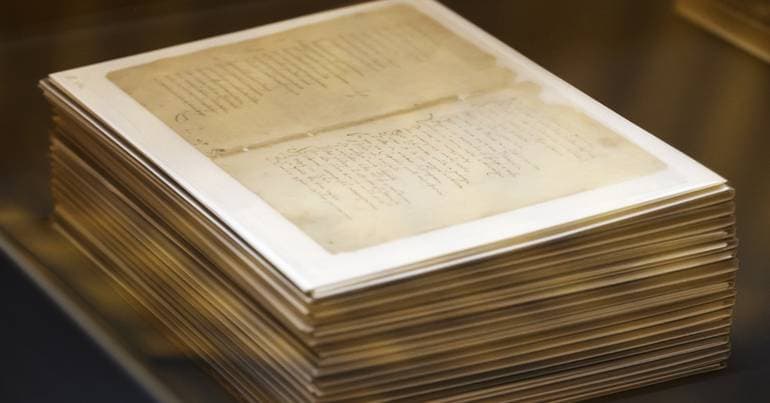
Its original provenance is unknown, but it “may be somehow linked to the College of São Pedro at the University of Coimbra, dated between 1580 and 1585, immediately after Camões' death.”

The manuscript contains a different version of a poem by Camões and previously unpublished testimonies. The State will allow any interested reader to consult it, either in person or digitally.
Ricardo Araújo Pereira makes a serious accusation against Luís Vaz de Camões and tries to justify it by presenting what he claims are pieces of evidence. He cites sonnets, vilancetes (short lyrical forms), endechas (laments) and esparsas (occasional poems). At the end he speaks with Carlos Maria Bobone and shows that it is possible to introduce, in an erudite conversation about Camões, the word “rabo” (literally “tail”, colloquially “arse”). On the celebrations of the prince of poets' birthday, recall this episode of Ricardo Araújo Pereira's podcast, “Coisa Que Não Edifica Nem Destrói”.

Title of a work by fado singer Camané featuring the lyric poems of Luís de Camões set to music.
