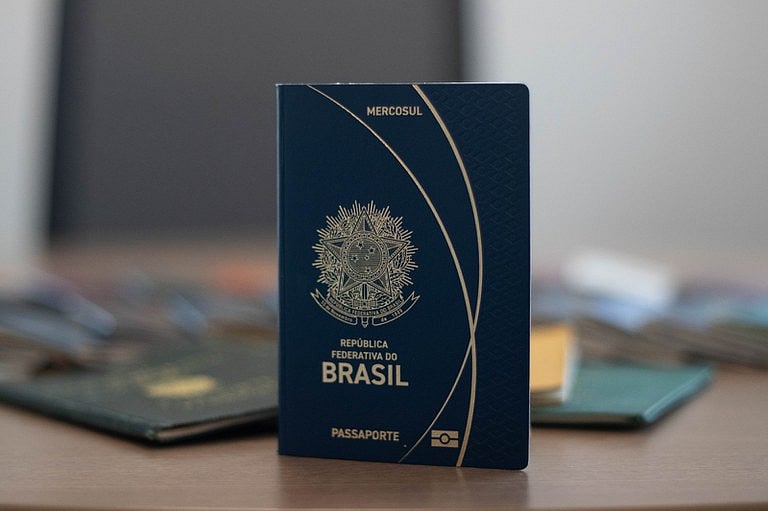
Visa applications for Portugal in Brazil will only be accepted in person starting April 17, as announced by the Embassy of Portugal in Brasília. This change aims to enhance efficiency and user proximity, with applications sent by post after April 16 being returned. Applicants will need to schedule appointments, which will be available weekly. The new process will affect those in remote areas, as not all states have VFS offices, necessitating travel for visa applications.
Update: Portuguese Consulates to Stop Accepting Visa Applications by Post
The Embassy of Portugal has confirmed that from April 17, all visa applications must be made in person at designated VFS offices across Brazil. This change is intended to improve efficiency and user accessibility, but it will require applicants from remote areas to travel, as not all states have VFS offices. The embassy will open weekly appointments for in-person services, although the number of available slots has not yet been disclosed.
Azul launches a programme that allows for extended holidays in Brazil, while TAP introduces new routes to São Luís and Curitiba. Gol receives authorisation for landings and take-offs in Portugal. Latam connects Fortaleza to Lisbon.
January saw a new increase in the main indicators of tourism activity. The largest growth in external markets came from Canada, followed by Brazil. France experienced the largest decline.
For decades, Portugal and Brazil have maintained a relationship marked by both historical and cultural ties. Today, however, this affinity evolves into something much more relevant: an economic and scientific partnership capable of transforming education, health, and technology into engines of global growth and innovation. The Atlantic thus ceases to be a barrier and becomes a bridge of knowledge, with cultural affinity now transforming into strategic synergy. In a world where innovation depends on collaborative ecosystems, the Luso-Brazilian relationship takes on new contours. Portugal seeks to cement its position as a European hub for science, education, and technology, while Brazil asserts itself as an emerging power in biomedical research and a large-scale Latin market. This complementarity creates the opportunity to build an axis of innovation and internationalisation of companies, higher education, scientific knowledge sharing, and the exchange of highly qualified professionals. According to the Brazilian Franchise Association, in 2024, Portugal was only behind the United States in the ranking of preferred destinations for Brazilian companies to internationalise. The close relationship between the two countries creates a virtuous effect through the continuous circulation of knowledge, where each educational context enriches the other with diverse approaches and perspectives. This flow of skills reinforces the modernisation of practices, the adoption of emerging technologies, and strengthens the Luso-Brazilian talent network. Thus, it is urgent to view internationalisation as a strategy for shared growth. The first step towards internationalisation is a well-executed market study, an essential basis for success. Additionally, commercial vision is key to achieving this goal. In 2023, the two countries, through Apex (Brazilian Agency for Export Promotion) and AICEP (Agency for Investment and Foreign Trade of Portugal), signed an economic cooperation agreement in the markets of CPLP (Community of Portuguese Language Countries), promoting internationalisation and stimulating bilateral trade and investment flows. By aligning priorities, Portugal and Brazil have the capacity to create a true corridor of internationalisation, research, and innovation within a single ecosystem. In the health sector, this model redefines how learning and practice occur, strengthening skills and exponentially broadening professional horizons. The transatlantic bridge begins in institutions that no longer just train students but also innovators. With the intersection of curricula and specialised courses, Portugal and Brazil can (and should) not only export but also build knowledge. The demand for Portuguese professionals for advanced training in Brazilian institutions, driven by linguistic proximity, scientific reputation, and specialised educational offerings, shows how this bridge is already functioning well. According to the latest data from the Order of Dentists, Portugal has a ratio of one dentist per 814 inhabitants, placing it in a very favourable position, as the World Health Organisation recommends one dentist per 1500-2000 inhabitants. Thus, this internationalisation gains even more strength, providing the opportunity to enhance the training of highly qualified professionals, promote the circulation of scientific and technological knowledge, and create a collaborative ecosystem that benefits both Portugal and Brazil. Education, technology, and health now speak a new common language: that of innovation. Portugal and Brazil are uniquely positioned today to shape this global axis as protagonists of internationalisation and complementarity between the two markets. The transatlantic bridge already exists. The next step is to expand it to become the engine of transformation for the coming decades.
Actress Catarina Wallenstein was born in London, but it was in Lisbon that she grew up between music lessons and the French Lycée. Today she has one foot in Portugal and the other in Brazil, and has artistic projects ready to debut.
The family has still not secured the funds, about €10,000, to repatriate Lucinete Freitas's body to Brazil. The deadline for removal is up to 45 days after release by the Judicial Police.
The Portuguese head of state, Marcelo Rebelo de Sousa, today promulgated the government decree relating to the 2023 agreement signed between Portugal and Brazil on the mutual recognition of driving licences.
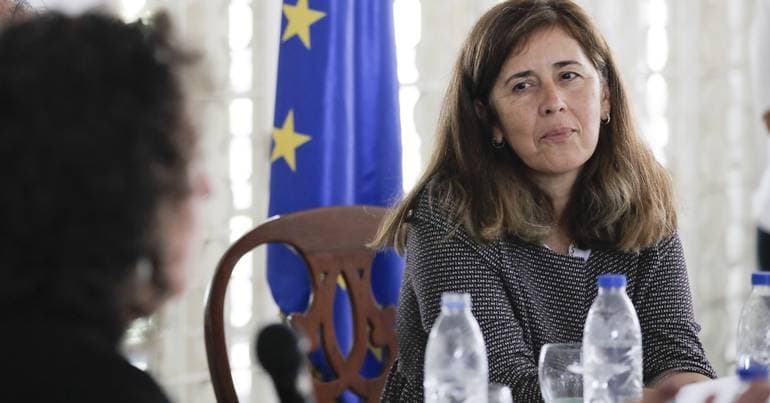
She is the first woman to hold the post. Until now she has been working in the diplomatic service of the European Union. In 2021, when she was the EU's ambassador in Caracas, she was expelled from Venezuela by Maduro's regime.
Brazilian model Eliza Samudio was murdered in 2010 and her ex-boyfriend was sentenced to more than 20 years in prison. Her passport has now been accidentally found in an apartment in Portugal.
In an interview with PÚBLICO Brasil, the singer says that he and the Brazilian Oxa have been very close since they met on the programme: “We share many personality traits”.