Miguel Araújo, director-general of Mobinov and a promoter of SCARIA, argues for accelerating industrial convergence between the automotive and aerospace sectors. He says both industries face common structural challenges and share many critical solutions, and highlights the role of initiatives like the third and final SCARIA call to foster startup creation and industrial development in rural areas. The piece calls for intensified collaboration across clusters, supply chains and innovation ecosystems to leverage shared technologies and strengthen regional industrial capacity.
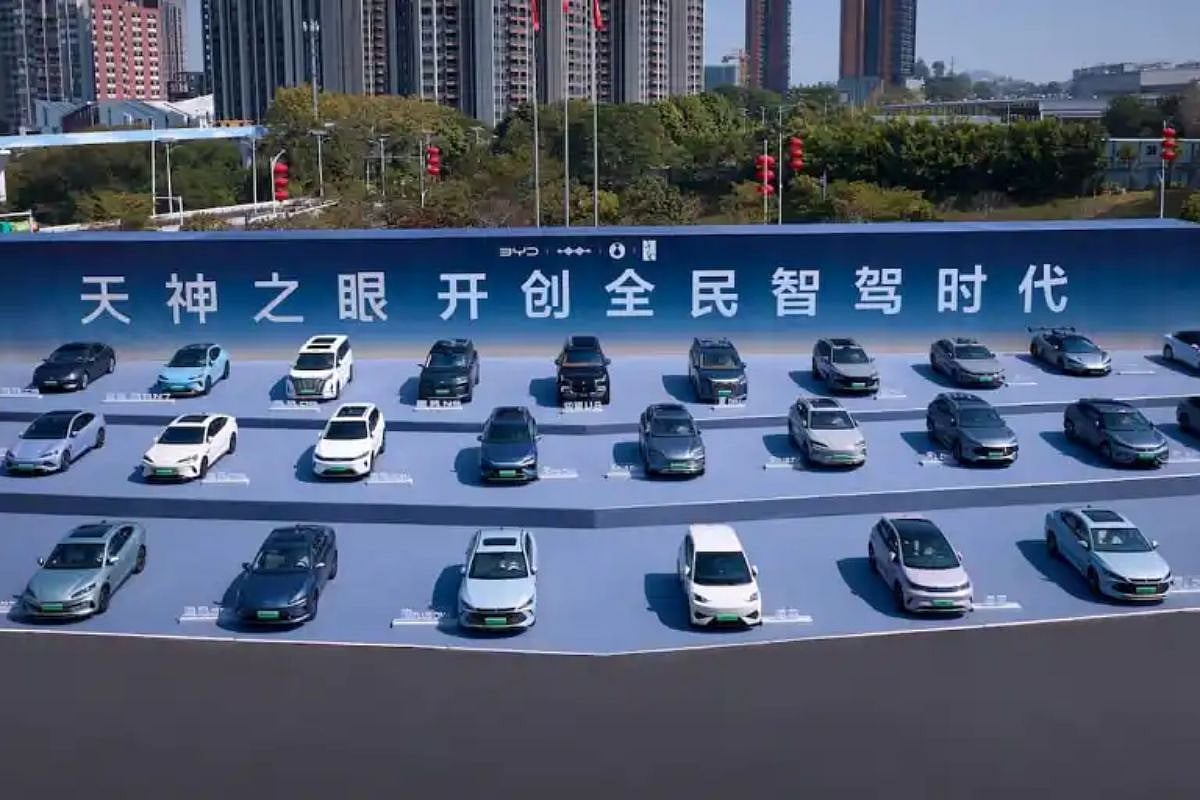
Following the example of BYD, which rented the Paris Opera for a major event, Chinese car brands are entering Europe with confidence, backed by technology that Europeans are struggling to replicate. Largely unknown in Europe three years ago, brands like BYD, MG, Chery, Geely, Leapmotor, Jaecoo, and Xpeng reached 9% of total European sales in March, and 14% in the electric vehicle segment. Their success is shaking European manufacturers, who are weakened by a shrinking domestic market and surprised by the EU's 2035 electric vehicle targets. Analysts note that Chinese manufacturers are not only competitive on labour costs but also lead in innovation and efficiency. To bypass tariffs and logistics issues, Chinese firms are now moving towards local production in Europe, while European manufacturers are increasingly forming partnerships with their Chinese counterparts to learn and compete.
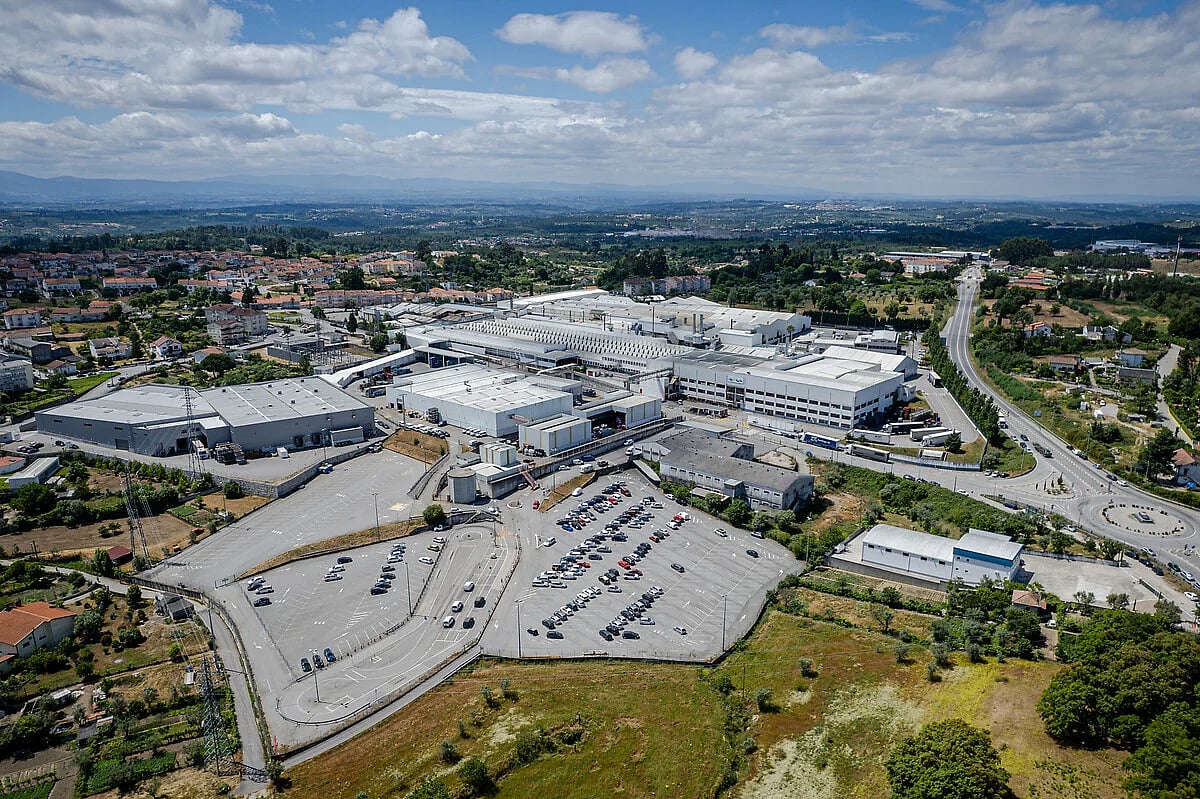
Bosch is leveraging Portuguese expertise in Braga to lead the development and manufacturing of advanced automotive radar systems. With a team of 200 dedicated staff and a highly automated facility, the plant has doubled its production capacity, becoming the group's global hub for radar technology. The site is currently producing the AI-integrated Generation 7 radar, which aims to enhance vehicle safety and enable autonomous driving features, while maintaining a competitive edge against global manufacturing sites in Germany, China, and Mexico.
Automotive production in Portugal increased by 5.0% in the first quarter compared to the same period in 2025, reaching 85,268 vehicles, with a 32.6% rise in the month of March alone, the Portuguese Automotive Association (ACAP) reported today.
Rodrigo Ferreira da Silva, president of the National Automotive Association, believes that the entry of new brands into the Portuguese market is welcomed by any retailer, because what they want is to have more options for their customers.
A team from the Porto School of Engineering has developed a drone for industrial environments. It will begin to be used at Autoeuropa starting in July.
Ricardo Vieira, a graduate in Economics and General Manager of Volkswagen in Portugal, has over 20 years of experience in the automotive sector. He shares VW's vision on market evolution during this industry transformation and the importance of Autoeuropa as a relevant industrial asset in the European ecosystem at a time of major change.
With a professional background in the automotive industry, Zineb Ghout is the new managing director of the Stellantis group for Portugal and Spain, succeeding Marco Cane who took on the role in December 2024. Cane will now take up the position of profitable volume growth, reported the newspaper El Economista this Thursday. The Algerian Zineb Ghout...
Profits for the Chinese automotive group BYD fell by 19% in 2025 to 32.619 billion yuan (4.086 billion euros) due to increasing competition in China. In financial documents sent this Friday, 27 March, to the Hong Kong Stock Exchange, where the company is listed, the electric vehicle manufacturer indicated that its revenue, which had surpassed that of the American company Tesla last year, grew by 3.46% compared to 2024, reaching 803.965 billion yuan (100.708 billion euros). 'Faced with macroeconomic headwinds and increasingly intense competition, the BYD brand has continuously strengthened its competitiveness, focusing on the integration of key technologies, consolidating its leadership in the domestic market and recording exceptional performance abroad,' the document states. Last year, overseas turnover rose from 28.55% of the total to 38.65%, following growth of 40.05% throughout 2025, while that recorded in China, its main market, decreased by 11.17%. 'We recognise that competition in the Chinese electric vehicle sector has reached a peak and is currently in an elimination phase,' indicated BYD founder and chairman Wang Chuanfu. According to the document, the sector faced international problems in 2025, such as 'trade protectionism and the restructuring of supply chains.' The situation caused BYD's net profit margin to decrease from 5.2% to 4.1% in 2025, its lowest rate since 2022. Throughout the financial year, BYD sold a total of 4.6 million vehicles, of which 1.05 million were destined for other markets, representing growth of 140% compared to the previous year. Specifically, Wang classified Latin America as the 'main pillar' of his company's growth abroad. 'BYD maintained sustained growth in 2025, keeping its position as the world's largest seller of electric vehicles for the fourth consecutive year, ranking among the top 10 automotive groups in sales for the third consecutive year and rising to fifth place in sales among global automotive groups, one position higher than the previous year,' the founder stated. BYD is considering creating or buying a team to compete in F1.
Carlos Tavares left Stellantis in December 2024. He has been retired since then. He returned to Portugal and released his autobiography. Speaking to Observador, he discusses the automotive industry and his life as a manager.
Home News Portugal and China anticipate possible collaboration Portugal and China anticipate possible collaboration Yang Yirui, Ambassador of the People's Republic of China to Portugal, predicts that Portugal and China could collaborate in the construction of automobiles. By Bruno G.
The production of motor vehicles in Portuguese factories fell by 13% in February, year-on-year, to 24,670 units, according to data from the Portuguese Automobile Association (ACAP) released this Wednesday. The second month of the year was marked by storms that caused “very significant damage” to companies in the sector. In cumulative terms, for the first two months of the year...
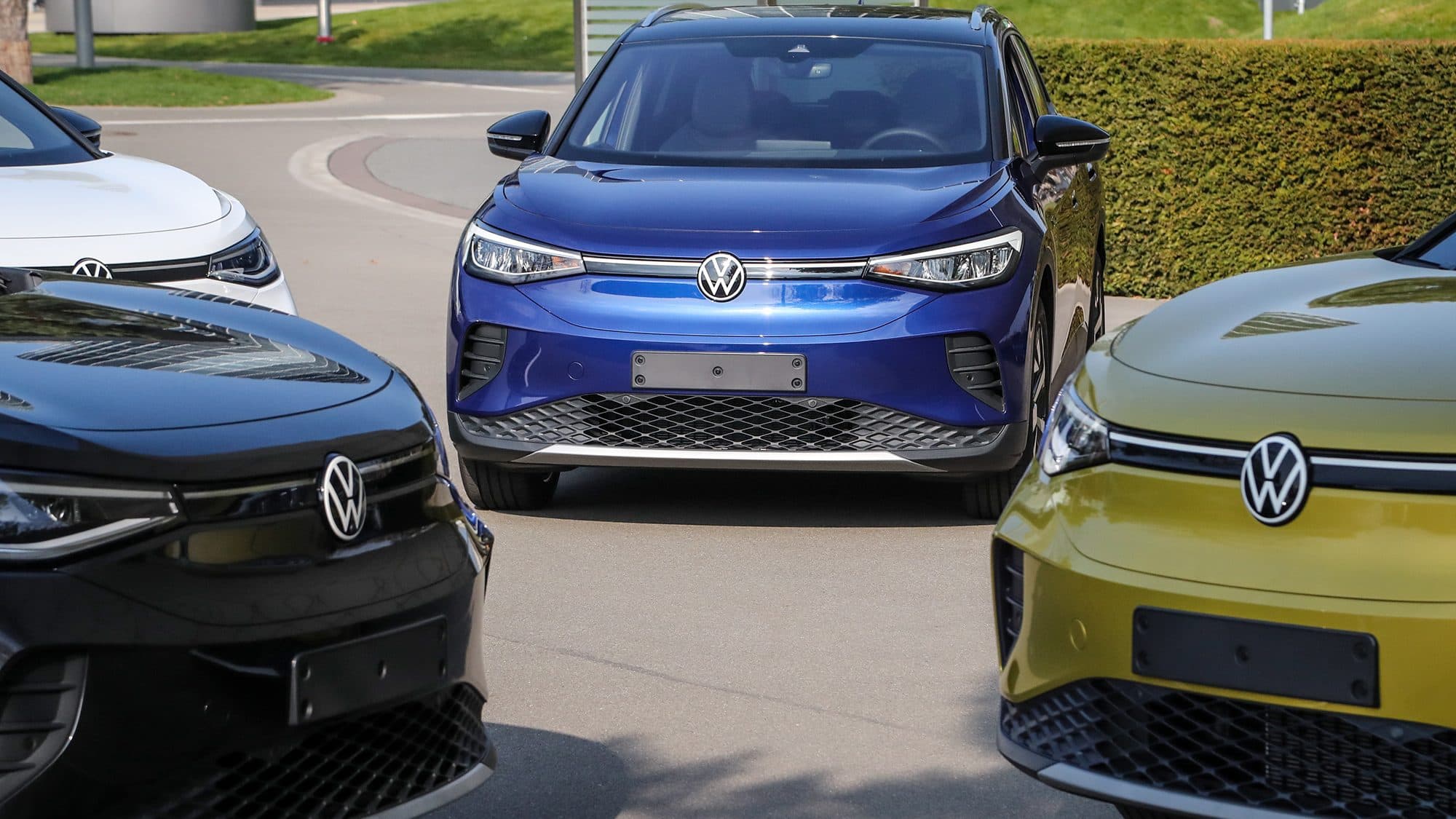
The automotive giant's profit halved in 2025 to 6.9 billion euros, the lowest figure since the 2016 Dieselgate scandal. Volkswagen attributes the decline to US tariffs and unforeseen restructuring costs. The German group also announced plans to cut 50,000 jobs in Germany by 2030. While revenue remained stable at 321.913 billion euros and vehicle sales were steady at 9.022 million units, operating profit dropped by 53.5%. The Seat and Cupra brands saw their operating profit plummet by 99.8% due to tariffs on the China-produced Cupra Tavascan and rising production costs, despite an increase in turnover. CEO Oliver Blume stated that a new beginning for the group is underway, while CFO Arno Antlitz noted that 2025 was marked by geopolitical tensions and intense competitive pressure. The company proposed a dividend of 5.26 euros for preferred shares and 5.20 euros for ordinary shares, a 17% decrease from 2024.
The automotive giant's profit halved in 2025 to 6.9 billion euros, the lowest figure since the 2016 Dieselgate scandal. In a statement, Volkswagen attributed the profit decline to US tariffs and unforeseen restructuring costs. In the information released this Tuesday, the German group announced...
Yazaki Saltano dismissed 163 people at the Ovar factory with immediate effect. The affected workers did not report for work this Friday. The automotive components plant says the job cuts aim to 'ensure the viability of operations in Portugal', given a demanding context the industry is facing...
Last year, 341,361 vehicles left factories located in the national territory, representing an increase of 2.7% compared with 2024, according to data from the Automobile Association of Portugal (ACAP) released on Friday. The analysis shows that Portugal produced 269,468 passenger cars, 68,809 light commercial vehicles and 3,084 heavy vehicles, ...
Thomas Schäfer, VW CEO, admitted that today it is impossible to design a new commercial vehicle at a competitive price. “The future in this segment is electric,” the head of Europe's largest automaker said.