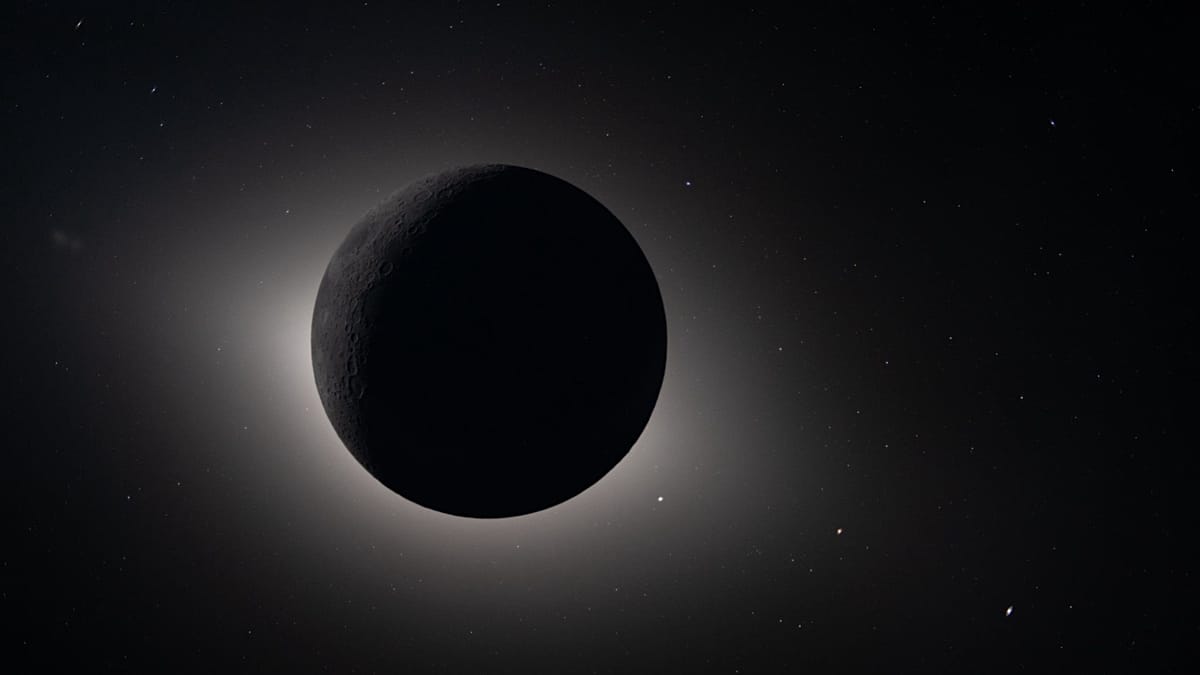
Total solar eclipse in Portugal to occur in August: "The anticipation is enormous"
A total solar eclipse is set to take place in Portugal this August, generating significant public interest and excitement.

Latest news and stories about astronomy in Portugal for expats and residents.
A total solar eclipse is set to take place in Portugal this August, generating significant public interest and excitement.

The elusive planet Mercury is at its greatest eastern elongation from the Sun on the 15th, which means it will be seen low down in the west just after sunset. The post The June 2026 Night Sky appeared first on Portugal Resident.


The region is internationally recognised for its ideal astronomical observation conditions and is widely acknowledged for having some of the best skies in Europe for admiring stars and planets. Column by Luciana Quaresma

The total solar eclipse will take place on 12 August and can only be seen in its entirety at the Montesinho Natural Park in Trás-os-Montes. This rare phenomenon has already begun to sell out tourist accommodation in Bragança.

An upcoming celestial event is expected to be visible from Portugal, offering a spectacular display in the night sky.

The phenomenon can be seen until the 28th, but with less intensity.


An overview of the upcoming solar eclipse in 2026 and its visibility from Portuguese territory.

This month, we only have one major meteor shower, the Eta-Aquarids. This is on the night of May 5, but the radiant only rises after midnight low down in the The post The May 2026 Night Sky appeared first on Portugal Resident.

Home News Where to watch the solar eclipse in Portugal? Where to watch the solar eclipse in Portugal? On 12 August 2026, the sky will darken during the day, not because a storm is approaching, but because the sun will be obscured, and Portugal will be able to witness the phenomenon in its totality.


A simulation of a mission to Mars involves the participation of nine European students and is taking place until Sunday at the Lake Alqueva Observatory.

Located in the heart of the DarkSky Alqueva Reserve, between the medieval village of Monsaraz and the banks of the reservoir, the Lake Alqueva Observatory (OLA) was founded by Leonel Godinho.

The Portuguese telescope, installed in Chile, observes the Sun to decipher the behaviour of other similar stars, around which there may be Earth-like worlds yet to be discovered.
A group of 12 Portuguese researchers travelled to the Atacama Desert in Chile to install a solar telescope (PoET). The equipment was built in Portugal and will help uncover mysteries about the Sun and other stars. Physics engineer Alexandre Cabral shared the details of this major mission with us.

The winter constellations, like Orion “the Hunter”, are now setting in the west as darkness falls. Over in the east at this time, we have the bright white star Spica The post The April 2025 Night Sky appeared first on Portugal Resident.

The intervention provides for the full rehabilitation of the building, a former school. This includes improvements to the roof, total renovation of the interior spaces, and enhancement of the exterior landscaping.

The instrument, which aims to better understand the physics of stars, will operate remotely from the operations centre in Porto and will allow for high-resolution observations of the Sun.

The goal is to “have better models” to take “a step forward” in the study of planets outside the solar system, says Alexandre Cabral, one of the researchers.

Scientists expect the telescope to begin collecting data on April 8th and hope it will improve the understanding of what happens in stars, exoplanets, and Earth-like stellar systems.

A team of 12 Portuguese researchers will install a solar telescope in the Chilean desert that will operate remotely and allow for high-resolution observations from Portugal, an academic source told Lusa. “It is almost like a robot. It might be necessary to go there once a year to program something, but...”

A team of 12 Portuguese researchers will install a solar telescope in the Chilean desert that will operate remotely and allow for high-resolution observations from Portugal, an academic source told Lusa.

A team of 12 Portuguese researchers is set to install a solar telescope in the Chilean desert that will operate remotely, allowing for high-resolution observations from Portugal. The POET (Paranal solar EXPRESSO Telescope), built partly in Lisbon, will be located at the Paranal Observatory in the Atacama Desert. Scientists aim to use the instrument to study the Sun and Earth-like exoplanets with unprecedented precision, with data collection expected to begin on April 8th.

Scientists expect the telescope to begin collecting its first data on April 8th.

Home News Total solar eclipse to be visible in Portugal Total solar eclipse to be visible in Portugal The total solar eclipse of 2026 will be visible in Portugal.

In August 2026 it will be possible to observe a total solar eclipse in Portugal, a rare phenomenon that, although partial across much of the country, “will be of considerable significance”, said astronomer Rui Jorge Agostinho today.