Humanising higher education in the AI era: less fear
In higher education, AI cannot be avoided; it can and should be tamed through rules, pedagogical design and institutional responsibility.

Latest news and stories about ai in education in Portugal for expats and residents.
This page has only 1 story and is not indexed by search engines.
In higher education, AI cannot be avoided; it can and should be tamed through rules, pedagogical design and institutional responsibility.

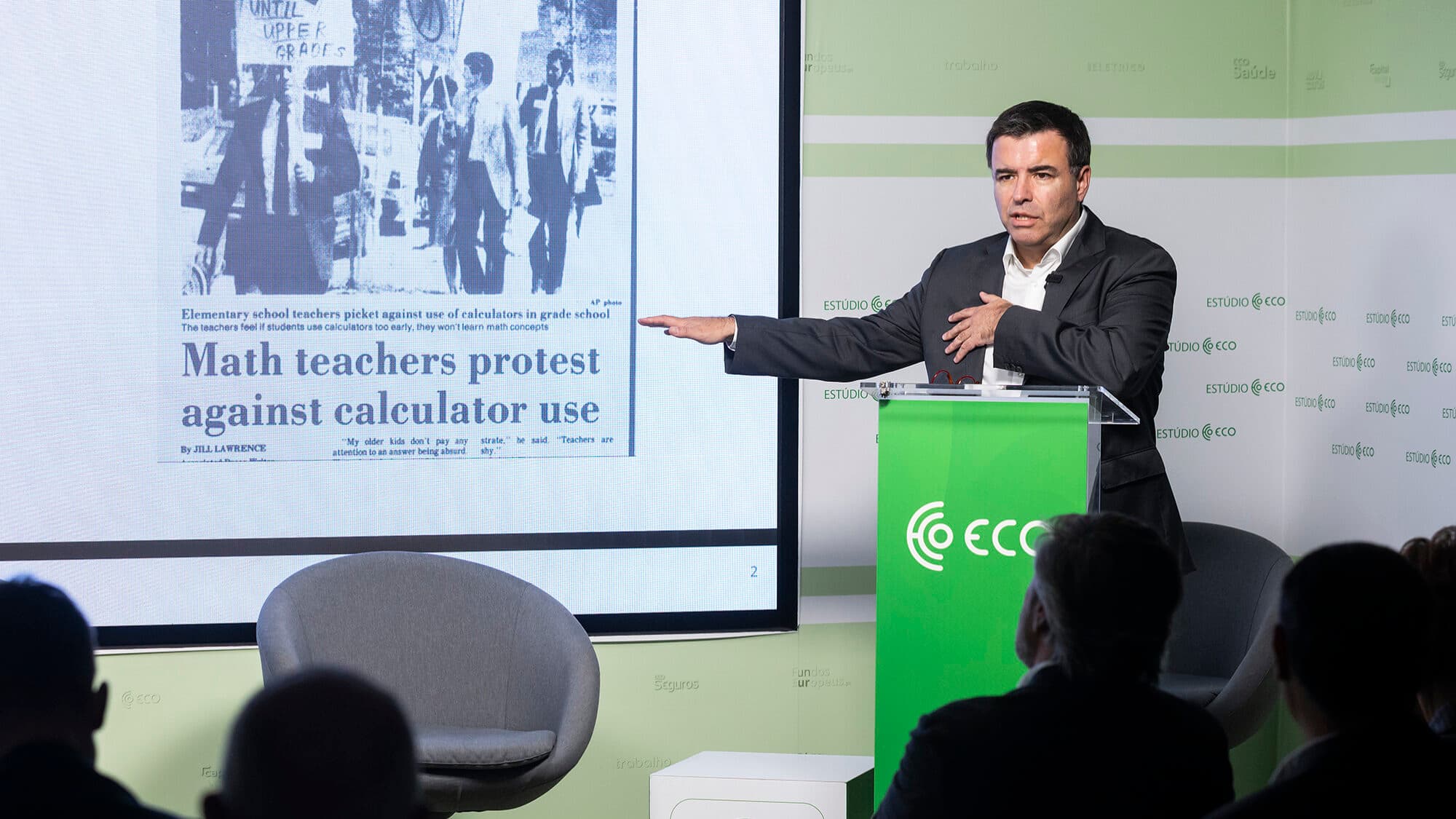
João Nuno Tavares argues that the rise of AI in classrooms necessitates a fundamental rethink of assessment and teaching methodologies to preserve meaningful learning without overwhelming teachers. Drawing on roughly 50 years of teaching experience, he outlines practical ideas for qualitative, robust assessment techniques and classroom practices that acknowledge AI’s capabilities while aiming to reduce teacher workload. The piece analytically weighs trade-offs and proposes scalable strategies to maintain academic integrity, learning quality and manageable teacher demands.

Our guest today is Tom Caston, Principal of the Bright International School in Loulé, Algarve, who studied Geography at the University of Exeter and later obtained an MSc in Managing The post Pupils, parents, AI & the future – Interview with Tom Caston appeared first on Portugal Resident.

Part of our role is to help students on their learning journey through a relationship and a methodology that can never be provided by AI — something that is much more than simply having access to information.

Please don't blame AI for the world's ills. After all, don't we want students to be fully rounded citizens in a world where AI is increasingly a day-to-day tool? Opinion by Mário A. Barbosa

From the official curriculum, centrally decided and standardised in its practices, there will inevitably be a shift towards the so-called 'curriculum of everything', driven by digital tools. Opinion by José Augusto Pacheco

Teachers and students reject the proposed ban on artificial intelligence in educational settings contained in a manifesto published over the weekend.

The dean of the Nova School of Business and Economics (Nova SBE), Pedro Oliveira, considers it 'impossible' to ban the advance of artificial intelligence (AI) in schools, after a group of higher education professors signed a manifesto to that effect, arguing that the use of generative AI is creating 'digital cretins'. 'It was reported that a ...'

The aim of a text is to promote the humanisation of higher education and to ban the use of AI in teaching; in it, professors describe students as “the main victims of the digital world”.

Argues that prohibiting artificial intelligence in universities is unrealistic and misguided, highlighting the impracticality of an outright ban and the negative consequences for teaching, learning and academic progress.

The Harvard physics professor speaks to PÚBLICO about the challenges academic institutions face in the era of artificial intelligence. A hint: teaching methods will have to change.