President António José Seguro promulgated legislation establishing rules for flying flags on public buildings after previously vetoing an earlier draft. Seguro stated that revisions made in the Assembly of the Republic (Assembleia da República) addressed his primary concerns by explicitly allowing flags for humanitarian causes and international commitments. The final text passed following an agreement between the Social Democratic Party (Partido Social Democrata or PSD) and the Socialist Party (Partido Socialista or PS).
President Seguro Promulgates Revised Public Building Flag Law
Friday, 9 October 2026AI summary
Context & Explainers

- President of Portugal (since March 9, 2026)
- Party: Independent. Former leader of the Socialist Party (PS), Partido Socialista
- Center-left
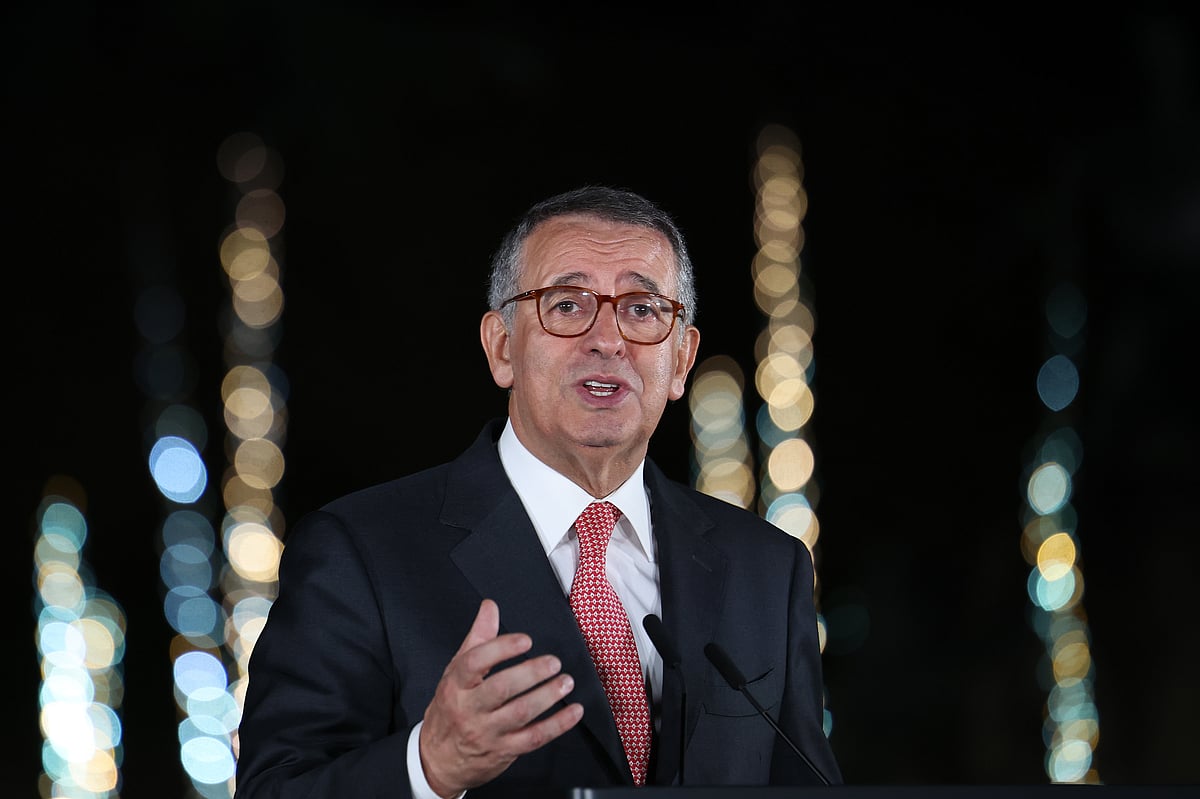
António José Martins Seguro (born March 11, 1962, in Penamacor) is a lawyer, political scientist, and the current President of the Portuguese Republic, inaugurated on March 9, 2026 after winning the two-round presidential election in January–February 2026.
Career: He led Socialist Youth (1990–1994), served as MEP (1999–2001), was Minister Adjunct to PM António Guterres (2001–2002), and led the PS parliamentary group (2004–2005). Elected PS Secretary-General in 2011 with 68%, he led the opposition during Portugal's bailout era. In 2014, António Costa defeated him in party primaries by a landslide, prompting Seguro's resignation and a decade-long retreat from politics. He returned in 2025, launching the movement UPortugal and announcing his presidential candidacy in June. He received official PS backing in October 2025 and won the presidency in February 2026.
Political philosophy: Seguro positions himself as representing a "modern and moderate" left, advocating financial responsibility while opposing austerity. As President, he has emphasized institutional trust, efficient governance, and a collaborative relationship with the government while maintaining rigorous constitutional oversight.

- Leader: Luís Montenegro (Prime Minister)
- Ideology: Liberal conservatism, pro-Europeanism
- Coalition: Social Democratic Party (PSD) + CDS–People's Party (CDS-PP)
The Democratic Alliance (Aliança Democrática, AD) is a center-right coalition primarily composed of the Social Democratic Party (PSD) with 89 seats and the CDS–People's Party (CDS-PP) with 2 seats. Together, they form the current minority government under Prime Minister Luís Montenegro.
The PSD, despite its name, occupies the center-right of Portugal's political spectrum and has been one of Portugal's two dominant parties since 1974, having formed nine governments including four with absolute majorities. The CDS-PP is a smaller Christian democratic party that has historically been the PSD's coalition partner.
The AD coalition governs without a parliamentary majority, requiring case-by-case support from opposition parties to pass legislation. The coalition has imposed a cordon sanitaire against Chega, refusing formal cooperation with the far-right despite its parliamentary strength, which means it must negotiate with the PS or smaller parties to advance its legislative agenda.
Health cards are private membership or discount schemes sold by companies that offer access to consultations, tests or reduced fees at private clinics; they are not the public health service. The Socialist Party (Partido Socialista or PS) has proposed regulation to increase transparency and protect consumers from misleading marketing or unexpected charges.
5 sources
- President of the Republic enacts decree on new rules for flying flags on public buildingscmjornal.pt ·
- Satisfied with changes, Seguro promulgates new rules for hoisting flags on public buildingspublico.pt ·
- Seguro promulgates decree on flags following changes by the Assembly of the Republicobservador.pt ·
- Seguro promulgates flag law he had vetoed in the first versiondn.pt ·
- President of the Republic promulgates flag law following veto of the first versionrtp.pt ·