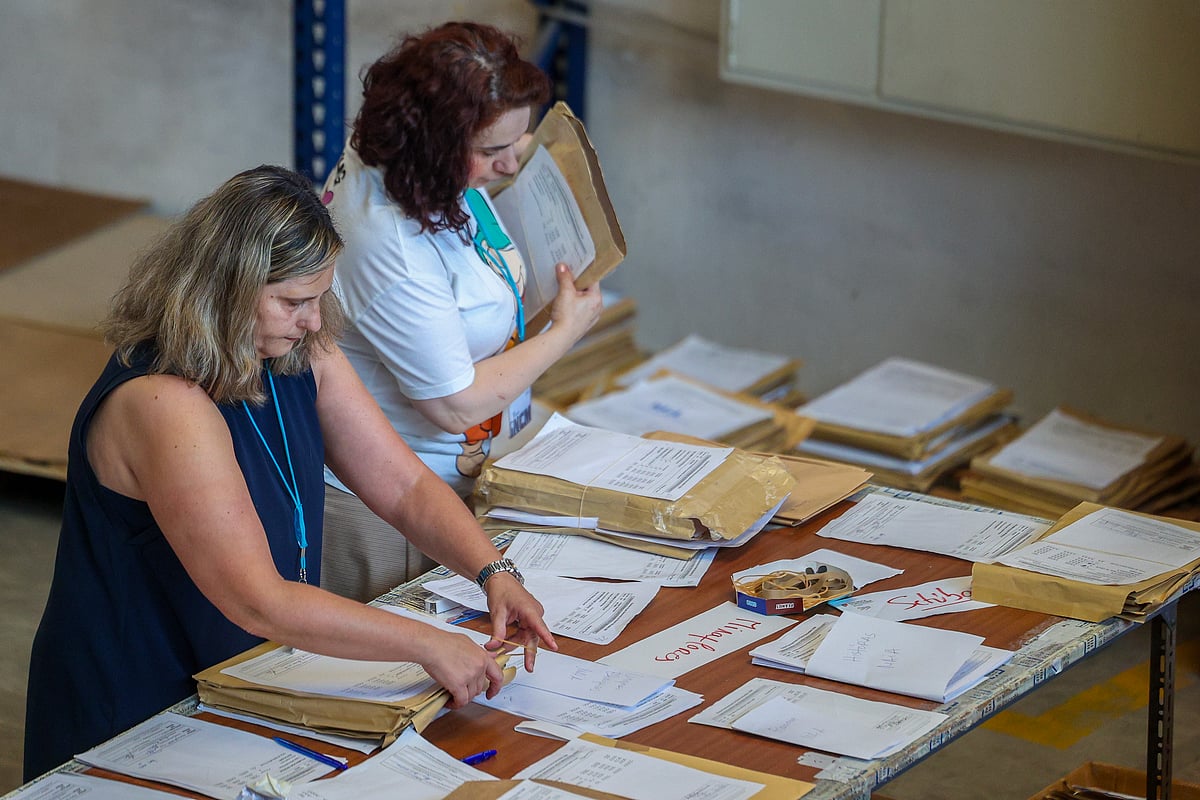
The government has submitted a proposal to the Assembly of the Republic (Assembleia da República) to ratify an agreement with Brazil that simplifies school equivalence for basic and secondary education. Currently, Brazilian students represent nearly half of all foreign pupils in Portuguese public schools. While the agreement addresses primary and secondary levels, it does not yet extend to higher education.
Parliament considers school equivalence agreement with Brazil
Thursday, 2 April 2026AI summary

Context & Explainers

The Assembly of the Republic (Assembleia da República) is Portugal's unicameral parliament, located in the Palácio de São Bento in Lisbon. It consists of 230 deputies elected by proportional representation for four-year terms.
The Assembly's powers include making and amending laws, approving the state budget, ratifying international treaties, and overseeing the government through debates, hearings, and committees. It can also pass votes of no confidence to bring down a government, as happened in March 2025.
Following the May 2025 elections, the current parliamentary composition is led by the Democratic Alliance (AD) with the largest share of seats, followed by Chega, PS, and smaller parties including the Liberal Initiative, Left Bloc, Livre, and PCP.