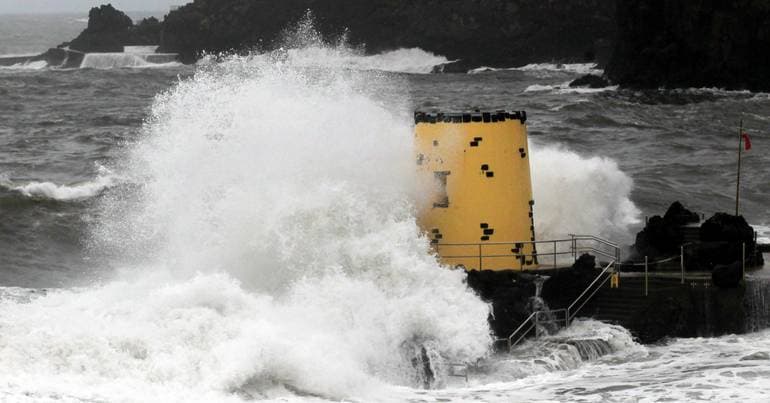
Storm Regina may bring strong gusts and heavy seas

Sunday, 1 March 2026AI summary
Storm Regina may bring strong gusts and heavy seas
Photo: HOMEM DE GOUVEIA/LUSA

Multiple outlets report a storm system named Regina will reach Portugal on Monday and Tuesday with rain and strong winds. Some sources (Observador, CNN Portugal) warn of gusts up to 120 km/h and waves that could reach around 11 metres on exposed coasts, while Publico and Expresso cite the IPMA (Instituto Português do Mar e da Atmosfera) saying it does not expect 'significant effects' nationwide. Residents in coastal and exposed areas should monitor official local alerts and expect rough seas and windy conditions in the coming days.

Update: More than 80 flights cancelled in Madeira

More than 80 flights were cancelled at Madeira Airport as Regina hit the islands, and Madeira Civil Protection (Proteção Civil da Madeira) issued precautionary warnings for the region; national outlets report the system is also sending heavy rain and windy conditions to the Algarve and southern Portugal.

Context & Explainers

Aviso amarelo (yellow warning) is the second level in Portugal's weather-alert system issued by the Instituto Português do Mar e da Atmosfera (IPMA) to signal potentially dangerous conditions like heavy snow or rough seas. When districts are under aviso amarelo, expect travel disruption and take precautions—drivers, boaters and coastal residents in the affected areas should be especially alert.

Civil protection (Proteção Civil) is the national system that coordinates prevention, response and recovery for disasters and emergencies in Portugal; the Autoridade Nacional de Emergência e Proteção Civil (ANEPC) oversees planning, warnings and coordination with fire brigades, police and municipal services. In weather events—such as snow or road closures around Serra da Estrela—Proteção Civil issues safety advisories, may close access routes and coordinates rescue and relief efforts, so people in affected areas should follow official guidance and call 112 for emergencies.

Sources (9)

Continue reading