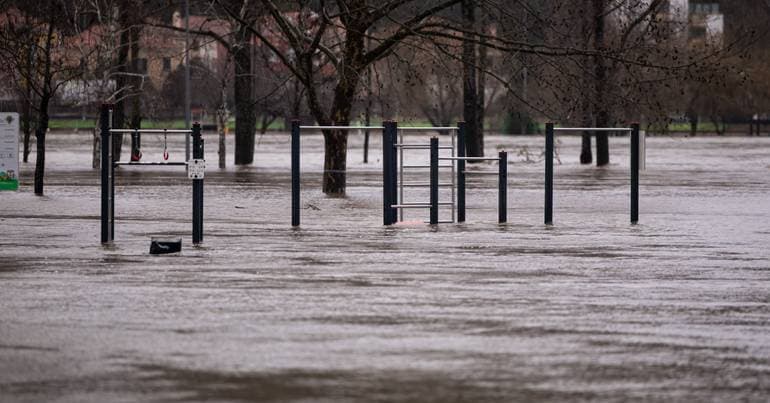
Centenary flood: Water may inundate downtown Coimbra
The government has indicated that the recovery of the A1 viaduct in Coimbra, which collapsed due to a dam burst on the Mondego River, could take several weeks. In response to the disaster, the Prime Minister has introduced new support measures for affected victims, including a dedicated Recovery and Resilience Plan for Portugal and an increase in credit lines for businesses from 500 million to 1 billion euros.
Update: Metrobus suburban section may reopen next week
RTP reports the suburban stretch of Coimbra's metrobus could reopen next week as water levels fall and repairs progress; authorities continue local assessments of infrastructure damage. Those in Coimbra should watch official local transport notices as services gradually return.
Civil protection (Proteção Civil) is the national system that coordinates prevention, response and recovery for disasters and emergencies in Portugal; the Autoridade Nacional de Emergência e Proteção Civil (ANEPC) oversees planning, warnings and coordination with fire brigades, police and municipal services. In weather events—such as snow or road closures around Serra da Estrela—Proteção Civil issues safety advisories, may close access routes and coordinates rescue and relief efforts, so people in affected areas should follow official guidance and call 112 for emergencies.
The Directorate‑General of Health (Direção‑Geral da Saúde) is Portugal’s national public health authority in the Ministry of Health that issues official health guidance, monitors disease, and coordinates health responses. In a weather emergency it provides advice on shelters, sanitation, water‑borne disease risk and hospital preparedness and works with civil protection and local health units, so residents should follow DGS updates for health precautions.
Portugal recently revised its return legislation to replace the phrase 'voluntary abandonment' with a formal 'duty to abandon', aligning national rules with EU return standards and making an obligation to leave explicit for third‑country nationals subject to removal decisions. For migrants this clarifies legal responsibilities and can affect the timing and procedures of removals, including when assisted or enforced return measures may be used.
The DGS (Direção-Geral da Saúde) is Portugal's national public health authority that issues health guidance, safety rules and emergency health advice and operates under the Ministry of Health. Residents should follow DGS guidance in situations such as post-storm generator use or disease alerts because it provides the official safety recommendations.
The Recovery and Resilience Plan (Plano de Recuperação e Resiliência) is Portugal's national programme under the EU's NextGenerationEU to fund reforms and investments after COVID‑19; the plan includes roughly €16.6 billion in grants plus about €2.7 billion in loans approved in 2021. Payments are tied to specific milestones and targets — which the government said it is politically committed to meet — so missed milestones can delay projects and funding that affect public works, contractors and local services.
The Mondego River is the longest river entirely within Portugal, about 234 km long, rising in the Serra da Estrela and flowing west through Coimbra to the Atlantic at Figueira da Foz. Rising Mondego levels often cause floods in Coimbra and downstream towns, so people in the river basin should monitor alerts and avoid riverside areas during heavy rain.
The National Authority for Emergency and Civil Protection (Autoridade Nacional de Emergência e Proteção Civil) is Portugal's national agency that plans for, coordinates and leads responses to disasters, including floods, storms and forest fires. It issues weather warnings (for example, orange alerts) and mobilises resources across districts during emergencies.

TAP Air Portugal is Portugal’s flag-carrier airline, founded in 1945 and based at Lisbon’s Humberto Delgado Airport, operating domestic, European and intercontinental routes. For expats it matters because TAP runs many of the main connections to Portugal (including transatlantic routes), so its schedules, fares and operational decisions directly affect relocation, visits and shipping of household goods.
Emergency associations argue that a single command structure in the Civil Protection law would centralise decision‑making during major incidents, reducing confusion between municipal, regional and national responders and improving the speed and efficiency of operations. They say this clearer hierarchy would help volunteers and professional services coordinate on the front line, which is why they want that change included before the health framework law is finalised.