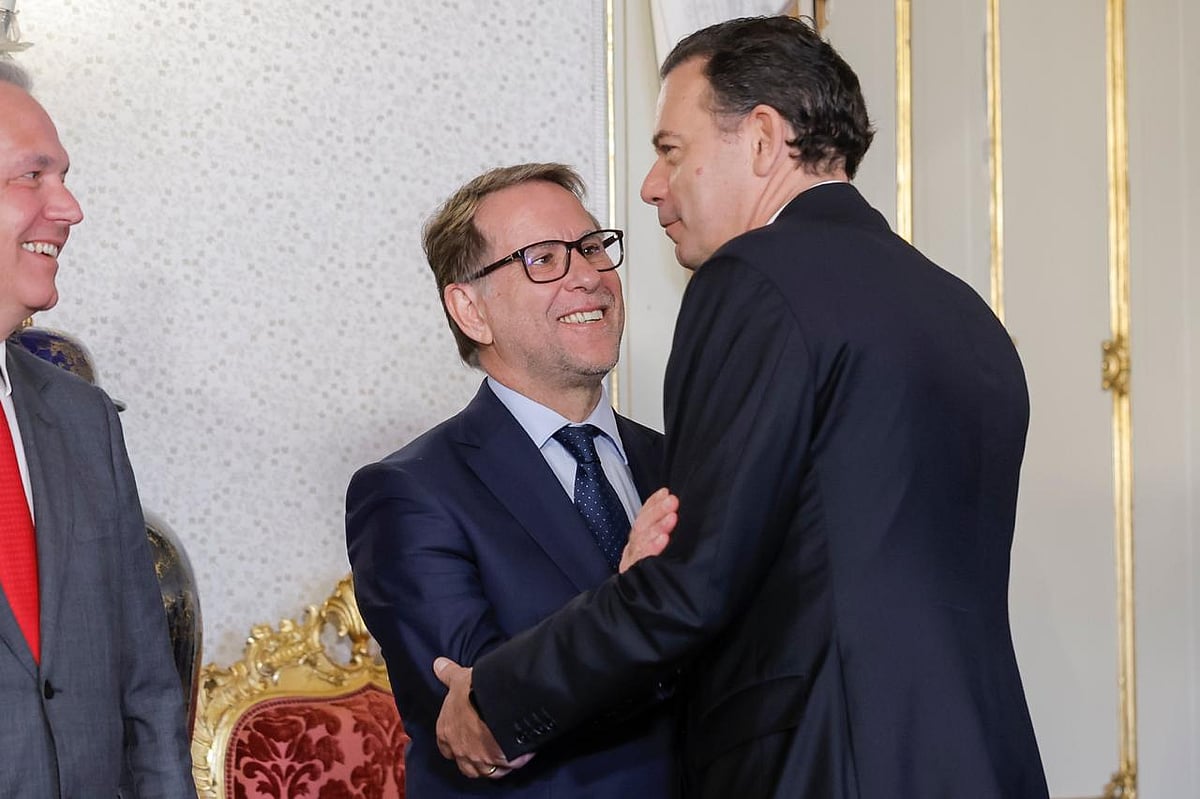
Luís Neves, newly appointed Minister of Internal Administration, bypassed protocol to address journalists shortly after his swearing-in. He discussed his transition from the national director of the Polícia Judiciária to the Council of Ministers amidst an investigation into Spinumviva, a family business linked to the Prime Minister. Neves emphasized that he would reject any proposals that conflict with his conscience, while highlighting the importance of prevention and cooperation in his new role.
New Minister Bypasses Protocol, Addresses Spinumviva and Rejects Proposals that 'Violate His Conscience'
Tuesday, 24 February 2026RSS
Context & Explainers
Luís Neves will take office on Monday as Minister of Internal Administration. He graduated in law and has worked at the Judicial Police since 1995, where he served as coordinator of a national unit and developed a long career in criminal investigation.

The PJ (Polícia Judiciária) is Portugal's national criminal investigation police agency, founded in 1945. Operating under the Ministry of Justice and supervised by the Public Ministry (prosecutors), the PJ is a "higher criminal police body" specializing in serious and complex crimes. Mission: The PJ assists judicial and prosecuting authorities by investigating terrorism, organized crime, homicide, kidnapping, drug trafficking, corruption, cybercrime, financial crime, and money laundering. It conducts forensic examinations, operates Portugal's Interpol and Europol liaison offices, and maintains specialized units including the National Counterterrorism Unit and National Anti-Corruption Unit. Difference from PSP/GNR: While PSP (civilian urban police) and GNR (military rural police) focus on preventive policing, public order, and investigating minor crimes, the PJ exclusively handles serious crime investigation requiring specialized technical and scientific expertise. PSP and GNR report to the Ministry of Internal Affairs; PJ reports to the Ministry of Justice. PJ officers receive higher pay and prestige but face greater operational risk.
AI Summary AvailableInterior minister bypasses protocol to face reportersRead the synthesized summary with context and explainers
View full article on Diário de Notícias