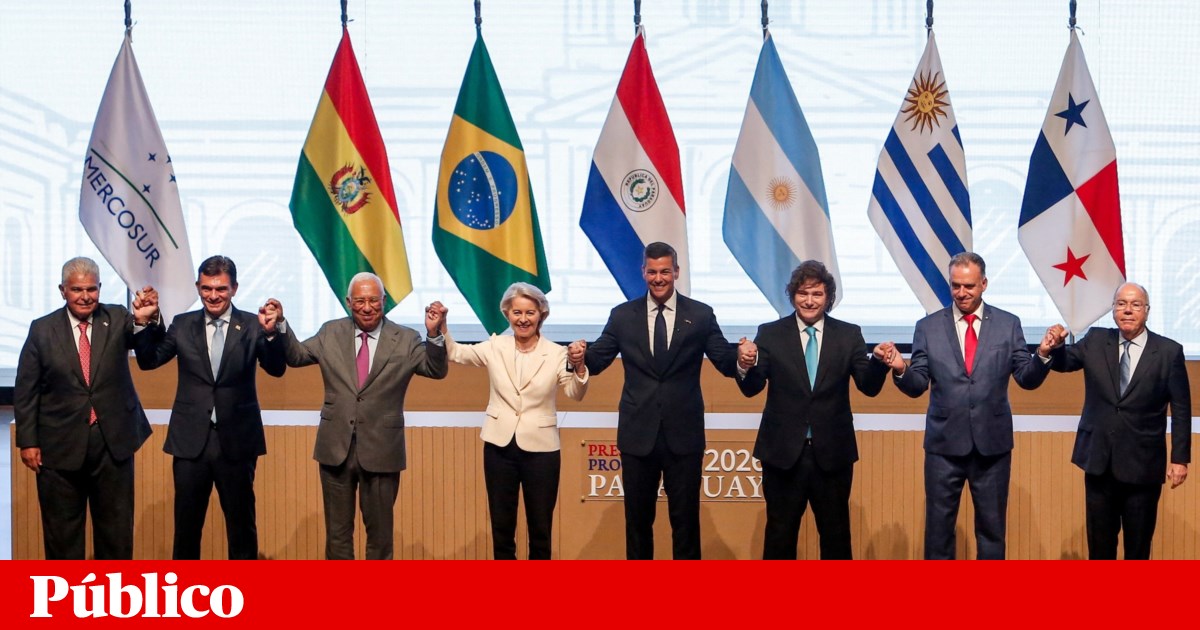
International trade agreement between the 27 EU member states and Brazil, Argentina, Uruguay, Paraguay, and Bolivia ends 25 years of negotiations between the two economic blocs.
European Commission moves forward with provisional application of the agreement with Mercosur
Friday, 27 February 2026RSS
Context & Explainers

Mercosur (Mercado Comum do Sul) is South America's largest trade bloc, comprising Brazil, Argentina, Uruguay, and Paraguay as full members. It has been negotiating a landmark free trade agreement with the European Union for over two decades.
The EU-Mercosur deal matters for Portugal because of the country's deep historical, cultural, and economic ties with Brazil — Portugal's largest non-EU trading partner and home to the biggest Portuguese diaspora community. A deal would reduce tariffs on European exports (including Portuguese wine, olive oil, and textiles) while opening EU markets to South American agricultural products (beef, soy, sugar, ethanol).
Portuguese farmers, particularly in the beef and dairy sectors, have expressed concern about competition from lower-cost South American producers. Environmental groups have criticized the deal over deforestation risks in the Amazon. The agreement requires ratification by all EU member states and the European Parliament, making its passage politically complex.