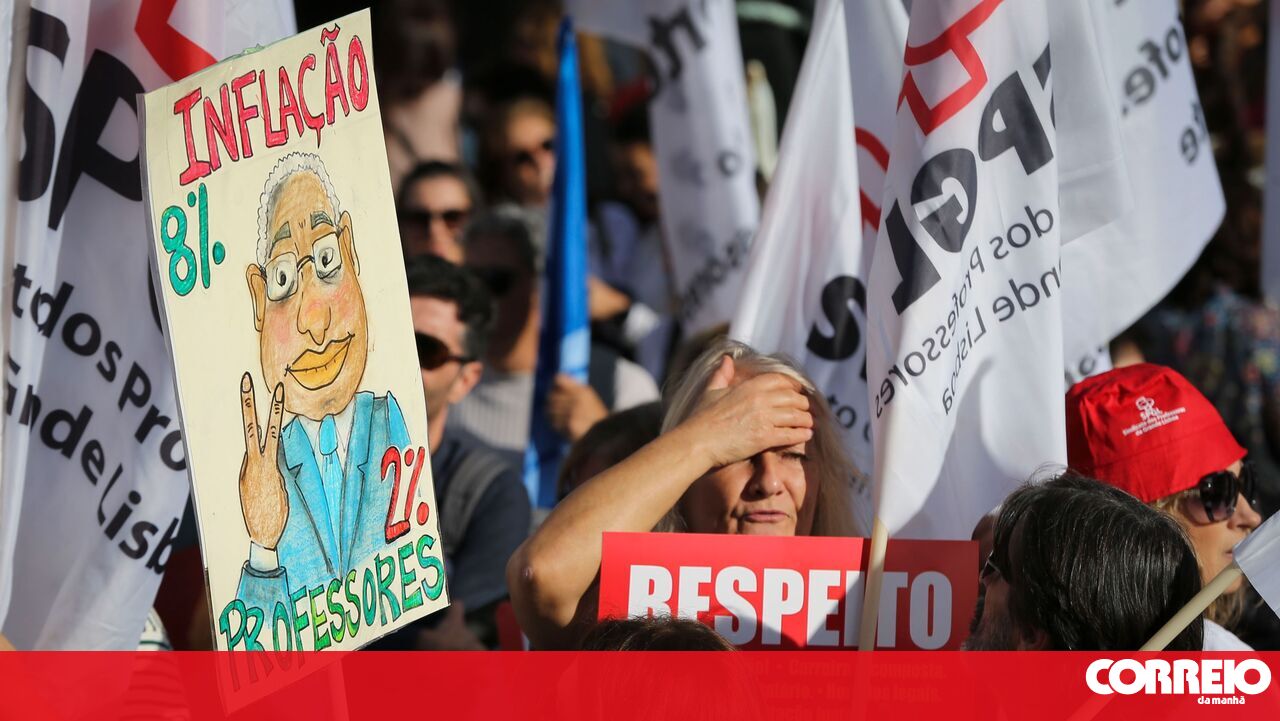
The general strike on December 11 is starting to have impacts this Wednesday, with transport services being affected throughout the day and night, ahead of the strike called by CGTP and UGT. The strike makes it unpredictable which schedules will be adhered to, although several are still guaranteed by minimum services.
Guide to the general strike. Which transport services will be operating?
Wednesday, 10 December 2025RSS

Context & Explainers

The General Union of Workers (UGT – União Geral de Trabalhadores) is one of Portugal’s two main national trade union confederations. Founded in Lisbon on 28 October 1978, it was created as a social‑democratic alternative to the more communist‑aligned CGTP after the 1974 Revolution, grouping unions close to the Socialist Party and moderate centre‑right currents.
UGT represents around 400,000 workers and is affiliated to the European Trade Union Confederation and International Trade Union Confederation, giving Portuguese labour a voice at EU and global level. Its principles stress union independence from the state, employers, churches and parties, internal democracy and active worker participation.
Historically, UGT’s hallmark has been “propositive” social dialogue: it is usually more willing than CGTP to sign tripartite agreements on wages, labour law and social policy with governments and employers, shaping minimum wage increases, working‑time rules and social protection reforms. This makes UGT a key centrist actor in Portugal’s industrial relations, often mediating between left and right while defending collective bargaining and incremental improvements to labour rights.

The General Confederation of the Portuguese Workers (CGTP – Confederação Geral dos Trabalhadores Portugueses) is Portugal’s largest trade-union confederation, grouping most unions in manufacturing, public services and many other sectors.
Founded clandestinely in 1970 as “Intersindical” under the dictatorship, it emerged publicly after the 1974 Carnation Revolution and was legalised in 1975. It has been central to virtually all major labour struggles since then, from defending collective bargaining and the 40‑hour week to leading general strikes against austerity and labour‑law rollbacks.
CGTP is historically close to the Portuguese Communist Party and has a class‑struggle, anti‑neoliberal profile, strongly critical of EU and government policies seen as undermining workers’ rights. It favours grassroots mobilisation and strikes over compromise, often refusing national social‑pact deals that the more centrist UGT is willing to sign.
In today’s Portugal, CGTP remains a key actor in wage bargaining, labour‑law debates and national protests; together with UGT it called the first joint general strike in years in December 2025, signalling its continuing capacity to organise mass action.
RSS source
Other news coverage of this topic
- From the reasons to the minimum services, everything you need to know about the general strike • ECO
- General Strike: What impact will it have on your day? • Observador
- General Strike: Union Claims Porto is Paralyzed • Observador
- General Strike. "Government wants to generalise precariousness" • Observador
- FNAM guarantees strong participation in the general strike • Observador
- "The Government owes us for the difficulties of this general strike day" • Correio da Manhã
- The general strike is already affecting transport • RTP Notícias
- Waste sector is massively joining the strike • Correio da Manhã
- Waiting for D. Sebastião... and for Justice reform • Observador
- Effects of the general strike are already being felt • Observador
- Lisbon metro lines are now closed • Observador
- General strike. André Ventura accuses the Government of being "stubborn and obstinate" • RTP Notícias
- Lisbon: traffic will be affected due to general strike • Observador
- General Strike. BE Leader Believes in "Great Mobilisation" • Observador
- CGTP and UGT expect high turnout for general strike • RTP Notícias
- 19h General Strike: Cotrim Figueiredo hopes the government will not yield • RTP Notícias
- General strike. Does the labour reform only benefit employers? • Observador
- Can the government resort to civil requisition during the general strike? Seven answers to understand what is at stake • ECO
- What is at stake with the general strike on December 11? • Público
- On the day of the general strike, the public transport sector will be one of the most affected • Correio da Manhã
- General strike already affects transport: more than 200 trains have been cancelled • Correio da Manhã
- CGTP calls for participation in general strike to give a "signal of rejection" to changes in labour law • Correio da Manhã
- Was there political instrumentalization in the general strike? • Observador
- Labour reform: six measures that are the source of the general strike • Público
- The general strike and the race for E-Lar • Observador
- What needs to work on a strike day • Observador
- General Strike. Transport services with minimum operations starting this Wednesday • RTP Notícias
- General Strike at 5 PM: Lisbon Metro Will Be Closed • RTP Notícias
- General Strike: Legislation, Impact and Workers' Rights • Diário de Notícias
- Cotrim hopes the Government "does not yield to initial pressures" • Observador
- Lisbon. Metro anticipates stoppage and closure of stations • Observador
- Madeira Government Sets Minimum Bus Services • Observador
- General Strike. Lisbon Metro anticipates service disruption and station closures • ECO
- Lisbon Metro to suspend service and close stations during General Strike • Correio da Manhã
- Am I covered by the general strike? What effect does it have on my salary? The answers to this and other essential questions • Correio da Manhã
- 15h. General strike. There are disruptions in CP starting today • Observador
- General strike: transport disruptions began this Wednesday, find out what to expect tomorrow • Expresso
- Do you have a transport ticket for the day of the general strike? Find out what you can do • ECO
- CP expects disruptions due to general strike until Friday, but there are minimum services • ECO
- CP announces minimum services and warns of disruptions • Observador
- CP announces minimum services and warns of disruptions starting today • Correio da Manhã
- General strike. Disruptions expected in various sectors • RTP Notícias
- "The rights of some should not obstruct the rights of others," says Montenegro • ECO
- Nurses' Union Headquarters in Porto Targeted in Searches • Dinheiro Vivo
- General strike on Thursday: waste collection and schools will be the most affected sectors in local authorities • Correio da Manhã
- 1,600 euros for the minimum wage is realistic, says Montenegro • Observador
- Portugal has 20,000 immigrant returns to process, says Minister Leitão Amaro • Dinheiro Vivo
- 12h PM says that the government respects the right to strike and is not inflexible • RTP Notícias
- Portuguese Journalists' Association claims that precariousness does not equal productivity • Correio da Manhã
- General strike. Montenegro reminds that "the rights of some should not obstruct the rights of others" • RTP Notícias
- A reform against those who work • Público
- General Strike. Which sectors will be most affected? • Observador
- More than 60% of Portuguese support general strike. Unions more popular than Government • Público
- UGT claims there is still room for dialogue with the Government • Observador
- Lisbon Firefighters Operating with Minimum Services • Observador
- 08h The impacts of the general strike begin today • RTP Notícias
- Portugal needs to provide more support for people with disabilities • Observador
- Does Portugal look more charming from the outside? • Observador
- Labour law reform is "liberal", "unbalanced" and unjustified, say former government officials • Diário de Notícias
- "I haven't dismissed a worker in years, and there isn't a worker who leaves DST without me wanting to know why they want to go" • Expresso
- Will the general strike change anything? • Observador
- Presidential Elections Under Review and the Reasons for the General Strike • Expresso
- CP anticipates disruptions in circulation starting today • Observador
- The workers' struggle and the economic miracle of the 'Sweet Custard Tart' • Expresso
- 07h The behind-the-scenes of tomorrow's general strike • RTP Notícias
- People with disabilities in Portugal remain more vulnerable to unemployment • Correio da Manhã