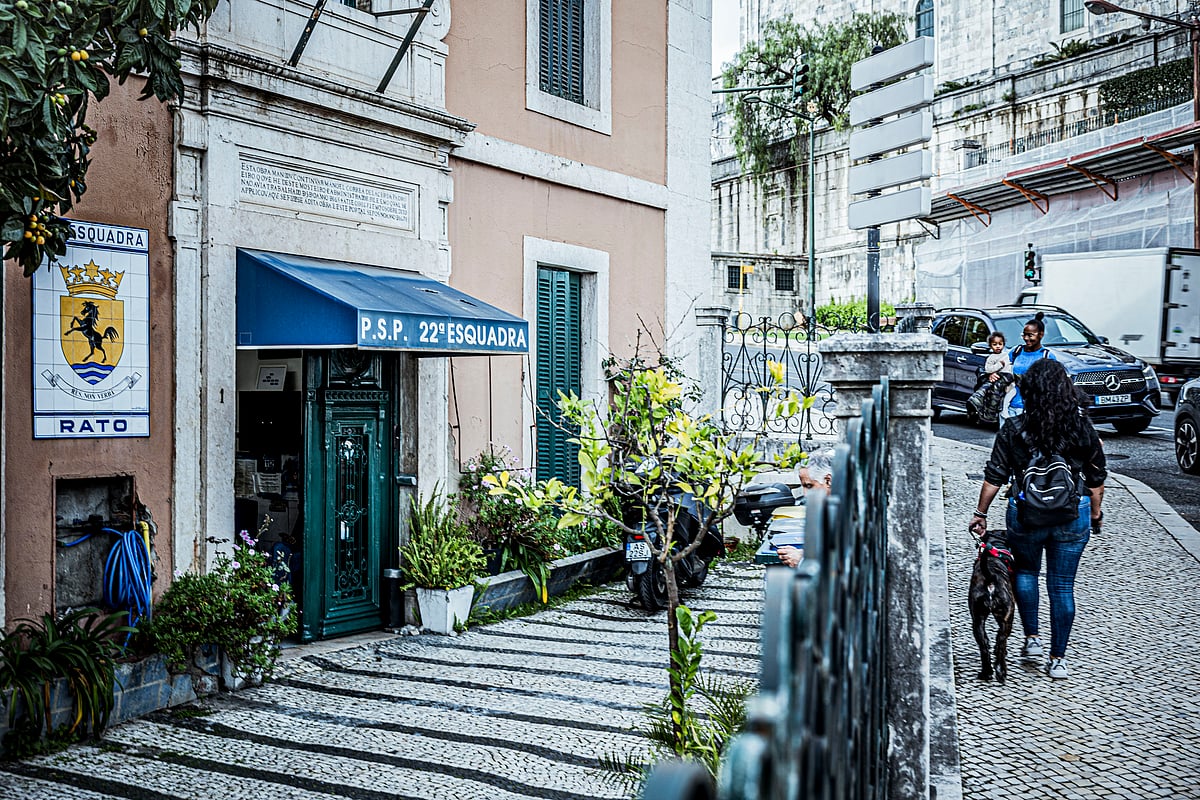
Seven police officers detained this week are being investigated for torture and other crimes at the Rato and Bairro Alto police stations in Lisbon. The preventive detention measures were announced by the Public Security Police (PSP) on Saturday, March 7. The decision to keep these officers in custody is based on the risk of “continued criminal activity” among other factors. The investigation has now led to nine officers being held preventively, facing charges of “serious torture, completed and attempted rape, abuse of power, possession of prohibited weapons, and serious and qualified bodily harm.” The PSP has also initiated seven disciplinary proceedings against the officers involved. The PSP expressed its “repudiation” of any criminal behaviour by its agents and stated it would take all necessary measures to prevent such actions in the future. The investigation began within the PSP itself, following reports of the case, which includes video and photographic evidence of the alleged assaults shared in messaging groups. The Minister of Internal Administration, Luís Neves, emphasized that there is no place in Portuguese security forces for illegitimate violence or violations of fundamental rights, and that any indications of such behaviour will be thoroughly investigated and punished according to the law.
Torture in police stations: Seven officers held in preventive detention due to "risk of continued criminal activity"
Context & Explainers
Preventive detention (prisão preventiva) is a court-ordered measure that keeps a suspect in custody before trial when a judge decides there is a real risk they might flee, tamper with evidence, or pose a danger to others. It is temporary and not a conviction; in the recent case five of the 37 alleged members were ordered to await the investigation in preventive detention by the Central Criminal Investigation Court. Those detained should request a lawyer and can seek consular assistance if they are foreign nationals, while family or lawyers can ask the court to review or lift the measure.

The PSP (Polícia de Segurança Pública) is Portugal's national civilian police force, founded in 1867. Responsible for defending Republican democracy and safeguarding internal security and citizens' rights, the PSP polices major cities—Lisbon, Porto, Faro—and large urban areas, covering only 4% of Portugal's territory but roughly half the population. Led by a National Director under the Ministry of Internal Affairs, its approximately 21,500 officers handle preventive policing, crime investigation, public order, airport security, diplomatic protection, private security regulation, firearms licensing, and border control (since 2023).
PSP vs. GNR: The PSP is civilian with police-focused training and urban jurisdiction, while the GNR (Guarda Nacional Republicana) is military (gendarmerie) with military training, covering 96% of Portugal's rural and suburban territory. Both share core public safety missions but differ fundamentally in nature, training, and geographic responsibility.
RSS source
Other news coverage of this topic
- PSP officers accused of torture at Rato police station to await trial in Évora's 'police and politicians' prison • Correio da Manhã
- Minister defends "overwhelming majority of PSP professionals" after preventive detention of seven officers • Dinheiro Vivo
- Torture at Rato police station: preventive detention for seven PSP officers, MAI apologises to victims • Expresso