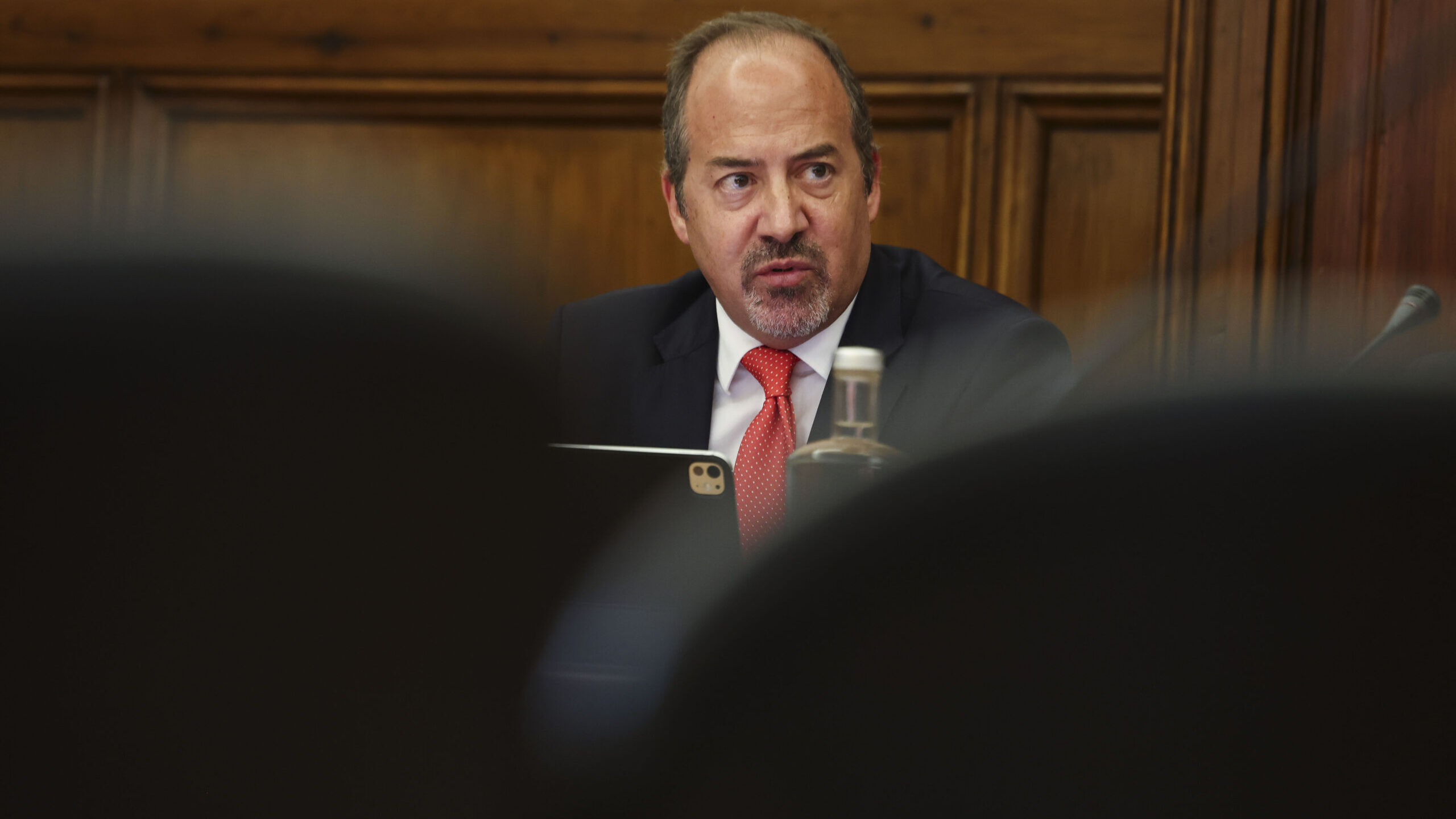
Álvaro Santos Pereira revealed this Wednesday that Mário Centeno retired early from the Banco de Portugal with a replacement rate of 72% (percentage of his last salary), which is lower than the average for other employees at the institution, and that he himself wanted to understand the conditions for an exit agreement after...
Centeno retired with 72% of his last salary. Banco de Portugal has already found a “solution” for five more consultants
Wednesday, 1 April 2026RSS
Context & Explainers
Banco de Portugal is Portugal's central bank, founded in 1846. It is a member of the European System of Central Banks (ESCB) and the Eurosystem, working alongside the European Central Bank (ECB) to implement monetary policy in the euro area.
Its main functions include supervising banks and financial institutions, ensuring financial stability, managing Portugal's gold and foreign currency reserves, and producing economic research and statistics. It also operates the payment systems infrastructure and issues banknotes.
Banco de Portugal is led by a Governor — currently Mário Centeno (since 2020) — who also sits on the ECB's Governing Council. For residents, the central bank matters because it regulates the banks they use, sets macroprudential rules (such as mortgage lending limits), and provides a complaints mechanism for banking disputes.