

Appeals court reduces sentence of former SEF officer for protecting inspectors who killed Ukrainian man
The case occurred after the SEF refused entry into Portugal to Ihor Homeniuk at the Lisbon airport border.
cmjornal.pt

Latest news and stories about legal reforms in immigration in Lisboa, Portugal for expats and residents.
The case occurred after the SEF refused entry into Portugal to Ihor Homeniuk at the Lisbon airport border.
Psychologist Juliana Ribeiro de Souza Revoredo is researching the emotional and professional impact on Brazilian lawyers following the sudden termination of the reciprocity agreement between the Brazilian and Portuguese Bar Associations in 2023.

Joom CEO Ilya Shirokov warns that proposed changes to Portugal's nationality law create market uncertainty and hinder the recruitment of international talent, noting that the company has already lost potential candidates to Germany.

The measure, which is part of a broader reform to speed up administrative and tax justice, still needs to be approved by the Assembly of the Republic.

The measure still needs to be approved by the Legislative Assembly, but it provides for the end of the concentration of cases in Lisbon

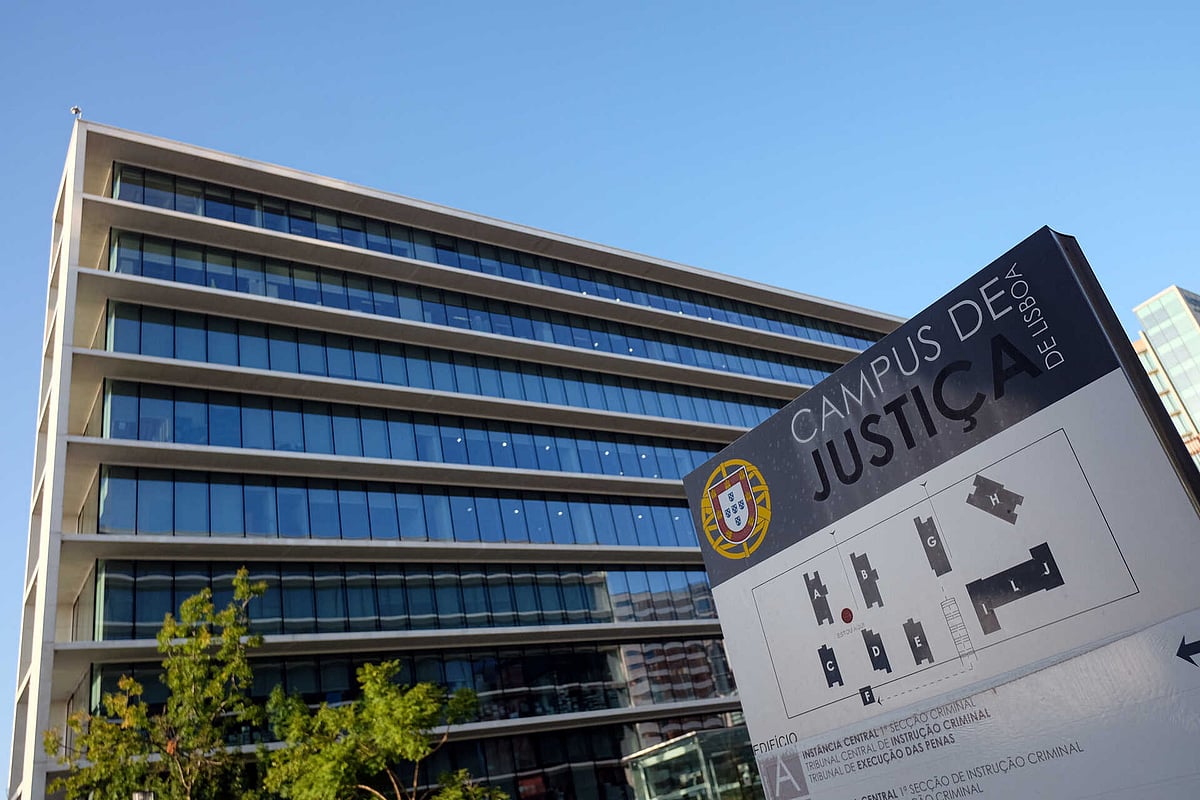
Another deadline for the installation of the hearing room at Lisbon Airport has been missed. ANA Aeroportos confirmed a new date to DN, stating that the contract for the permanent facilities has been awarded, with completion expected in the second half of this year. Previous forecasts had suggested completion by the summer of 2026. Temporary facilities have been available since June 1st while work on the permanent ones continues. The delay is attributed to the division of responsibilities between entities and bureaucratic procedures. The room is intended for judicial hearings for immigrants denied entry, aiming to function as an extension of the Lisbon court to process cases before individuals are deported.

A lawyer from Loures allegedly embezzled over one million euros from 33 clients between 2023 and 2026, claiming the money was necessary to process 'golden visa' applications. He is suspected of qualified fraud, breach of trust, and money laundering.

The 26 defendants accused of belonging to a network that used fake addresses in Penha de França, Lisbon, to legalise immigrants were today given suspended sentences for aiding illegal immigration, document forgery, and abuse of power.

The 26 individuals accused of belonging to a network that used false addresses in Penha de França, Lisbon, to legalise immigrants have received suspended sentences for aiding illegal immigration, document forgery, and abuse of power. The verdict was delivered this Wednesday, July 15. The court did not find sufficient evidence for the charge of criminal association, ruling that there was no complex organisation or leadership structure. Consequently, 25 defendants were convicted of aiding illegal immigration and document forgery, while one defendant, a parish council employee, was convicted of abuse of power. All sentences are under five years and were therefore suspended. The scheme, which involved using addresses provided by others in exchange for money to obtain erroneous residency certificates from the Penha de França Parish Council, was reported by the council itself in 2022.
The next session at Casa do Brasil will focus on family reunification. This free initiative allows participants to ask questions about the process, including appointment requests at the Agency for Integration, Migration and Asylum (AIMA) and changes introduced by the new Foreigners Law. The event is scheduled for Tuesday, June 30th, at 3:00 PM, and will be held exclusively online via Microsoft Teams. Jurist Patrícia Peret will lead the session, explaining the practical implications of the new law and procedures for AIMA. Participation is free but requires prior registration via an online form, with limited spots available.

The new president of the Constitutional Court, João Carlos Loureiro, stated today, in his first speech in this role, that the court “does not forget the rights of foreigners and stateless persons” and is solely committed to the Constitution.

Using an asylum request as a delaying tactic, one of the most dangerous Brazilian criminals detained in Portugal managed to be released by the Lisbon Court of Appeal despite having an ongoing extradition process requested by the Brazilian justice system. However, this would never have happened under the new Return Law.
He was arrested as part of the police operation “Miracle Land”, carried out by the PJ Central Directorate in Oeiras and Odivelas.

Administrative and Tax Courts cite a context of “heavy procedural pressure,” with an exponential growth in filings and priority given to urgent cases such as those against AIMA.

A Brazilian national, known as “Hulk” and identified as a leader of the PCC, will await the final decision on his asylum request in Portugal while at liberty.

Brazilian national Ygor Daniel Zago, known as 'Hulk', a leader of the PCC criminal organisation, has been released from prison in Portugal due to the expiration of his preventive detention period. His lawyer, Marques Lobato, explained that the detention limit was reached while an appeal for international protection—filed to block his extradition to Brazil—remains pending before the Administrative Court. Although released, Zago must surrender his passport, is prohibited from leaving Portugal, and must report daily to the police in Cascais. Zago, who was convicted in Brazil for his role in a transatlantic drug trafficking and money laundering scheme, had been living in a private condominium in Cascais before his arrest.
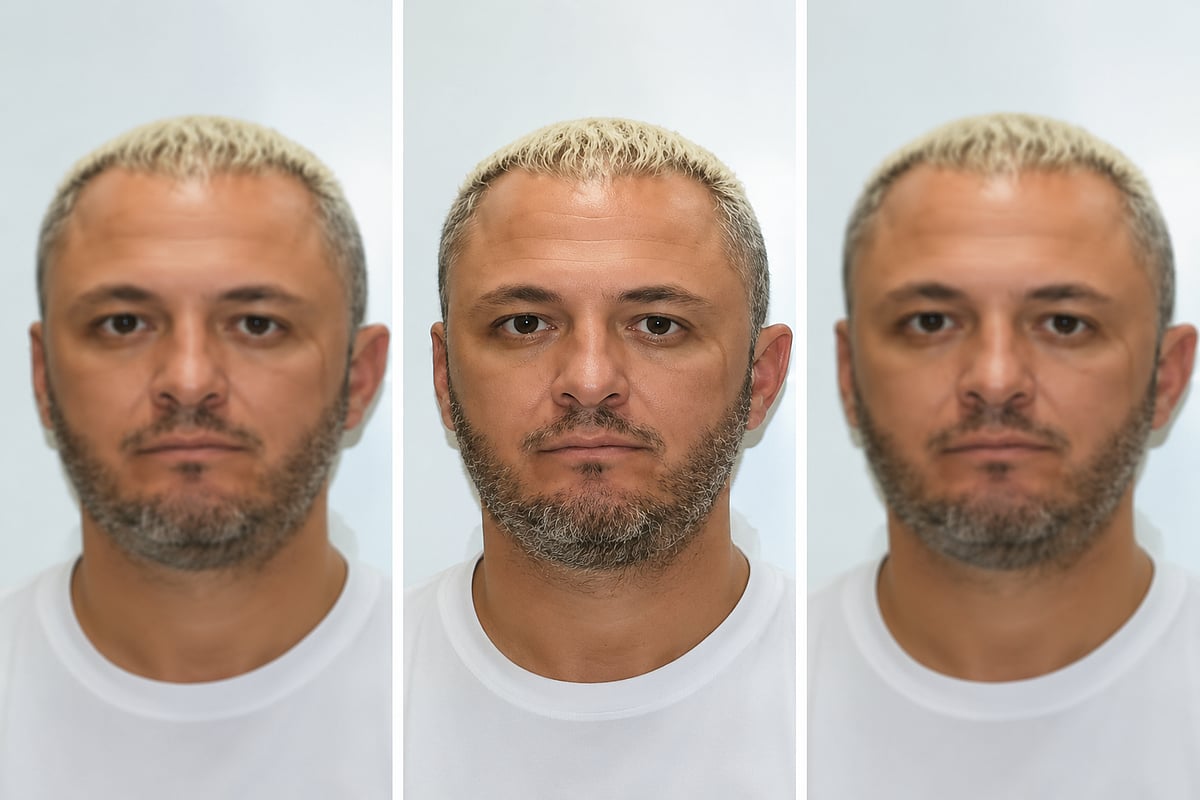
A court has ruled for the release of an individual associated with a criminal organisation who was being held in custody in Portugal.
According to data from the Administrative and Tax Courts (CSTAF), 496 new administrative actions and precautionary measures to challenge expulsion orders were filed in the Lisbon Administrative Circle Court in April.

António Sérgio Henriques had been convicted of denial of justice and aggravated prevarication; the Lisbon Court of Appeal changed the conviction to abuse of power. The suspended sentence was reduced to one year and ten months.

The number of new cases to challenge voluntary departure requests, expulsion orders, and residence permit denials reached its highest value in April since January 2025.

The Judiciary Police (PJ) arrested two suspects on Tuesday (May 19) for crimes including criminal association, aiding illegal immigration, and document forgery to regularise foreign citizens. The men, aged 42 and 64, allegedly created an organised structure to fraudulently obtain 800 residency certificates by providing false addresses and witnesses to local authorities. They charged between 130 and 200 euros per person, exploiting vulnerable foreign nationals. The investigation, led by the Loures DIAP, involved seven search and seizure warrants in Loures and Odivelas. The suspects will face a judicial interrogation to determine coercive measures. Separately, the Public Prosecutor's Office has charged 15 individuals and six companies with over 2,200 counts of aiding illegal immigration.

The most extraordinary thing is that Marcos, it seems, only entered Portugal in 2024. In other words, the documents arrived before the fugitive.

The couple divorced and agreed that the children would live with their mother in Portugal until 2029. A little over a month later, the father filed a report claiming the children had disappeared.
For Paula Santos, António José Seguro was expected to show 'greater distance from the options contained in this law, which he himself criticises' and to veto it for further consideration by the Assembly of the Republic.

The Left Bloc leader stressed that the head of state 'had an alternative' and could have politically opposed the law, considering that the fact he did not do so 'is very worrying at this early stage of his term'.

Erotic films and recruitment for the Yoga sect in Sintra, the new Nationality Law promulgated by Seguro, and the growing wave of internal criticism of Vladimir Putin.

The PS parliamentary leader, Eurico Brilhante Dias, confirmed this Friday, April 17, that the socialists have requested the Constitutional Court to conduct a preventive review of the amendment to the Penal Code associated with the new version of the Nationality Law, two legislative initiatives approved by the entire parliamentary right. Lamenting the “unfortunate concession of the PSD to the far-right”, Brilhante Dias referred to the amendment to the Penal Code that creates the accessory penalty of loss of nationality, whereby naturalised Portuguese citizens lose such right if convicted of serious crimes. “It creates a different sanctioning framework for Portuguese men and women,” he argued. Regarding the Nationality Law, highlighting the socialist bench's contribution to addressing the unconstitutionalities pointed out by the Constitutional Court in the version approved last year, Brilhante Dias said it is not covered by the preventive review request sent to the judges of the Palácio Ratton. Eurico Brilhante Dias also said there was no decision regarding the candidacy for the Ombudsman, claiming that less than 24 hours had passed since the election failed for the Lisbon Law School professor Tiago Antunes, former Assistant Secretary of State to the Prime Minister and European Affairs in António Costa's governments - and accused by the Liberal Initiative of having been part of the “intoxication and manipulation machine of public opinion during the José Sócrates executives”. Despite this, the PS parliamentary leader dismissed the idea that Tiago Antunes lacked votes among socialist deputies, saying that “the numbers speak for themselves” and taking pride in having “a cohesive bench”. Already on Thursday, after the voting result was known, in which the candidate for Ombudsman only had 104 favourable votes, less than the sum of null and blank votes, and far short of the two-thirds majority required. PS proposes a “more balanced” nationality law with a transitional regime.

The inspectors who led to the death of Ihor in 2020 were imprisoned for less than three years.

Parole was granted after two-thirds of their sentences had been served. The three former inspectors spent two years and seven months in Évora prison and served the remainder of their sentences under house arrest.

The Assembly of the Republic is re-examining this Wednesday the decrees that intend to amend the Nationality Law and the Penal Code.
