The Assembly of the Republic (Assembleia da República) approved in general terms proposals from the Azores and Madeira to alter access rules for the social mobility subsidy (subsídio de mobilidade social or SSM), waiving the requirement for regularised contributory status for air travel, RTP reports. The change is aimed at easing travel access for residents of the islands; details and final wording will be set when the proposals return for detailed votes. Island residents and those booking subsidised travel should watch for final approval and implementation rules.
Parliament approves regional travel subsidy changes
Wednesday, 18 February 2026AI summary
Context & Explainers
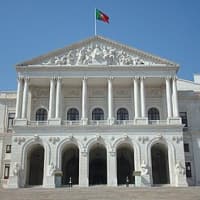
The Assembly of the Republic (Assembleia da República) is Portugal's unicameral parliament, located in the Palácio de São Bento in Lisbon. It consists of 230 deputies elected by proportional representation for four-year terms.
The Assembly's powers include making and amending laws, approving the state budget, ratifying international treaties, and overseeing the government through debates, hearings, and committees. It can also pass votes of no confidence to bring down a government, as happened in March 2025.
Following the May 2025 elections, the current parliamentary composition is led by the Democratic Alliance (AD) with the largest share of seats, followed by Chega, PS, and smaller parties including the Liberal Initiative, Left Bloc, Livre, and PCP.
The social mobility subsidy (subsídio de mobilidade social, SSM) helps residents of the Azores and Madeira cover the cost of required air travel to the mainland or between islands. On 18 February 2026 the Assembly approved in general terms proposals to waive the requirement for regularised contributory status for SSM access for air travel, so people without regular social security contributions may become eligible once the measure is finalised.
Portugal's return law governs the procedures for removing third-country nationals who are in the country irregularly, implementing the EU's Return Directive (2008/115/EC). It sets out the rules for deportation orders, voluntary departure periods, entry bans, and detention of irregular migrants pending removal.
Changes to the return law have been a recurring point of political debate, particularly around the balance between enforcement and rights protections. Amendments can affect the length of voluntary departure periods, the grounds for detention, and the procedural safeguards available to those subject to removal orders.
The law is administered by AIMA (Agência para a Integração, Migrações e Asilo), which replaced the former SEF in handling immigration enforcement and integration services.
The Assembly of the Republic (Assembleia da República) is Portugal's unicameral parliament, located in the Palácio de São Bento in Lisbon. It consists of 230 deputies elected by proportional representation for four-year terms.
The Assembly's powers include making and amending laws, approving the state budget, ratifying international treaties, and overseeing the government through debates, hearings, and committees. It can also pass votes of no confidence to bring down a government, as happened in March 2025.
Following the May 2025 elections, the current parliamentary composition is led by the Democratic Alliance (AD) with the largest share of seats, followed by Chega, PS, and smaller parties including the Liberal Initiative, Left Bloc, Livre, and PCP.