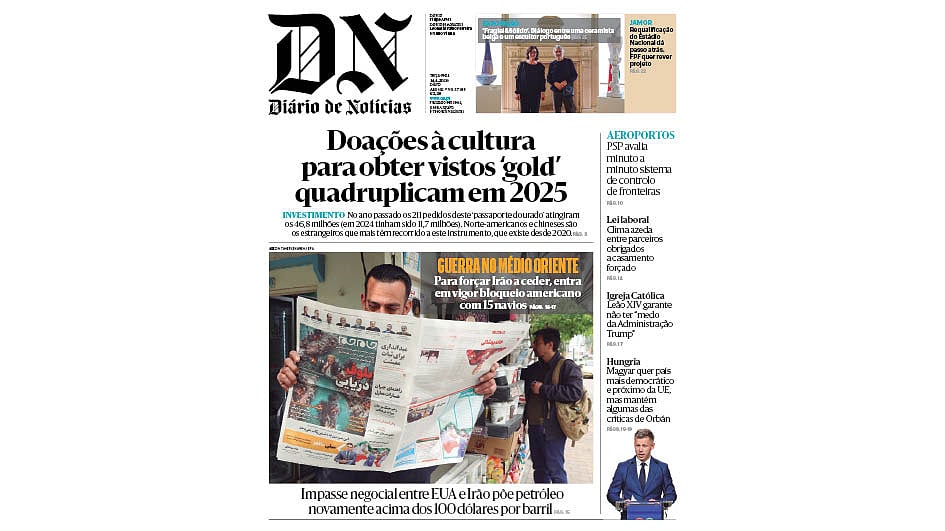
Capital transfers for cultural projects aimed at obtaining 'golden visas' reached 46.8 million euros last year, a 298% increase compared to the 11.7 million recorded in 2024, according to data from the Ministry of Culture, Youth and Sports. This is the highest annual investment since the scheme began in 2020, which grants residency permits for capital transfers of 250,000 euros or more to the cultural sector. US citizens are the most frequent users of this instrument, followed by Chinese and Indian nationals.
Donations to culture for 'golden visas' soared by almost 300% in 2025
Monday, 13 April 2026RSS
Context & Explainers
The Golden Visa (Autorização de Residência para Investimento, ARI) is Portugal's residence-by-investment program, created in 2012, granting non-EU nationals a residency permit in exchange for qualifying investments.
Since October 2023, direct residential real estate purchases no longer qualify — a reform aimed at easing housing market pressure. Eligible investment routes now include capital transfers (€500,000+), investment fund subscriptions, job creation, and contributions to scientific research or cultural heritage. Minimum amounts and conditions vary by category.
A Golden Visa provides Schengen travel rights, requires minimal physical presence in Portugal (7 days per year), and offers a pathway to permanent residency after five years and citizenship after six. The program has been politically controversial, with ongoing debate about its impact on housing prices and its value as an economic stimulus.
Applicants must deal with AIMA for residency processing, which has experienced significant backlogs.
AI Summary AvailableGolden visa cultural donations triple in 2025Read the synthesized summary with context and explainers
View full article on dinheirovivo.dn.pt